


Relevant for Exams
NCP-SP eyes alliance with Ajit Pawar faction for Maharashtra civic polls; loyalist resigns.
Summary
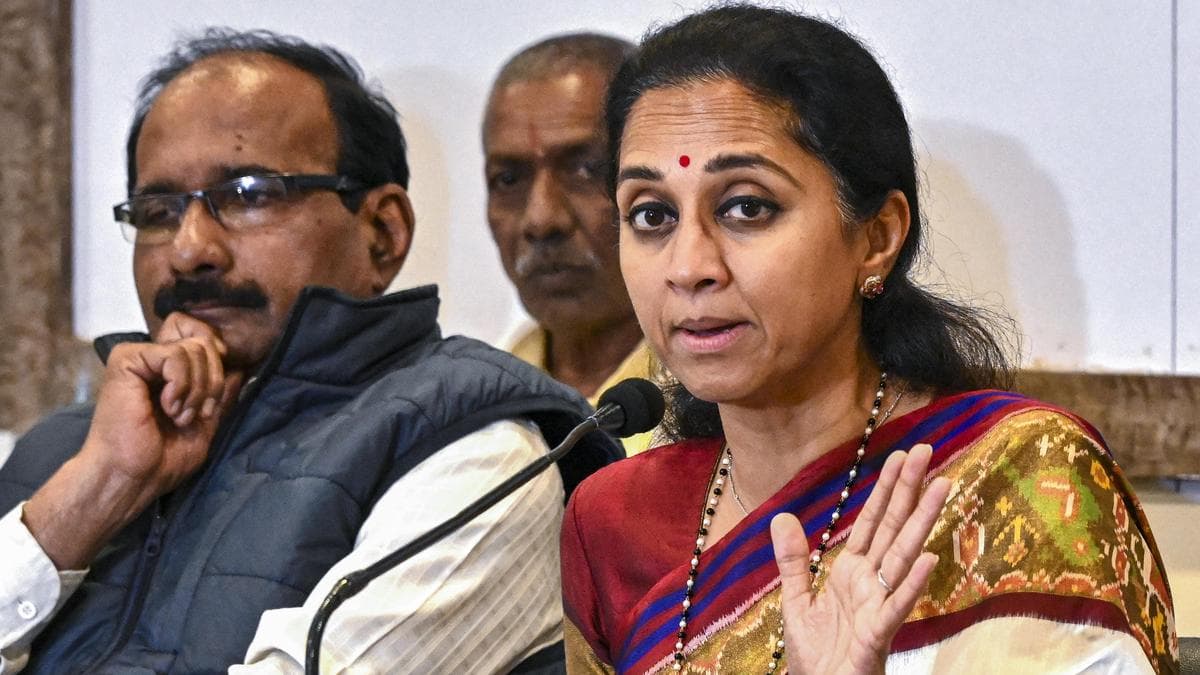
The Sharad Pawar-led NCP-SP is reportedly working towards an alliance with the Ajit Pawar faction for the upcoming civic polls in Maharashtra, specifically for the Pune municipal corporation. This move, confirmed by Supriya Sule, highlights the intricate political landscape and internal party dynamics within the Nationalist Congress Party. The potential merger has led to the resignation of Sharad Pawar loyalist Prashant Jagtap, signaling dissent and making it relevant for understanding state-level political developments.
Key Points
- 1NCP-SP (Sharad Pawar faction) is exploring an alignment with the Ajit Pawar-led NCP faction.
- 2The potential alliance is aimed at contesting the upcoming civic polls in Maharashtra.
- 3Discussions are specifically focused on the elections for the Pune municipal corporation.
- 4Supriya Sule, a prominent leader of the NCP-SP, confirmed that efforts are underway for this political alignment.
- 5Prashant Jagtap, a loyalist of Sharad Pawar, resigned expressing unhappiness over the possible merger.
In-Depth Analysis
The recent news of the Sharad Pawar-led Nationalist Congress Party (NCP-SP) exploring an alliance with the Ajit Pawar faction for the upcoming civic polls in Maharashtra, particularly for the Pune municipal corporation, unveils the complex and often unpredictable nature of Indian state politics. This development, confirmed by Supriya Sule, a prominent leader of the NCP-SP, signals a potential realignment that could reshape local governance and state-level power dynamics.
To understand this situation, it's crucial to recall the dramatic split within the Nationalist Congress Party in July 2023. Founded by Sharad Pawar in 1999 after he broke away from the Indian National Congress, the NCP had been a significant force in Maharashtra and national politics. However, in a stunning move, Ajit Pawar, Sharad Pawar's nephew and a veteran politician himself, along with a significant number of MLAs, defected to join the ruling Mahayuti alliance comprising the Bharatiya Janata Party (BJP) and the Shiv Sena (Shinde faction). Ajit Pawar subsequently took oath as Deputy Chief Minister, leading his faction to claim the original NCP name and symbol, a matter still under adjudication by the Election Commission of India. This split left Sharad Pawar leading the NCP-SP, which aligned with the Maha Vikas Aghadi (MVA) alongside the Congress and Shiv Sena (Uddhav Balasaheb Thackeray).
The current proposed alignment for civic polls involves several key stakeholders. On one side is the **NCP-SP**, led by the seasoned political strategist **Sharad Pawar** and his daughter **Supriya Sule**. They aim to retain their political relevance and strengthen their base, especially in crucial urban centers like Pune. On the other side is the **Ajit Pawar-led NCP faction**, which is part of the ruling coalition in Maharashtra. An alliance between these two factions, despite their recent bitter split, suggests a pragmatic political calculation, possibly to consolidate the 'Pawar' legacy and voter base, or to counter other strong political forces like the BJP and Shiv Sena in local elections.
The immediate fallout of this proposed alliance is evident in the resignation of **Prashant Jagtap**, a loyalist of Sharad Pawar and the Pune city unit chief of the NCP-SP. His resignation underscores the internal dissent and ideological discomfort among some party workers who view such a merger, even for local polls, as a betrayal of the principles that led to the split. The **electorate of Pune** and Maharashtra will also be a key stakeholder, as their perception of these frequent political realignments will ultimately determine electoral outcomes.
This development holds significant implications for India's political landscape, especially concerning state and local governance. Firstly, it highlights the **fluidity of coalition politics** in India, particularly in Maharashtra, often dubbed the 'laboratory of coalition politics.' Political parties, driven by electoral pragmatism, frequently form and break alliances, sometimes even with former adversaries. Secondly, it directly impacts **urban local self-governance**. Municipal corporations, like the Pune Municipal Corporation, are vital for urban development, infrastructure, and public services. The composition and leadership of these bodies directly affect the lives of millions. The **74th Constitutional Amendment Act of 1992** gave constitutional status to Urban Local Bodies (ULBs) and mandated their regular elections, defining their powers and responsibilities under **Article 243W**. This proposed alliance aims to gain control over such a crucial institution. Thirdly, the outcome of these civic polls is often seen as a **barometer for upcoming state assembly and Lok Sabha elections**, providing insights into voter sentiment and the strengths of various political formations.
Historically, Maharashtra has witnessed numerous political realignments, from the formation of the MVA government in 2019 to the Shiv Sena split in 2022. These events underscore a trend where political expediency often trumps ideological consistency. The future implications of this potential alliance are manifold. It could lead to a **re-consolidation of the Pawar family's political influence**, possibly paving the way for a larger merger between the two factions in the long run. However, it also risks **alienating core supporters** who sided with Sharad Pawar post-split, leading to a loss of trust. Furthermore, such an alliance could strain relations within the MVA, potentially weakening the opposition's unity against the ruling Mahayuti. The BJP, a key ally of Ajit Pawar, would also have to factor in this dynamic, as it could impact their own electoral strategies.
While the **Tenth Schedule of the Constitution (Anti-defection Law)** primarily deals with disqualification of elected members for defection, the spirit of party discipline and loyalty is tested in such scenarios. Though an electoral alliance for civic polls is distinct from a legislative merger, it reflects deeper shifts in party allegiance and strategy that can eventually lead to legislative realignments. The Election Commission of India's role in adjudicating party symbols and names, as seen with the original NCP split, also remains a crucial aspect of such political developments.
Exam Tips
This topic falls under 'Indian Polity and Governance' (UPSC GS-II, State PSCs). Focus on the structure and functions of Urban Local Bodies (ULBs) and the 74th Constitutional Amendment Act.
Study related topics like the Anti-defection Law (Tenth Schedule), the role of the Election Commission in party splits, and the dynamics of coalition politics in states. Understand the difference between electoral alliances and legislative mergers.
Common question patterns include factual questions on constitutional articles related to ULBs (e.g., Article 243W), analytical questions on the implications of political realignments on governance, and questions on the role of regional parties in Indian democracy.
Related Topics to Study
Full Article
Sharad Pawar loyalist Prashant Jagtap resigns, expressing unhappiness over the possible merger for the polls to Pune municipal corporation