



Relevant for Exams
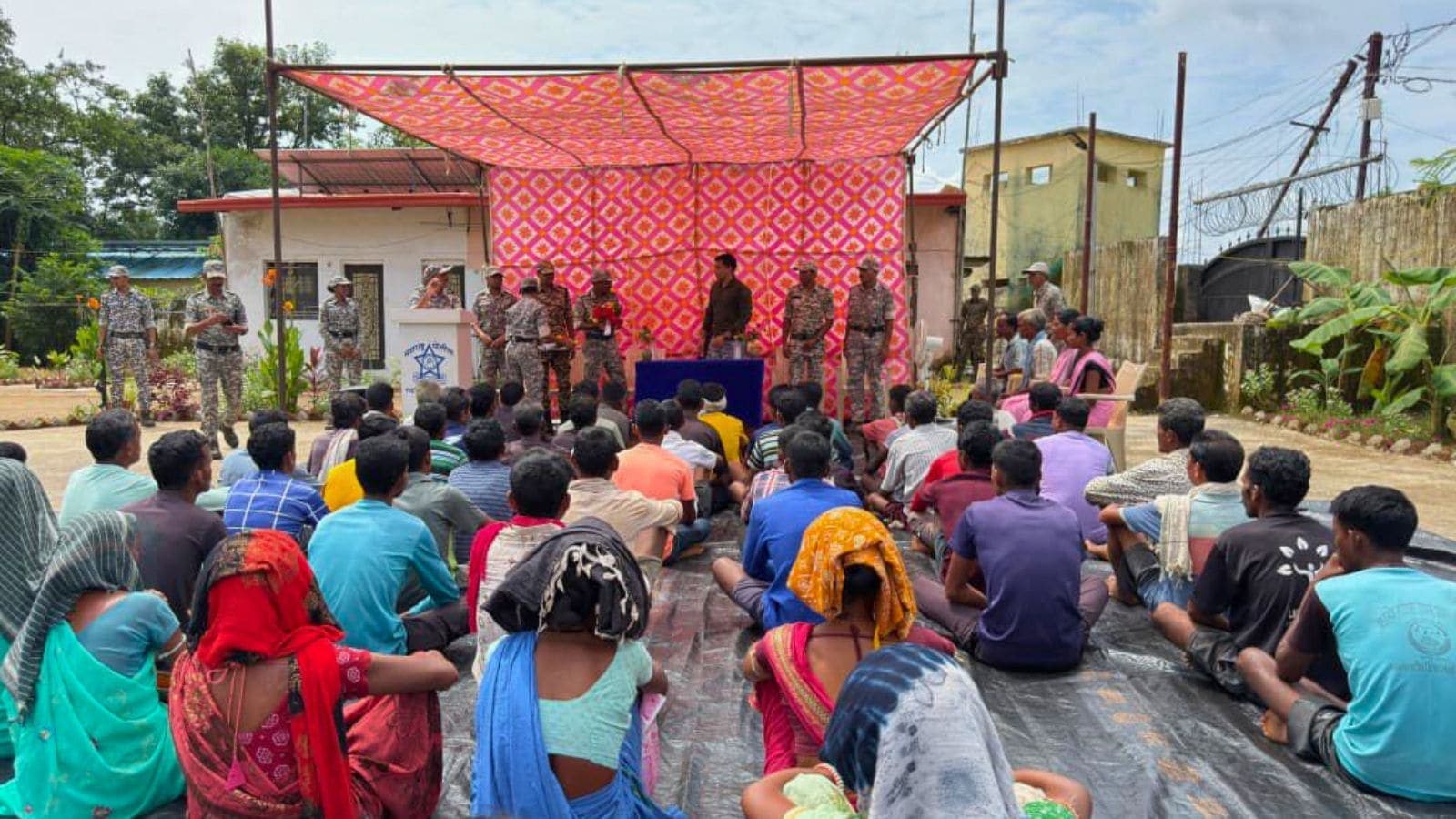
Jharkhand Cabinet approves PESA rules, empowering Gram Sabhas in Scheduled Areas.
Summary
The Jharkhand Cabinet has approved the state-specific Panchayats (Extension to Scheduled Areas) Act (PESA) rules. This significant move aims to empower Gram Sabhas in the state's Scheduled Areas, granting them greater autonomy over local governance and natural resources. The approval is crucial for implementing the central PESA Act of 1996, strengthening tribal self-rule and participatory democracy in Jharkhand.
Key Points
- 1The Jharkhand Cabinet approved the state's Panchayats (Extension to Scheduled Areas) Act (PESA) Rules.
- 2The PESA Act, 1996, extends Part IX of the Constitution related to Panchayats to Fifth Schedule Areas.
- 3Jharkhand is one of the ten states with Fifth Schedule Areas where PESA is applicable.
- 4The approved rules aim to empower Gram Sabhas with control over natural resources, minor forest produce, and local development planning.
- 5PESA rules ensure tribal self-rule and consultation of Gram Sabhas on matters like land acquisition and resettlement.
In-Depth Analysis
The recent approval of the state-specific Panchayats (Extension to Scheduled Areas) Act (PESA) rules by the Jharkhand Cabinet marks a pivotal moment in India's journey towards decentralized governance and tribal empowerment. This move is not merely an administrative formality; it represents a significant step in actualizing the spirit and letter of the PESA Act, 1996, which was designed to grant self-rule to tribal communities in Fifth Schedule Areas.
**The Genesis of PESA: A Historical Imperative**
For decades, tribal communities across India faced unique challenges stemming from their distinct socio-cultural structures, traditional resource management practices, and often, their marginalization within mainstream governance systems. The conventional Panchayati Raj Institutions (PRIs), established by the 73rd Constitutional Amendment Act, 1992, while revolutionary for rural self-governance, were deemed unsuitable for Scheduled Areas due to their failure to adequately recognize tribal customary laws, social and religious practices, and traditional management practices of community resources. This realization led to the formation of the Dilip Singh Bhuria Committee in 1995, which recommended a separate legal framework for these regions. The committee's report emphasized the need to respect and preserve the customs and traditions of tribal people, their cultural identity, and their traditional rights over natural resources.
**The PESA Act, 1996: A Landmark Legislation**
Responding to these recommendations, the Parliament enacted the Panchayats (Extension to Scheduled Areas) Act, 1996. This landmark legislation extended Part IX of the Constitution, pertaining to Panchayats, to the Fifth Schedule Areas with certain modifications and exceptions. Article 243M of the Constitution explicitly empowers Parliament to make such provisions. The PESA Act aimed to ensure tribal self-rule through the Gram Sabha, which was recognized as the central body for local governance, decision-making, and protection of community resources. It mandated state legislatures to enact laws in consonance with customary law, social and religious practices, and traditional management practices of community resources. Key provisions included giving Gram Sabhas control over minor forest produce, minor water bodies, minor minerals, land acquisition, resettlement and rehabilitation, and management of local plans.
**Jharkhand's PESA Rules: Bringing the Act to Life**
Jharkhand, being one of the ten states with Fifth Schedule Areas, has a significant tribal population whose socio-economic fabric is deeply intertwined with forests and natural resources. Despite the central PESA Act being in force since 1996, its effective implementation has been a slow and challenging process across many states due to the absence or inadequacy of state-specific rules. The recent approval of the PESA rules by the Jharkhand Cabinet is therefore monumental. These rules are expected to empower Gram Sabhas with legally binding authority over local governance and the management of natural resources, including minor forest produce, minor minerals, and water bodies. They also mandate consultation with Gram Sabhas on matters of land acquisition, resettlement, and rehabilitation, ensuring that development initiatives do not displace or disempower tribal communities without their free, prior, and informed consent. This institutionalizes participatory democracy at the grassroots level, giving tribal communities a decisive say in matters directly affecting their lives and livelihoods.
**Key Stakeholders and Significance for India**
The primary stakeholders are the **Gram Sabhas and the tribal communities** of Jharkhand, who will now have enhanced autonomy and control. The **Jharkhand Government** is a crucial stakeholder, responsible for drafting, approving, and ensuring the effective implementation of these rules. The **Central Government** played its role by enacting the PESA Act. For India, this move reinforces the commitment to social justice and inclusive governance. It strengthens the constitutional mandate of protecting tribal rights under the Fifth Schedule (Article 244(1)). Economically, it can lead to more sustainable and equitable management of natural resources, potentially reducing conflicts over land and resources. Politically, it deepens decentralization, empowering the lowest tier of governance and fostering a sense of ownership among local communities. Socially, it helps preserve tribal culture, traditions, and identity, which are often threatened by external developmental pressures.
**Future Implications and Challenges**
While the approval of PESA rules is a welcome development, the real challenge lies in their effective implementation. Future implications include the potential for genuine self-governance and economic upliftment of tribal communities. However, obstacles such as lack of awareness among tribal communities about their rights, bureaucratic resistance, capacity building for Gram Sabhas, and potential conflicts with existing state laws or corporate interests, need to be addressed. Ensuring that the Gram Sabhas are genuinely empowered and not merely rubber stamps for government decisions will be crucial. This initiative in Jharkhand could also serve as a model or impetus for other PESA-implementing states to expedite or strengthen their own PESA rules, further solidifying tribal self-rule across the nation.
Exam Tips
This topic falls under GS Paper II: Governance, Constitution, Social Justice, and Welfare Schemes. Focus on the constitutional provisions (Fifth Schedule, Article 243M) and the PESA Act, 1996.
Study the objectives, key provisions, and significance of the PESA Act. Understand the role of Gram Sabhas and their powers as envisioned by PESA. Compare and contrast PESA with the 73rd Constitutional Amendment Act.
Common question patterns include direct questions on PESA provisions, analytical questions on its impact on tribal self-governance, challenges in implementation, and its role in protecting tribal rights and resources. Be prepared for questions comparing Fifth and Sixth Schedule areas.
Remember specific dates like 1995 (Bhuria Committee) and 1996 (PESA Act). Understand 'Fifth Schedule Areas' and which states fall under it.
For Mains, prepare arguments on how PESA contributes to inclusive development, environmental protection, and social justice. Also, analyze the hurdles in its effective implementation.