



Relevant for Exams
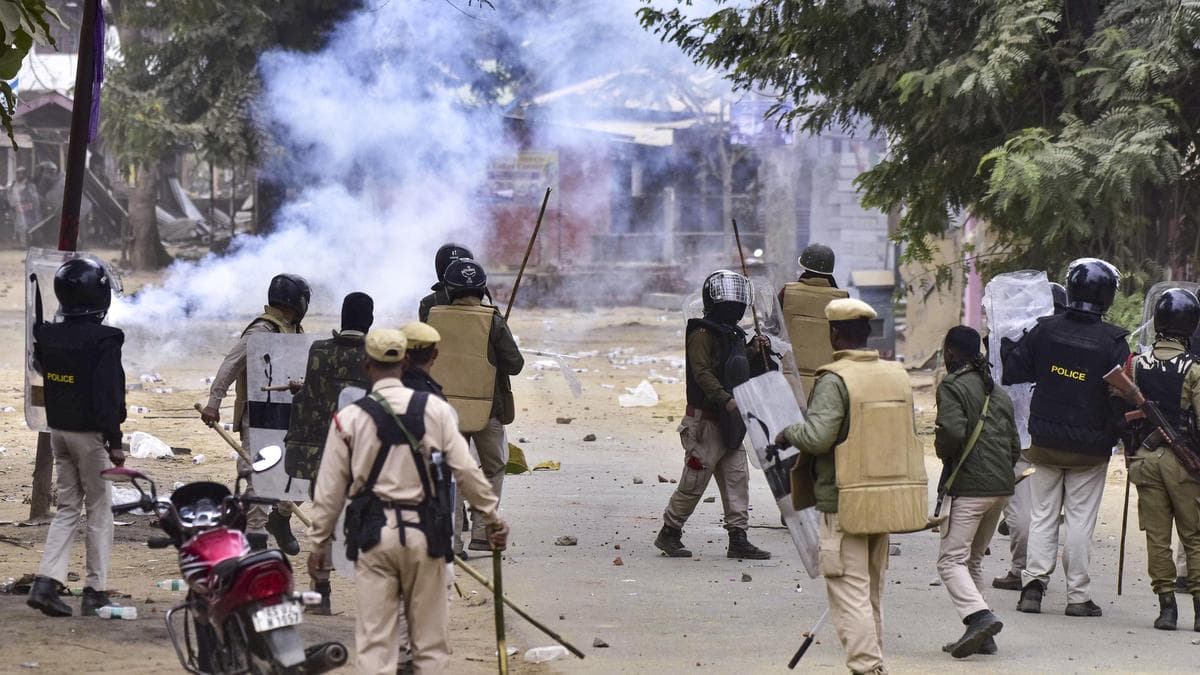
Internet suspended in Assam's Karbi Anglong and West Karbi Anglong due to law and order issues.
Summary
Internet services were suspended in Assam's Karbi Anglong and West Karbi Anglong districts following reports from District Magistrates on December 23 regarding a serious "law and order" situation. This measure is a common administrative response to prevent the spread of misinformation and maintain public order during unrest, highlighting the state's power to restrict communication under such circumstances. For exams, it's relevant for understanding internal security measures and geographical locations.
Key Points
- 1Internet services were suspended in two districts of Assam: Karbi Anglong and West Karbi Anglong.
- 2The suspension was initiated following reports from District Magistrates on December 23.
- 3The primary reason cited for the suspension was a serious "law and order" situation.
- 4The action was taken by the Government of Assam to control potential unrest.
- 5The measure highlights the state's authority to suspend internet under Section 144-like powers to maintain public order.
In-Depth Analysis
The suspension of internet services in Assam's Karbi Anglong and West Karbi Anglong districts on December 23, following reports of a serious "law and order" situation from District Magistrates, is a significant event that highlights the complex interplay between state authority, public order, and fundamental rights in India, particularly in sensitive regions like the Northeast. This administrative action, while seemingly localized, carries profound implications for internal security, governance, and digital rights across the nation.
**Background Context and Historical Roots:**
Karbi Anglong and West Karbi Anglong are districts in Assam known for their rich ethnic diversity, primarily inhabited by the Karbi tribe, along with Dimasa, Rengma, Kuki, and other communities. This region has a long history of ethnic tensions, demands for greater autonomy, and occasional insurgency. The aspiration for a separate 'Karbi State' or an 'Autonomous State' within Assam, under Article 244(A) of the Constitution, has fueled various movements and, at times, led to armed conflict involving groups like the United People's Democratic Solidarity (UPDS) and Karbi Longri NC Hills Liberation Front (KLNLF). While many insurgent groups have signed peace accords with the government over the years, the underlying socio-economic grievances and ethnic fault lines often resurface, leading to sporadic unrest. The internet, in such volatile environments, can become a double-edged sword, facilitating coordination for protests or dissemination of vital information, but also enabling the spread of misinformation, hate speech, and mobilization for violence, thus prompting state intervention.
**The Incident and Key Stakeholders:**
On December 23, the Government of Assam's Home Department initiated the internet suspension based on reports from the District Magistrates of Karbi Anglong and West Karbi Anglong. The DMs, as the principal executive and administrative officers of their respective districts, are primarily responsible for maintaining law and order. Their reports of a "serious law and order situation" provided the immediate justification for the suspension. The key stakeholders involved are therefore the Government of Assam, particularly its Home Department, the District Magistrates, the local populace (whose access to information and communication is restricted), and various ethnic groups whose inter-community relations might be strained. The suspension directly impacts daily life, commerce, education, and access to essential services that increasingly rely on digital connectivity.
**Constitutional and Legal Framework:**
The state's power to suspend internet services is not arbitrary but is governed by specific legal provisions and judicial pronouncements. The primary legal basis for such suspensions comes from the **Temporary Suspension of Telecom Services (Public Emergency or Public Safety) Rules, 2017**, framed under the **Indian Telegraph Act, 1885**. These rules empower the Union Home Secretary or a State Home Secretary to issue orders for temporary suspension of telecom services, including internet, in cases of "public emergency" or in the interest of "public safety." Furthermore, powers under **Section 144 of the Criminal Procedure Code (CrPC), 1973**, which allows District Magistrates to issue orders in urgent cases of apprehended danger or nuisance, are often invoked alongside or in conjunction with these rules to restrict public gatherings and, by extension, communication channels. These actions, however, must be balanced against fundamental rights, particularly **Article 19(1)(a) – Freedom of Speech and Expression**, which the Supreme Court has interpreted to include the right to access the internet, and **Article 19(1)(g) – Freedom to practice any profession, or to carry on any occupation, trade or business**, which is severely hampered by internet shutdowns. The landmark judgment in **Anuradha Bhasin v. Union of India (2020)** by the Supreme Court emphasized that internet shutdowns must be temporary, necessary, and proportionate, subject to judicial review, and based on principles of public emergency or public safety, not mere apprehension of law and order issues.
**Significance for India:**
This incident underscores several critical issues for India. Firstly, it highlights the ongoing challenges of internal security and maintaining peace in the Northeast, a region critical for India's Act East Policy. Secondly, it brings into focus the delicate balance between state security imperatives and citizens' fundamental rights. Frequent internet shutdowns, while intended to curb unrest, raise concerns about digital authoritarianism and the erosion of democratic freedoms. Economically, such suspensions cause significant disruption to local businesses, education, and public services, hindering the digital India initiative. Socially, they can exacerbate grievances, create an information vacuum, and further alienate populations, potentially making long-term peace more elusive.
**Future Implications:**
The future implications of such actions are multifaceted. While short-term suspensions might help de-escalate immediate threats, prolonged or frequent shutdowns can have detrimental effects on trust between the state and its citizens. They can impede economic development, especially in a world increasingly reliant on digital connectivity. For the Northeast, ensuring lasting peace requires addressing the root causes of unrest, including socio-economic disparities and demands for political autonomy, rather than solely relying on restrictive measures. The legal scrutiny of internet shutdowns, as mandated by the Supreme Court, necessitates greater transparency and accountability from authorities, pushing for more precise and less disruptive methods of maintaining law and order. This incident will likely contribute to the ongoing national debate on digital rights, surveillance, and the appropriate use of state power in the digital age.
In conclusion, the internet suspension in Karbi Anglong and West Karbi Anglong is a microcosm of broader governance challenges in India. It necessitates a nuanced approach that prioritizes both security and fundamental rights, leverages technology for development, and fosters inclusive political solutions to address historical grievances.
Exam Tips
This topic falls under GS-II (Polity & Governance - Fundamental Rights, State's power, Centre-State relations) and GS-III (Internal Security - Challenges to internal security, Role of state and non-state actors, Communication networks and their role).
Study related topics like the powers of District Magistrates (CrPC Section 144), the Indian Telegraph Act, 1885, the Temporary Suspension of Telecom Services (Public Emergency or Public Safety) Rules, 2017, and the Supreme Court's judgment in Anuradha Bhasin v. Union of India (2020).
Common question patterns include: analytical questions on balancing fundamental rights (Article 19) with national security; case studies on internet shutdowns and their legality/implications; direct questions on constitutional provisions and legal acts related to internet suspension; and questions on challenges to internal security in Northeast India.
Pay attention to the specific articles (19(1)(a), 19(1)(g), 19(2)) and legal frameworks (CrPC 144, Indian Telegraph Act, 2017 Rules) as they are frequently tested.
Understand the socio-political and historical context of regions like Northeast India, including demands for autonomy and ethnic conflicts, as they provide the 'why' behind such administrative actions.
Related Topics to Study
Full Article
The notification stated that the Government of Assam received reports from the District Magistrates of Karbi Anglong and West Karbi Anglong on December 23 of a serious "law and order" situation in two districts