

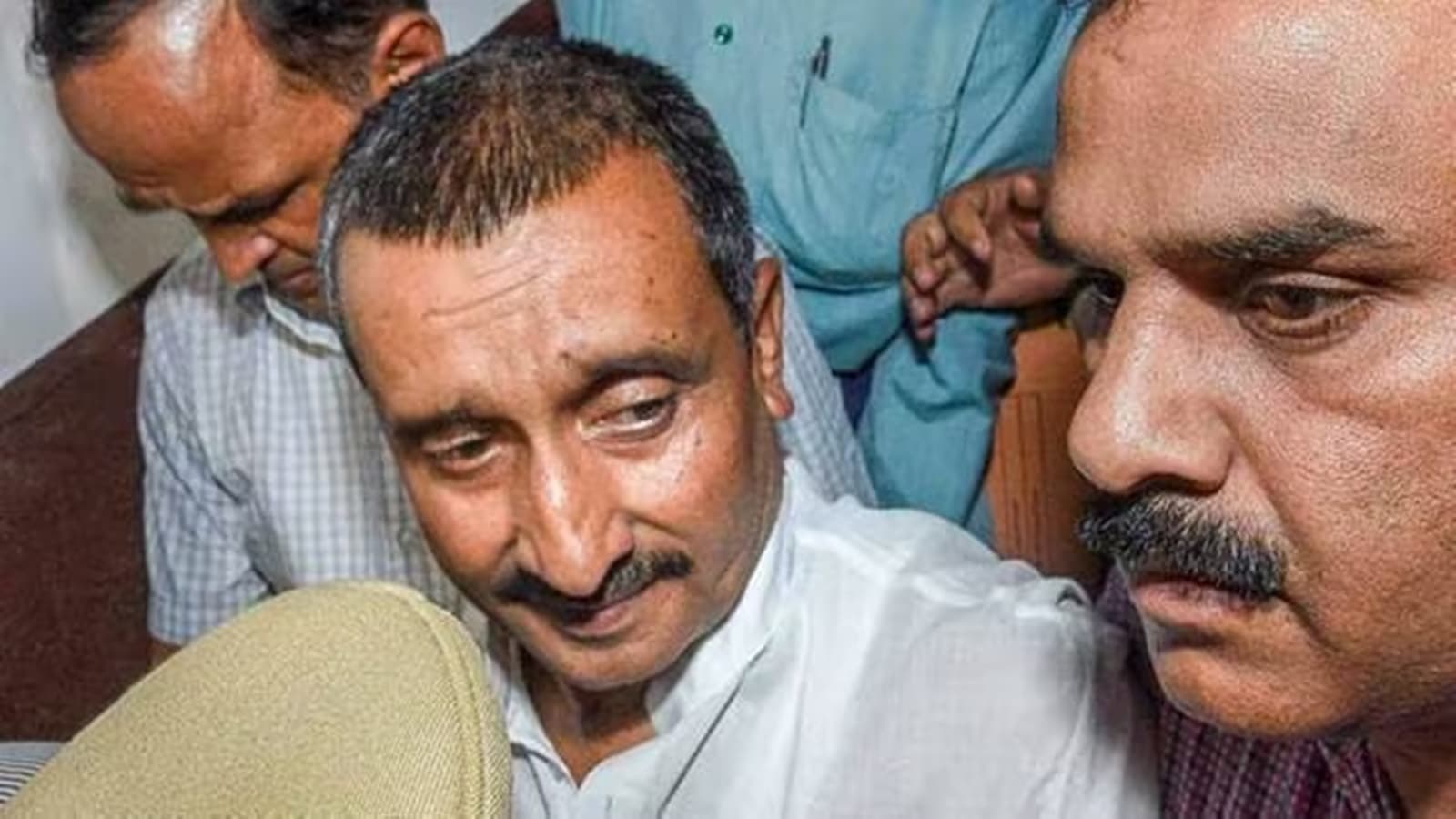


Content unavailable: Cannot extract exam-relevant facts or details from the article.
Summary
Content for this article is explicitly stated as 'No content available'. Therefore, a detailed summary explaining what happened, why it matters, or its significance for competitive exam preparation cannot be generated. No exam-relevant facts or specific details can be extracted from the provided input.
Key Points
- 1Article content is explicitly stated as 'No content available'.
- 2Due to missing content, specific facts, dates, names, or numbers cannot be extracted.
- 3No exam-relevant MCQs can be formulated from the provided input.
- 4The subject, Kuldeep Singh Sengar and Unnao rape case, is significant but details are absent.
- 5Further analysis and fact extraction are impossible without the article's body.
In-Depth Analysis
The article title, "In eye of Unnao rape case storm, ex-BJP leader’s jail term suspended: Who is Kuldeep Singh Sengar," points to a highly significant and sensitive topic in India's recent history. While the specific content of the article regarding the suspension of Kuldeep Singh Sengar's jail term is unavailable, the broader context of the Unnao rape case itself offers profound insights into critical aspects of Indian society, governance, and the justice system, making it highly relevant for competitive exam aspirants.
The Unnao rape case came to national prominence in 2018, involving allegations of sexual assault against Kuldeep Singh Sengar, a powerful politician and then a BJP MLA from Unnao, Uttar Pradesh. The case was not just about a sexual assault but evolved into a saga highlighting the immense challenges faced by victims when confronting powerful individuals. The victim, a minor at the time of the alleged assault in 2017, and her family faced severe intimidation and violence, including the death of her father in judicial custody, her two aunts in a suspicious car accident, and the victim herself sustaining critical injuries. These events intensified public outrage and brought into sharp focus the issues of political impunity, victim protection, and the efficiency of the justice delivery system.
Key stakeholders in this complex case included the victim and her family, who displayed extraordinary courage in pursuing justice against an influential figure. Kuldeep Singh Sengar, as the accused, represented the challenge of holding powerful politicians accountable. The Uttar Pradesh Police initially faced criticism for inaction and alleged attempts to shield Sengar, leading to the case being transferred to the Central Bureau of Investigation (CBI) by the Allahabad High Court. The judiciary, from trial courts to the Supreme Court, played a pivotal role in ensuring the case progressed, transferring it out of Uttar Pradesh to Delhi, and ordering daily hearings. Civil society organizations and the media were instrumental in keeping the case in the public eye, exerting pressure for justice.
This case holds immense significance for India on multiple fronts. Socially, it underscored the persistent vulnerability of women and children, particularly from marginalized backgrounds, to sexual violence and exploitation, and the additional hurdles they face when perpetrators are politically connected. Politically, it sparked debates on the criminalization of politics, the accountability of political parties for their members' actions, and the need for stricter vetting of candidates. The BJP, in particular, faced scrutiny for its initial reluctance to take action against Sengar. From a governance perspective, the case exposed lacunae in the law enforcement and judicial systems, particularly concerning witness protection and ensuring a fair trial environment free from intimidation. The Supreme Court's intervention highlighted the judiciary's role as a guardian of fundamental rights when other state organs falter.
Historically, the Unnao case can be seen in continuity with other high-profile sexual assault cases like the Nirbhaya case (2012), which led to significant legal reforms. These cases collectively pushed for stronger laws and better implementation mechanisms for women's safety. The legal framework brought into play included the **Protection of Children from Sexual Offences (POCSO) Act, 2012**, under which Sengar was eventually convicted. Furthermore, the **Criminal Law (Amendment) Act, 2013**, enacted post-Nirbhaya, and its subsequent amendment in **2018**, which introduced harsher penalties for child rape, were crucial. Constitutional provisions like **Article 21 (Right to Life and Personal Liberty)**, encompassing the right to live with dignity and safety, and **Article 14 (Equality Before Law)**, emphasizing that all citizens are equal before the law irrespective of their power, were central to the victim's struggle for justice. The Supreme Court's intervention also highlighted the importance of **Article 32 and 226**, granting citizens the right to constitutional remedies.
The future implications of such cases are profound. They underscore the ongoing need for comprehensive judicial reforms, including fast-track courts for sensitive cases, robust witness protection programs (like the **Witness Protection Scheme, 2018**), and enhanced training for law enforcement agencies to handle cases involving sexual assault victims with sensitivity and professionalism. It also reiterates the importance of political parties adopting a zero-tolerance policy towards members accused of serious crimes and prioritizing ethics over political expediency. Ultimately, the Unnao case serves as a stark reminder of the continuous struggle for gender justice and the strengthening of the rule of law in India, demanding vigilance from both the state and civil society to prevent such travesties of justice.
Given the explicit statement that the article's content is 'No content available', the specific details of Kuldeep Singh Sengar's jail term suspension are not discussed here. However, the broader context and implications of the Unnao rape case remain highly relevant for competitive exams.
Exam Tips
This topic falls under GS Paper I (Indian Society/Social Issues), GS Paper II (Polity & Governance, Social Justice), and Current Affairs. Focus on the legal aspects (POCSO Act, IPC sections, Criminal Law Amendments) and constitutional provisions (Article 14, 21).
Study the evolution of laws related to women's safety and child protection in India. Understand the key provisions of the POCSO Act, 2012, and the Criminal Law (Amendment) Acts of 2013 and 2018. Pay attention to the role of the judiciary in such high-profile cases.
Be prepared for questions on judicial reforms, witness protection mechanisms, political accountability, and the challenges faced by victims of sexual assault in India. Case studies on similar incidents or questions on the ethical dilemmas involved are common.