


Relevant for Exams
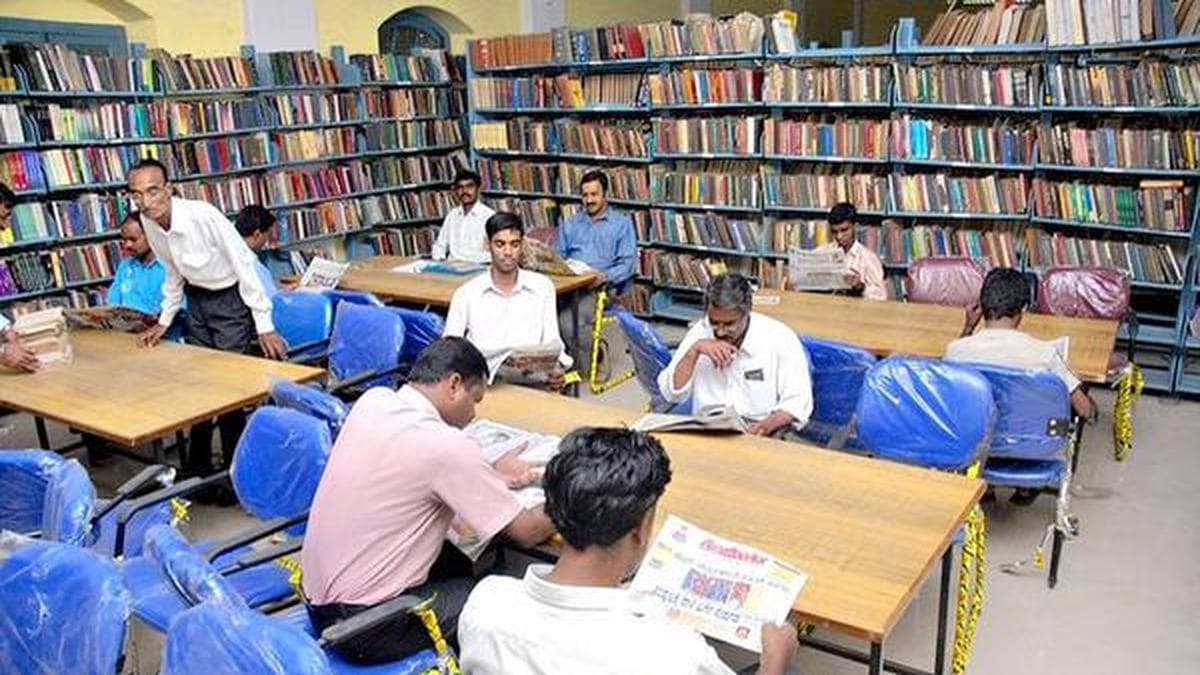
Govt hasn't procured library books for 4 years; local bodies owe ₹526.83 cr library cess.
Summary
The government has reportedly not procured books for public libraries for four years, raising concerns about the availability of resources. This issue is further exacerbated by local bodies owing ₹526.83 crore, collected as library cess, to the concerned department. This situation highlights critical lapses in public library funding, procurement processes, and financial accountability of local administration, which are important aspects for competitive exam preparation related to governance and public services.
Key Points
- 1The government has not procured books for public libraries for a period of four years.
- 2Local bodies collectively owe the concerned department a sum of ₹526.83 crore.
- 3The outstanding amount of ₹526.83 crore was collected by local bodies as library cess.
- 4The non-procurement of books directly impacts the availability of new reading material in public libraries.
- 5The issue highlights significant challenges in the financial management and utilization of funds collected for public library development.
In-Depth Analysis
The reported stagnation in book procurement for public libraries for four years, coupled with local bodies owing a colossal ₹526.83 crore from collected library cess, exposes a critical failure in India's public service delivery and financial accountability mechanisms. This isn't merely an administrative hiccup; it strikes at the very heart of accessible education, information dissemination, and social equity.
**Background Context: The Role of Libraries and Library Cess**
Public libraries in India have historically been pillars of knowledge, particularly for those with limited access to private resources. From the colonial-era Imperial Library (now National Library of India) to post-independence efforts, libraries have been seen as vital for fostering literacy, critical thinking, and informed citizenry. After independence, the need for a robust public library system was recognized, leading to the establishment of the Raja Rammohun Roy Library Foundation (RRRLF) in 1972, an autonomous body under the Ministry of Culture, Government of India, tasked with promoting and supporting public library movements. Many states, recognizing the importance of sustained funding, enacted specific library legislation. The Tamil Nadu Public Libraries Act, 1948, was a pioneering effort, followed by states like Andhra Pradesh (1960) and Karnataka (1965). A common feature of these acts was the provision for a 'library cess' – a surcharge on property tax or land revenue, specifically earmarked for library development and maintenance. This cess was designed to create a dedicated, sustainable funding stream, collected by local bodies and remitted to the state library department or authority.
**What Happened: A Dual Failure**
The current situation highlights a dual failure. Firstly, the state government or the concerned department has reportedly not procured books for public libraries for four consecutive years. This directly starves libraries of new content, rendering their collections outdated and less appealing, especially to younger generations. In an age of rapidly evolving information, a library without new books loses its relevance. Secondly, and perhaps more alarmingly, local bodies (Panchayats and Municipalities) have failed to remit ₹526.83 crore collected as library cess to the appropriate department. This amount, specifically collected from citizens for library development, is either lying unutilized with local bodies or has been diverted, representing a significant breach of public trust and financial discipline.
**Key Stakeholders Involved**
* **State Government/Culture/Education Department:** The primary authority responsible for policy formulation, budget allocation, procurement of library materials, and oversight of the public library system. Their inaction on book procurement is central to the problem.
* **Local Bodies (Panchayats, Municipalities):** Responsible for collecting the library cess from citizens as mandated by state library acts. Their failure to remit these funds to the designated department is a critical lapse in fiscal accountability.
* **Public Libraries:** The institutions directly impacted, struggling with outdated collections and lack of resources, unable to fulfill their mandate effectively.
* **Citizens/Readers:** The ultimate beneficiaries who are deprived of updated knowledge, educational resources, and community spaces. This particularly affects students, researchers, and economically weaker sections who rely heavily on public libraries.
* **Raja Rammohun Roy Library Foundation (RRRLF):** Though a central body, it works in partnership with states to develop libraries. Such financial mismanagement at the state and local level undermines its efforts.
**Why This Matters for India: Social, Governance, and Economic Impact**
This issue has profound implications for India. Socially, it exacerbates the existing knowledge gap and digital divide. Public libraries are crucial for promoting literacy, lifelong learning, and providing access to information for marginalized communities who cannot afford books or internet access. Stagnation directly harms human development. From a governance perspective, it exposes severe lapses in financial management, inter-governmental fiscal transfers, and accountability. The failure to utilize earmarked funds collected from citizens erodes public trust in local governance and state administration. Economically, a vibrant library system can support local publishing industries and contribute to an informed workforce. The lack of new books also limits opportunities for skill development and research.
**Historical Context and Constitutional Provisions**
The concept of public libraries falls under the **State List (Entry 12 - Libraries, Museums and other similar institutions controlled or financed by the State)** of the Seventh Schedule of the Indian Constitution, granting states the primary legislative and administrative authority. This is why various states have their own library acts and mechanisms for funding, including the library cess. The **73rd and 74th Constitutional Amendment Acts (1992)**, which gave constitutional status to Panchayati Raj Institutions and Urban Local Bodies respectively, empower these local bodies to collect certain taxes and manage local services. While libraries are not explicitly mentioned in the Eleventh or Twelfth Schedule in all states, their development is often linked to local governance and community welfare, making the collection of cess by local bodies a legitimate function, albeit with the obligation to remit funds. The current situation signifies a breakdown in this constitutional and statutory framework of fiscal federalism and local self-governance.
**Future Implications**
If left unaddressed, this situation will lead to the further degradation and eventual irrelevance of public libraries in India. This could widen educational inequalities, especially in rural and remote areas. There is an urgent need for the state government to audit the unremitted cess amounts, ensure their transfer, and streamline procurement processes. Furthermore, a review of existing library legislation and funding mechanisms may be necessary to ensure their effectiveness and accountability. The future might also see a greater push for digital libraries and e-resources, but this cannot entirely replace the role of physical libraries, particularly in bridging the digital divide.
Exam Tips
This topic falls under 'Indian Polity and Governance' (UPSC GS-II), 'Social Justice' (UPSC GS-II), and 'Public Administration'. Focus on the constitutional provisions related to local self-governance (73rd & 74th Amendments), fiscal federalism, and the State List.
Study related topics like the role of the Raja Rammohun Roy Library Foundation (RRRLF), state-specific library acts, challenges in public service delivery, and mechanisms of financial accountability in local bodies. Understand the concept of 'cess' vs. 'tax'.
Common question patterns include: analytical questions on governance failures and their impact on social welfare; essay questions on the importance of public libraries in a democracy; case studies on financial mismanagement in local bodies; and direct questions on constitutional provisions related to state and local finances.
Be prepared to discuss solutions and reforms for strengthening public library systems and improving financial accountability in local self-governance.
Understand the difference between central and state responsibilities regarding social sector schemes and institutions, as highlighted by the State List entry for libraries.