


Relevant for Exams
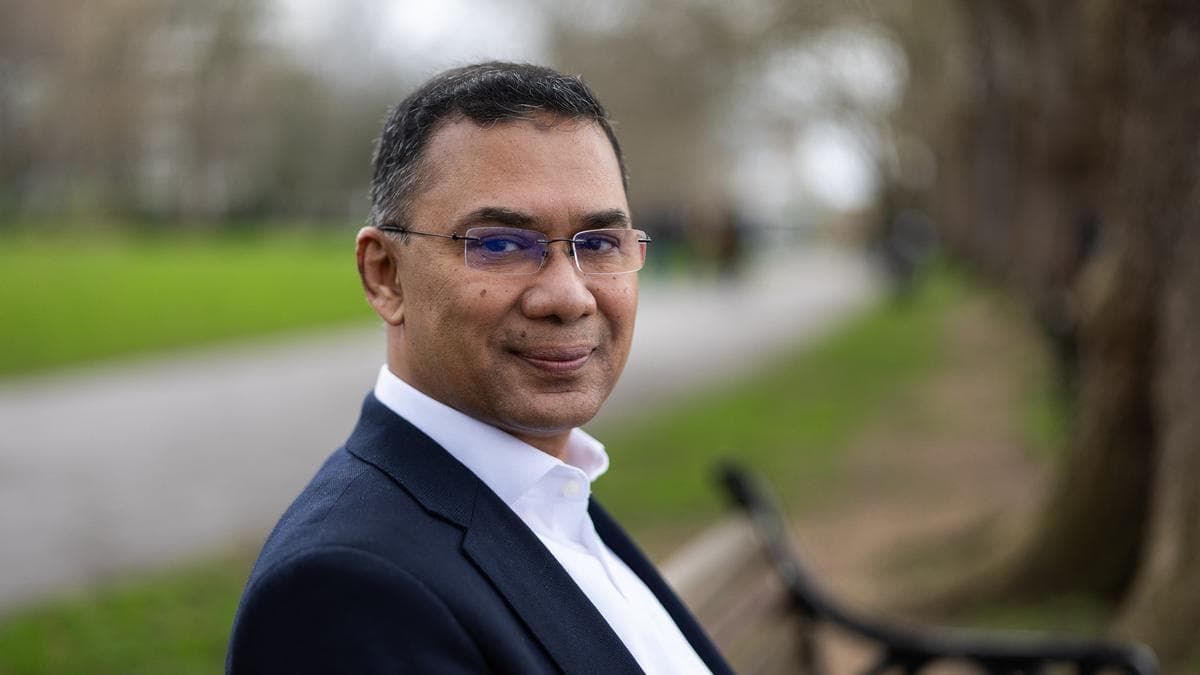
BNP leader Tarique Rahman ends 18-year UK exile, returns to Dhaka ahead of Bangladesh polls.
Summary
Tarique Rahman, the acting chairman of the Bangladesh Nationalist Party (BNP) and son of former PM Khaleda Zia, is slated to return to Dhaka on December 25. His return, after nearly 18 years of exile in the U.K., is a significant political development. It holds importance for upcoming polls in Bangladesh, potentially reshaping the political landscape and impacting regional relations, making it relevant for international current affairs sections in competitive exams.
Key Points
- 1Tarique Rahman is the acting chairman of the Bangladesh Nationalist Party (BNP).
- 2He is the son of former Bangladesh Prime Minister Khaleda Zia.
- 3Tarique Rahman is scheduled to arrive in Dhaka on December 25.
- 4He is returning after nearly 18 years in exile, primarily in the United Kingdom (U.K.).
- 5His return is significant ahead of the upcoming general elections in Bangladesh.
In-Depth Analysis
The impending return of Tarique Rahman, the acting chairman of the Bangladesh Nationalist Party (BNP) and son of former Prime Minister Khaleda Zia, to Dhaka on December 25 after nearly 18 years in exile, primarily in the United Kingdom, marks a pivotal moment in Bangladesh's tumultuous political landscape. This development is not merely an internal affair for Bangladesh; it carries significant implications for regional stability and, by extension, for India's strategic interests and 'Neighbourhood First Policy'.
To understand the gravity of this event, one must delve into the deeply entrenched political rivalry that has defined Bangladesh since its independence. The country's political narrative has largely been dominated by two women: Sheikh Hasina, daughter of Bangabandhu Sheikh Mujibur Rahman, and Khaleda Zia, widow of General Ziaur Rahman. Their respective parties, the Awami League (AL) and the Bangladesh Nationalist Party (BNP), represent contrasting ideological streams and historical legacies, often leading to intense, sometimes violent, political contention. Tarique Rahman emerged as a prominent figure within the BNP, serving as its Senior Joint Secretary General before his mother's premiership. However, his political career was marred by allegations of corruption and involvement in criminal activities.
What happened was that Tarique Rahman went into exile in 2008 during the tenure of a military-backed caretaker government (known as the '1/11' government), which had launched a massive anti-corruption drive. He faced numerous charges, including corruption, money laundering, and orchestrating the 2004 grenade attack on an Awami League rally that targeted Sheikh Hasina. While he was acquitted in some cases, he was convicted in others, notably receiving a seven-year sentence in 2016 for money laundering and a life sentence in 2018 for his alleged role in the 2004 grenade attack. Despite these convictions, he has continued to lead the BNP from abroad as its acting chairman, a position he assumed after his mother, Khaleda Zia, was jailed in 2018 on corruption charges.
Key stakeholders in this unfolding drama include Tarique Rahman himself, whose return could either invigorate or further destabilize the BNP; Khaleda Zia, his ailing mother, whose political future remains uncertain; the Bangladesh Nationalist Party (BNP), which has been struggling to regain political traction and has boycotted the upcoming general elections; the ruling Awami League (AL), led by Prime Minister Sheikh Hasina, which views Tarique Rahman as a symbol of corruption and political violence; and the Bangladesh Election Commission, tasked with ensuring fair elections amidst heightened political tensions. The international community, including the United States and the United Kingdom, is also closely watching the democratic process in Bangladesh.
For India, this development is critically important. Bangladesh is a vital neighbour, sharing a long land boundary and significant cultural ties. Political stability in Bangladesh is paramount for India's security, particularly for its Northeastern states, which share borders with Bangladesh. Instability could lead to an influx of refugees, increased cross-border crime, and potential safe havens for extremist elements. Economically, India has significant investments and connectivity projects with Bangladesh, such as the BBIN (Bangladesh-Bhutan-India-Nepal) initiative and various cross-border transport and energy links. Political turmoil could jeopardize these initiatives, impacting India's regional economic integration. Furthermore, India's 'Neighbourhood First Policy' prioritizes strong, stable, and friendly relations with its immediate neighbours. A government in Bangladesh that is less amenable to India's interests, or one that emerges from a highly contested and unstable political environment, could complicate bilateral relations.
Historically, the India-Bangladesh relationship has seen fluctuations depending on the party in power in Dhaka. The Awami League, under Sheikh Hasina, has generally fostered close ties with India, cooperating on security and connectivity. The BNP, traditionally, has been perceived as less aligned with India's strategic interests. Tarique Rahman's return, especially ahead of a general election that the BNP has decided to boycott, could intensify street protests and political confrontation, potentially leading to violence. His legal status, with multiple convictions and pending cases, also raises questions about whether he will be arrested upon arrival, further fueling political unrest.
Future implications are multifaceted. Tarique Rahman's return could be a gambit to galvanize the BNP's base and provide a visible leadership presence on the ground, potentially altering the party's election boycott strategy or intensifying their movement for a caretaker government. It could also lead to a direct confrontation with the Awami League government, especially if legal proceedings against him are expedited. The stability of Bangladesh's democratic institutions, its electoral process, and its relationship with India will all be tested. India will need to carefully navigate this evolving scenario, emphasizing democratic principles and stability, consistent with its 'Neighbourhood First Policy'. While there are no direct Indian constitutional articles immediately applicable to an individual's return to another country, India's foreign policy is guided by principles of non-interference and promotion of regional peace and security, often through economic and diplomatic channels outlined by its broader foreign policy objectives.
This event underscores the fragility of democratic transitions and the enduring impact of dynastic politics in the South Asian region, making it a crucial topic for understanding contemporary international relations and governance challenges.
Exam Tips
This topic primarily falls under 'International Relations' and 'Current Affairs (India and its Neighbourhood)' sections for UPSC, State PSCs, and SSC exams. It can also be relevant for 'Governance' as it touches upon democratic processes and political stability.
Study related topics such as India-Bangladesh bilateral relations, the 'Neighbourhood First Policy,' the roles of regional organizations like BIMSTEC and SAARC, and the internal political dynamics of Bangladesh (Awami League vs. BNP). Understand the historical context of the two dominant political families.
Common question patterns include MCQs on key political figures (Tarique Rahman, Khaleda Zia, Sheikh Hasina), political parties (BNP, Awami League), and the significance of such events for India. Descriptive questions might ask about the implications of political instability in Bangladesh for India's security and economic interests, or a critical analysis of India's 'Neighbourhood First' policy in this context.
Related Topics to Study
Full Article
BNP acting chairman and son of former PM Khaleda Zia, Tarique Rahman, to arrive on December 25 after nearly 18 years in exile in the U.K.; he is scheduled to address party members, visit ailing mother