


Relevant for Exams
Consul General Mr. Viswanathan paid tribute to former CM M.G. Ramachandran at VIT Vellore.
Summary
Consul General Mr. Viswanathan paid floral tributes to the statue of former Chief Minister M.G. Ramachandran at VIT campus in Vellore on his Memorial Day. This event highlights the continued remembrance of significant political figures in state politics. For competitive exams, it's relevant for general knowledge about prominent regional leaders and their contributions, especially for State PSCs.
Key Points
- 1Consul General Mr. Viswanathan paid floral tributes.
- 2Tributes were paid to former Chief Minister M.G. Ramachandran.
- 3The event occurred at the VIT campus in Vellore.
- 4The occasion was M.G. Ramachandran's Memorial Day.
- 5M.G. Ramachandran was the founder of the AIADMK party.
In-Depth Analysis
The event of a Consul General paying floral tributes to the statue of former Chief Minister M.G. Ramachandran at VIT campus in Vellore on his Memorial Day, while seemingly a local occurrence, offers a rich tapestry for understanding various facets of Indian politics, history, and even diplomatic engagement. It underscores the enduring legacy of regional leaders and the intricate interplay between state-level reverence and broader national and international contexts.
M.G. Ramachandran, affectionately known as MGR, was an iconic figure who transcended the realms of cinema and politics to become one of Tamil Nadu's most beloved Chief Ministers. Born in Sri Lanka in 1917, MGR's journey from a celebrated actor to a formidable politician is central to the narrative of Dravidian politics. He initially rose to prominence as a key figure in the Dravida Munnetra Kazhagam (DMK) under C.N. Annadurai and later M. Karunanidhi. However, ideological differences and power struggles led him to split from the DMK in 1972, founding his own party, the All India Anna Dravida Munnetra Kazhagam (AIADMK). He served as Chief Minister of Tamil Nadu for three consecutive terms from 1977 until his death in 1987, a testament to his immense popularity and charismatic leadership. His Memorial Day, observed on December 24th, commemorates his passing and continues to be a significant date for his followers and the political landscape of Tamil Nadu.
The act of Mr. Viswanathan, a Consul General, paying tributes to MGR is significant. While the specific country he represents is not mentioned, a Consul General is a diplomatic official representing their country's interests and citizens in a particular city or region within a foreign country. Their presence at such an event indicates a recognition of the local political and cultural significance of MGR. It highlights how foreign missions often engage with state-level political figures and historical icons, fostering goodwill and understanding, which can be seen as a form of soft diplomacy. The venue, VIT campus in Vellore, a prominent private educational institution, further emphasizes MGR's widespread respect beyond mere political affiliations.
For India, this event underscores several crucial aspects. Firstly, it reiterates the profound influence of regional leaders in shaping the country's political narrative. MGR's policies, particularly his pioneering Mid-day Meal Scheme (initiated in 1982), had a transformative impact on child nutrition and school enrollment in Tamil Nadu, later inspiring similar programs nationwide. These welfare initiatives exemplify how state-level governance can directly address socio-economic challenges, often aligning with the Directive Principles of State Policy enshrined in the Indian Constitution, such as Article 38 (promoting welfare of the people) and Article 47 (duty of the State to raise the level of nutrition and the standard of living). Secondly, it reinforces the robust federal structure of India, where states possess considerable autonomy and their political figures command immense respect, sometimes even attracting international diplomatic attention. The strength of regional parties like the AIADMK is a hallmark of India's multi-party democracy, as guaranteed by Article 19(1)(c) of the Constitution (freedom to form associations).
Historically, MGR's political ascent and the enduring rivalry between DMK and AIADMK are cornerstones of Tamil Nadu's Dravidian politics. This movement, rooted in social justice, anti-caste sentiments, and Tamil linguistic pride, has profoundly influenced state identity and Centre-State relations. MGR effectively harnessed his cinematic appeal to connect with the masses, employing populist rhetoric and welfare schemes that cemented his image as a leader working for the common man. His legacy continues to be a potent force, influencing electoral outcomes and political discourse in Tamil Nadu even decades after his demise. The AIADMK, despite internal challenges, still invokes his name and ideology to rally support.
Looking ahead, the continued remembrance of figures like MGR suggests that personality-driven politics and the reverence for charismatic leaders will remain an integral part of India's democratic fabric, especially at the state level. Such events also hint at the increasing importance of sub-national diplomacy, where foreign missions engage directly with state governments and local entities, reflecting India's diverse cultural and political landscape. This can have implications for economic partnerships, cultural exchanges, and overall bilateral relations, as states become more active players on the global stage. The tribute serves as a reminder of the deep roots of regional identity and the indelible mark left by leaders who combined mass appeal with concrete welfare initiatives, a model that continues to resonate in Indian governance.
In essence, the Consul General's tribute to MGR is not just a ceremonial act; it's a microcosm reflecting the power of regional identity, the dynamics of federalism, the legacy of welfare politics, and the subtle yet significant role of sub-national diplomacy in modern India.
Exam Tips
This topic falls under 'Indian Polity and Governance' (State Politics, Regional Parties, Federalism) and 'Indian History' (Post-Independence, particularly the history of Tamil Nadu and Dravidian Movement) sections of the syllabus. It also has relevance for 'Current Affairs' for general awareness.
When studying this, focus on related topics like the history of the Dravidian Movement (DMK, AIADMK), the concept of federalism in India (Articles 1, 245, 246), the role and impact of regional political parties, and significant welfare schemes initiated by state governments (e.g., Mid-day Meal Scheme).
Common question patterns can include: 'Who was M.G. Ramachandran and what were his major contributions as CM?' (for State PSCs and SSC), 'Discuss the evolution of Dravidian politics in Tamil Nadu.' (descriptive for Mains), 'Match the following Chief Ministers with their key welfare policies.' (objective), or 'Explain the significance of regional leaders in India's federal structure.' (analytical).
Related Topics to Study
Full Article
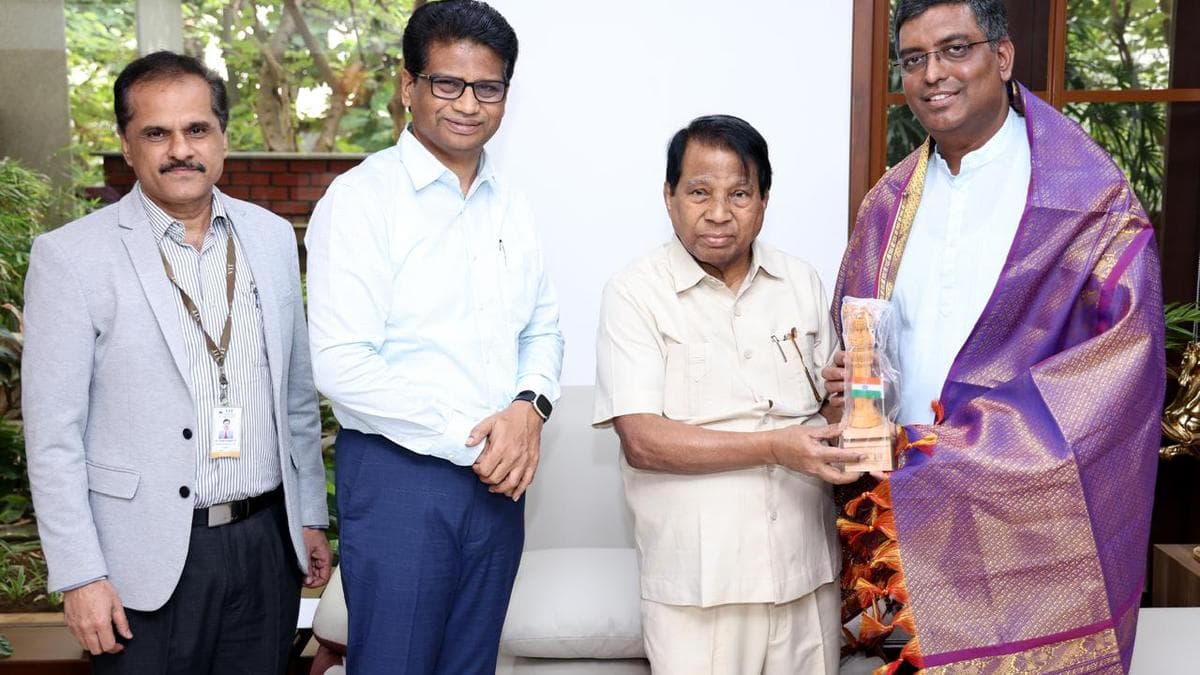
Mr. Viswanathan also paid floral tributes to the statue of former Chief Minister and AIADMK founder M.G. Ramachandran on his Memorial Day at VIT campus in Vellore on Wednesday