



Relevant for Exams
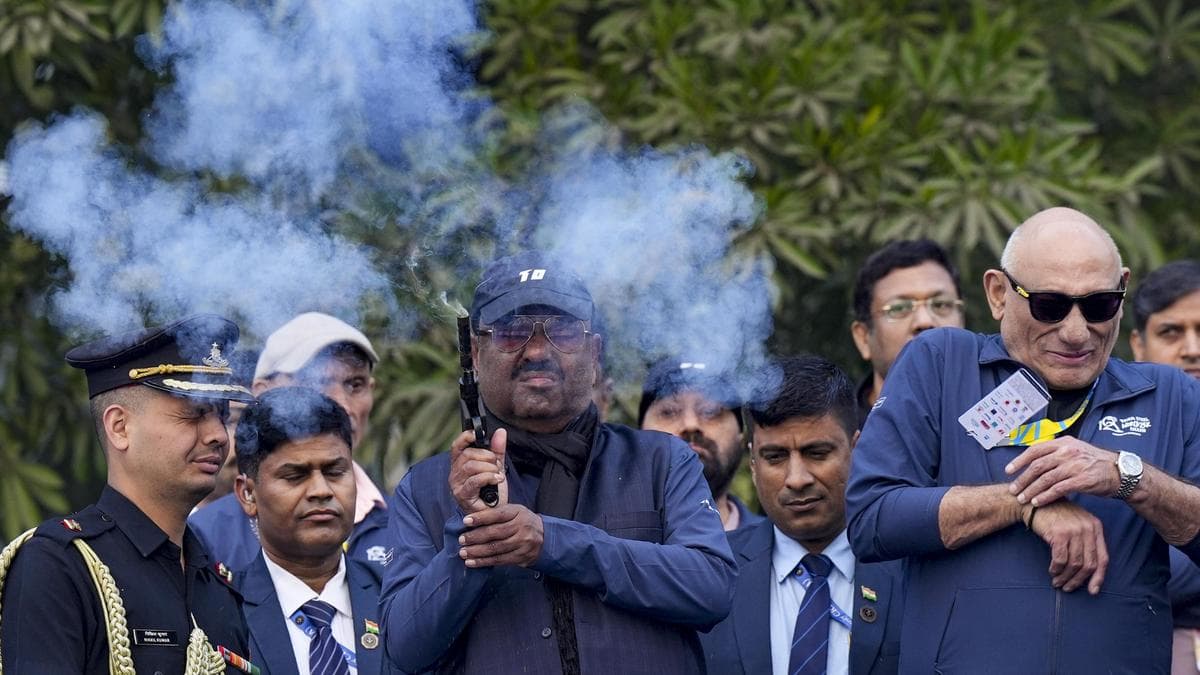
Bengal Governor orders inquiry into starter gun incident at Kolkata marathon; no injuries reported.
Summary
The Bengal Governor ordered an inquiry into an incident where a starter gun, fired at a marathon in Kolkata, emitted minor splinters. While no injuries were reported to the Governor or other attendees, the incident prompted a security review. This event highlights the Governor's role in maintaining public safety, though its direct relevance for competitive exams is low due to its minor nature.
Key Points
- 1The incident occurred during a marathon run held in Kolkata.
- 2The Bengal Governor ordered an inquiry into the firing of a starter gun.
- 3Minor splinters or particle-like fragments were emitted from the starter gun.
- 4It was confirmed that no injury was caused to the Governor or anyone else present.
- 5The inquiry was ordered by the Governor of Bengal, C.V. Ananda Bose (implied by context of 'Bengal Governor').
In-Depth Analysis
The incident involving the firing of a starter gun at a marathon in Kolkata, which led to the emission of minor splinters and prompted an inquiry by the Bengal Governor, C.V. Ananda Bose, might seem minor on the surface. However, for competitive exam aspirants, it serves as an excellent case study to delve into several critical aspects of Indian governance, security protocols, and the constitutional role of a Governor.
**Background Context and What Happened:**
The incident occurred during a public marathon event in Kolkata. A starter gun, typically used to signal the beginning of a race, was fired. While the intention was routine, the unexpected emission of minor splinters or particle-like fragments from the gun raised immediate safety concerns. Crucially, no injuries were reported to the Governor or any other individual present at the venue. Despite the lack of harm, Governor C.V. Ananda Bose promptly ordered an inquiry into the matter. This swift action underscores the importance placed on public safety and the vigilance required, especially when high-profile constitutional functionaries are present at public gatherings. The inquiry aims to ascertain the cause of the splinter emission, identify any negligence, and recommend measures to prevent recurrence.
**Key Stakeholders Involved:**
Several key stakeholders are involved in such an incident and its subsequent inquiry. Firstly, **the Governor of West Bengal, C.V. Ananda Bose**, is central. As the constitutional head of the state (Article 153), his presence at public events is a matter of state protocol and security. His decision to order an inquiry reflects his constitutional duty to uphold public safety and ensure good governance. Secondly, the **State Administration and Police Department** are crucial. Law and order, including VVIP security and the investigation of incidents, falls squarely under their purview. The police would be responsible for conducting the inquiry, collecting evidence, and identifying any lapses. Thirdly, the **Event Organizers** bear significant responsibility for ensuring the safety and security of participants and dignitaries at public events. Their selection of equipment, adherence to safety standards, and coordination with security agencies are critical. Finally, the **Public and Participants** are indirect stakeholders, whose safety and well-being are the ultimate concern.
**Why This Matters for India:**
This incident, despite its seemingly minor nature, holds significant implications for India. It highlights the paramount importance of **VVIP security protocols**. Governors, being constitutional heads, are protected under elaborate security frameworks. Any lapse, however small, can lead to a comprehensive review of these protocols. Secondly, it underscores the critical need for **stringent public safety measures at large gatherings**. Marathons, political rallies, and cultural festivals attract massive crowds, making them potential targets or sites for accidental mishaps. The incident emphasizes the need for thorough checks of all equipment and adherence to safety guidelines. Thirdly, it reinforces the **Governor's role as a guardian of public interest and safety**. While largely ceremonial, the Governor can exercise moral authority and direct the administration to act on matters of public concern, demonstrating accountability in governance. This proactive stance by the Governor contributes to public trust in the administrative machinery. Economically, any major security lapse can deter tourism and investment, while socially, it can erode public confidence in event management and state administration.
**Historical Context and Broader Themes:**
The role of the Governor has been a subject of extensive debate in India's constitutional history. Commissions like the **Sarkaria Commission (1983)** and the **Punchhi Commission (2007)** have extensively reviewed the powers, functions, and discretionary roles of the Governor. While controversies often revolve around political appointments and discretionary powers (like dissolving assemblies or inviting parties to form governments), incidents like this remind us of the Governor's fundamental role in maintaining public order and safety. This event ties into the broader themes of **accountability, administrative efficiency, and the balance of power** between the constitutional head and the elected government. It also highlights the constant challenge of balancing security needs with public accessibility at large events.
**Future Implications and Constitutional References:**
The inquiry's findings could lead to several future implications. There might be a review of standard operating procedures (SOPs) for equipment used at public events, particularly those involving VVIPs. Event organizers may face stricter guidelines and accountability for safety. Security agencies might refine their protocols for screening and managing public access points. From a constitutional perspective, the Governor's actions are rooted in his executive powers (Article 154) and his general role as the state's constitutional head (Article 153). While 'Public Order' and 'Police' fall under the State List (Entry 1 and 2, List II, Seventh Schedule) and are primarily managed by the elected state government, the Governor, as the constitutional head, has an overarching responsibility to ensure the state administration functions effectively and maintains peace and safety. The **Arms Act, 1959**, and various state police acts, while not directly applicable to a starter gun in its entirety, govern the use and safety of devices that could cause harm, underscoring the legal framework for public safety. This incident, therefore, serves as a poignant reminder of the multi-faceted responsibilities intertwined with the Governor's office and the continuous need for vigilance in public safety and security.
Exam Tips
This topic falls under 'Indian Polity & Governance' (UPSC Mains GS-II, State PSCs General Studies). Focus on the constitutional role and powers of the Governor (Articles 153-161, 163, 164) and their discretionary powers.
Study related topics like VVIP security protocols, disaster management (in the context of public event safety), and the role of state police in maintaining law and order (Seventh Schedule - State List).
Expect questions on the Governor's constitutional position, the balance of power between the Governor and the Chief Minister/Council of Ministers, and the various commissions (Sarkaria, Punchhi) that have reviewed the Governor's office. Also, be prepared for questions on public safety and event management.
Practice essay questions on 'The evolving role of the Governor in Indian federalism' or 'Challenges in ensuring public safety at large gatherings in India'.
Familiarize yourself with the administrative hierarchy and the chain of command in a state administration, especially concerning law and order and security.
Related Topics to Study
Full Article
It also noted that minor splinters or particle-like fragments were emitted from the starter gun upon firing, but confirmed that no injury was caused to the Governor or anyone else present at the venue.