


Relevant for Exams
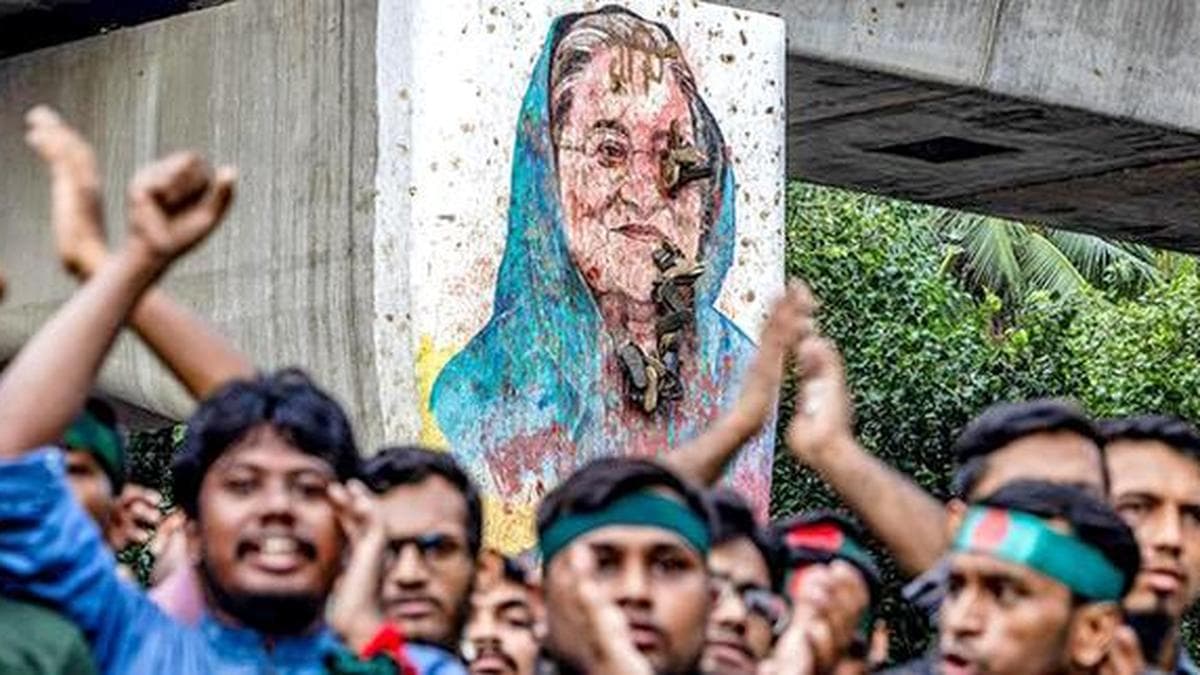
Bangladesh interim govt bars Awami League from election, first time since 1971.
Summary
Bangladesh's interim government has announced that the Awami League will be barred from participating in the upcoming general election. This marks a significant political development, as it is the first instance since Bangladesh's independence in 1971 that the Awami League, a historically dominant party, has been prohibited from contesting an election. This event is crucial for competitive exams, highlighting regional political dynamics and India's neighbourhood policy.
Key Points
- 1The Awami League has been barred from participating in the upcoming Bangladesh election.
- 2The decision was announced by the interim government of Bangladesh.
- 3This is the first time since 1971 that the Awami League will not be allowed to contest an election in Bangladesh.
- 4The Awami League is a major political party in Bangladesh, historically led by Sheikh Mujibur Rahman and currently by Sheikh Hasina.
- 5The event signifies a major political shift in Bangladesh's electoral landscape.
In-Depth Analysis
The political landscape of Bangladesh has been profoundly reshaped by the interim government's announcement to bar the Awami League (AL) from participating in the upcoming general election. This is not merely a procedural decision; it marks a monumental shift, being the first time since Bangladesh's hard-won independence in 1971 that the Awami League, a party intrinsically linked to the nation's founding, will be prohibited from contesting an election. Understanding this event requires delving into Bangladesh's tumultuous political history, the role of key players, and its significant implications for India and regional stability.
**Background Context and What Happened:**
Bangladesh's political history is characterized by periods of democratic rule interspersed with military coups and political instability. The Awami League, founded in 1949, played a pivotal role in the struggle for independence from Pakistan, led by Bangabandhu Sheikh Mujibur Rahman, who became the nation's first President. After his assassination in 1975, Bangladesh witnessed a series of military takeovers and a prolonged struggle for democracy. A recurring feature of Bangladeshi politics has been the demand for a 'caretaker government' system to oversee elections, a mechanism designed to ensure fairness and impartiality, especially after allegations of rigging under partisan governments. This system was abolished in 2011, leading to renewed political tensions and opposition demands for its reinstatement.
The current interim government came to power amidst a backdrop of escalating political unrest, mass protests, and allegations of human rights abuses and economic mismanagement against the previous Awami League government led by Prime Minister Sheikh Hasina. The opposition, primarily the Bangladesh Nationalist Party (BNP) and its allies, had been demanding the resignation of the AL government and the formation of a neutral caretaker administration to hold free and fair elections. The interim government, formed under these circumstances, has now taken the unprecedented step of barring the Awami League, citing reasons that are likely to include concerns over electoral integrity and past political actions, though specific justifications would be crucial to fully assess.
**Key Stakeholders Involved:**
1. **Awami League (AL):** As the party of Bangladesh's founding father, Sheikh Mujibur Rahman, and currently led by his daughter Sheikh Hasina, the AL has been a dominant force in Bangladeshi politics. Being barred from elections is an existential crisis for the party, potentially leading to widespread protests from its cadre and supporters.
2. **Interim Government:** This unelected body, often comprising non-partisan individuals, is tasked with creating a level playing field for elections. Its legitimacy and decisions are under intense scrutiny, both domestically and internationally. Its actions will define the credibility of the upcoming elections.
3. **Bangladesh Nationalist Party (BNP) and Opposition Alliance:** The main opposition, led by figures like Khaleda Zia (currently under house arrest or in exile), has consistently accused the AL of authoritarian tendencies and vote rigging. This decision, while potentially beneficial to the opposition in the short term, also raises questions about the long-term democratic health of Bangladesh if major parties are excluded.
4. **Bangladesh Election Commission (BEC):** Constitutionally mandated to conduct elections, the BEC's independence and capacity to ensure a fair process, especially in the absence of a major party, will be critical. Its decisions on candidate eligibility and electoral rules will be closely watched.
5. **International Community:** Global powers, including the United States, European Union, and the United Nations, have often called for free, fair, and inclusive elections in Bangladesh. The exclusion of a major party will undoubtedly draw international concern and potentially lead to questions about the democratic process.
**Significance for India:**
Bangladesh is a crucial neighbour for India, sharing a 4,096 km land border, the fifth-longest in the world. The political stability of Bangladesh is paramount for India's 'Neighbourhood First' policy. Instability in Bangladesh can have several repercussions for India:
* **Security Concerns:** A volatile Bangladesh could become a breeding ground for extremist elements, leading to cross-border infiltration and impacting security in India's Northeast states. Radicalization in Bangladesh also poses a direct threat.
* **Economic Impact:** India and Bangladesh have robust trade and connectivity initiatives (e.g., BBIN Motor Vehicle Agreement, railway links, port access). Political instability could disrupt these, affecting India's economic interests and its Act East Policy.
* **Refugee Crisis:** Past periods of unrest in Bangladesh have led to an influx of refugees into India, posing humanitarian and resource challenges.
* **Geopolitical Alignment:** The Awami League government under Sheikh Hasina has generally maintained friendly relations with India, cooperating on security and connectivity. A new political dispensation, especially one formed in contentious circumstances, might alter this equation, potentially impacting India's regional influence.
**Historical Context and Future Implications:**
Historically, the Awami League has been the dominant force since 1971, with periods of exclusion or political challenge. The current situation echoes, in a way, the deep political polarization that has often plagued Bangladesh. The complete exclusion of such a significant political entity raises serious questions about the inclusiveness and legitimacy of the upcoming elections. While the interim government's stated aim might be to ensure fairness, the method itself could be seen as undemocratic by many.
The future implications are significant. Firstly, there is a high probability of increased political unrest and violence in Bangladesh, as AL supporters protest their exclusion. Secondly, the legitimacy of any government formed after an election without the Awami League will be questioned, both domestically and internationally. This could lead to a cycle of instability, where future governments might also resort to similar tactics against their opposition. Thirdly, India will need to carefully navigate its diplomatic relations, upholding its commitment to democratic principles while safeguarding its strategic interests in the region. The event could set a dangerous precedent for democratic backsliding in South Asia, where the 'tyranny of the majority' or the 'tyranny of the interim' might undermine fundamental electoral rights. India, as the world's largest democracy, often takes a stance advocating for democratic processes in its neighbourhood, a principle reflected in its foreign policy doctrines.
**Related Constitutional Articles, Acts, or Policies:**
While specific Bangladeshi constitutional articles are not directly relevant for Indian competitive exams, the underlying principles are. India's **Article 324** of the Constitution establishes the Election Commission of India (ECI) as an independent body to superintend, direct, and control the preparation of electoral rolls and the conduct of all elections. The spirit of this article emphasizes free, fair, and impartial elections. The situation in Bangladesh highlights the importance of an independent and strong Election Commission, free from executive interference, to ensure democratic integrity. India's **'Neighbourhood First' Policy** is directly impacted, emphasizing the need for stable, prosperous, and democratic neighbours for India's own security and growth. Any threat to democracy or stability in Bangladesh directly challenges the objectives of this policy. The event also touches upon broader themes of good governance, rule of law, and regional security cooperation.
Exam Tips
This topic falls under 'International Relations' (specifically India and its Neighbourhood) and 'Current Affairs' for UPSC Civil Services Exam (GS Paper 2). For SSC, Banking, and State PSCs, it's relevant for 'General Awareness' and 'Current Events'.
Study related topics like India-Bangladesh bilateral relations (trade, connectivity, border issues, security cooperation), the history of Bangladesh's independence, the concept of caretaker governments in South Asia, and India's 'Neighbourhood First' and 'Act East' policies.
Common question patterns include factual questions on the Awami League's history or Bangladesh's independence, analytical questions on the implications for India's foreign policy or regional stability, and questions comparing electoral systems or democratic challenges in South Asian countries. Be prepared for map-based questions on the India-Bangladesh border region and connectivity projects.
Related Topics to Study
Full Article
This will be the first time since 1971 that the party has been barred from contesting an election in Bangladesh’s history