



Relevant for Exams
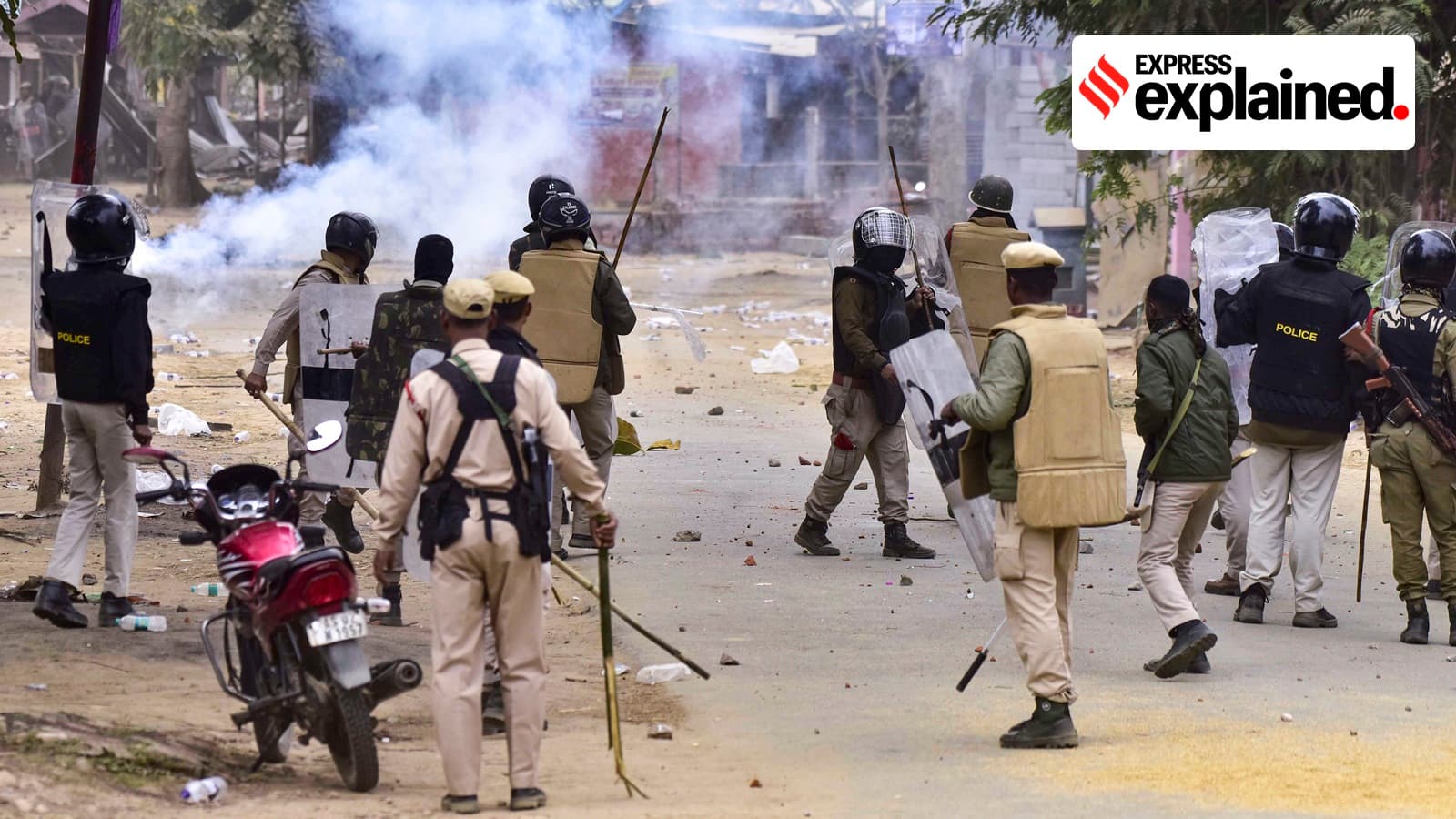
Assam's Karbi Anglong violence: Content unavailable for detailed analysis of triggers and history.
Summary
The article, titled 'Assam's Karbi Anglong violence: Immediate trigger and historical background of dispute', lacks content, preventing a detailed analysis. The Karbi Anglong region in Assam is historically prone to ethnic conflicts and boundary disputes, making such incidents relevant for UPSC and State PSC exams on internal security and regional issues.
Key Points
- 1The provided article content is absent, precluding the identification of the immediate trigger for the Karbi Anglong violence.
- 2Specific details regarding the historical background of the dispute in Karbi Anglong cannot be extracted from the article.
- 3No names of individuals, organizations, or specific dates related to the violence are available in the missing content.
- 4The article does not provide any numerical data such as casualties, displaced persons, or economic impact of the violence.
- 5Relevant constitutional provisions or legal frameworks pertaining to the Karbi Anglong dispute are not mentioned due to lack of content.
In-Depth Analysis
The Karbi Anglong region in Assam, a land of enchanting hills and diverse tribal communities, has unfortunately been a flashpoint for ethnic violence and boundary disputes for decades. While the immediate trigger for the specific violence mentioned in the article is unavailable, understanding the historical context and underlying issues is crucial for any competitive exam aspirant.
**Background Context and Historical Roots:**
Karbi Anglong is one of the three autonomous districts in Assam, administered under the provisions of the Sixth Schedule of the Constitution of India. This unique constitutional arrangement grants significant autonomy to the Karbi Anglong Autonomous Council (KAAC) over land, forest, primary education, and local administration. The district is home to various indigenous communities, primarily the Karbis, but also Dimasas, Rengma Nagas, Kukis, and others, alongside non-tribal populations. The historical background of disputes in the region is complex, stemming from competing land claims, resource control, demands for greater autonomy or even separate statehood, and the influx of migrants over time.
Post-independence, the aspirations for self-governance among various tribal groups in Northeast India led to the creation of autonomous districts and later, separate states. The Karbis, like many other groups, harbored desires for enhanced self-rule, culminating in the demand for an 'Hemprek Kanthim' (Karbi state) or 'Karbi Anglong Autonomous State'. This aspiration, coupled with the presence of multiple ethnic groups vying for political and economic dominance, created a fertile ground for conflict. Boundary disputes, both internal within the district (e.g., between Karbis and Rengma Nagas, or Karbis and Dimasas) and external with neighboring states like Nagaland, further complicate the scenario. The issue of 'encroachment' on tribal lands by non-tribals or other tribal groups often serves as a potent immediate trigger for violence.
**Key Stakeholders Involved:**
1. **Karbi Anglong Autonomous Council (KAAC):** The primary administrative and legislative body, responsible for local governance and development. Its decisions on land use, resource allocation, and traditional laws often become points of contention.
2. **Various Ethnic Communities:** The Karbis, Dimasas, Rengma Nagas, Kukis, Adivasis, and other groups, each with their distinct cultural identities, land claims, and political aspirations. Inter-community relations are often strained by historical grievances and competition for resources.
3. **State Government of Assam:** Responsible for maintaining law and order, facilitating development, and mediating disputes. Its effectiveness in governance and conflict resolution is crucial.
4. **Central Government:** Provides security forces, financial assistance, and plays a role in peace talks and policy formulation for tribal areas.
5. **Militant/Insurgent Groups:** Historically, several armed groups such as the United People's Democratic Solidarity (UPDS), Karbi Longri NC Hills Liberation Front (KLNLF), and Dima Halam Daogah (DHD) have operated in the region, advocating for separate states or greater autonomy, often resorting to violence. While many have signed peace accords, residual elements and new factions can emerge.
**Significance for India:**
Violence in Karbi Anglong poses significant challenges to India's internal security and national integrity. It disrupts peace and stability in an already sensitive border region, impacting trade, tourism, and infrastructure development. The socio-economic fabric is torn apart, leading to displacement, loss of lives, and hindering progress for marginalized communities. Such conflicts also test the efficacy of India's federal structure and its ability to manage diverse ethnic aspirations within a democratic framework. Furthermore, instability in the Northeast can be exploited by external actors, posing geopolitical risks.
**Constitutional Provisions and Policies:**
* **Sixth Schedule (Articles 244(2) and 275(1)):** This is the bedrock of administration in Karbi Anglong, granting significant legislative and executive powers to the KAAC. It empowers the council to make laws on land, forest, village administration, marriage, social customs, and inheritance. Understanding its provisions is key to appreciating the region's unique administrative status.
* **Article 371B:** Makes special provisions with respect to the State of Assam, primarily concerning the constitution and functions of a committee of the Legislative Assembly of the State consisting of members elected from the Tribal Areas of Assam.
* **Peace Accords:** The Indian government has historically engaged with various insurgent groups, leading to peace accords like the one signed with the UPDS in 2011 and the DHD in 2012. These accords aim to bring militant groups into the mainstream, disarm them, and address their grievances through political and economic packages.
* **Look East/Act East Policy:** Stability in the Northeast is paramount for the success of India's Act East Policy, which seeks to enhance connectivity and economic integration with Southeast Asian nations. Conflict directly undermines this strategic objective.
**Future Implications:**
Resolving the Karbi Anglong issue requires a multi-pronged approach. This includes strengthening the autonomous councils, ensuring equitable development, addressing land-related grievances through clear policy and demarcation, and fostering inter-community dialogue. The long-term solution lies in inclusive governance that respects the unique identities of all communities while promoting shared prosperity. Failure to address these issues can lead to renewed cycles of violence, radicalization of youth, and continued instability, hindering India's progress in a crucial strategic region.
**Broader Themes:**
The Karbi Anglong situation highlights broader themes in Indian governance: the challenges of federalism in managing diverse regional aspirations, the complexities of tribal rights versus development, the role of internal security in nation-building, and the delicate balance between autonomy and national unity. It underscores the continuous need for dialogue, negotiation, and constitutional mechanisms to resolve conflicts in a diverse country like India.
Exam Tips
This topic falls under GS Paper III (Internal Security – Linkages between development and spread of extremism, challenges to internal security through communication networks, role of external state and non-state actors in creating challenges to internal security). It also relates to GS Paper II (Polity – Federalism, Centre-State Relations, Sixth Schedule, Tribal Administration).
Study the Sixth Schedule of the Constitution in detail, including its provisions, the powers of Autonomous District Councils (ADCs), and the states where it applies. Compare and contrast it with the Fifth Schedule. Also, prepare notes on various ethnic groups and their historical demands in Northeast India.
Common question patterns include direct questions on the features and significance of the Sixth Schedule, analytical questions on the causes and consequences of ethnic conflicts in Northeast India, and policy-oriented questions on measures to address insurgency and promote peace and development in tribal areas.