


Relevant for Exams
Unnao rape survivor appeals to Gandhis to stop Sengar's bail after police manhandling.
Summary
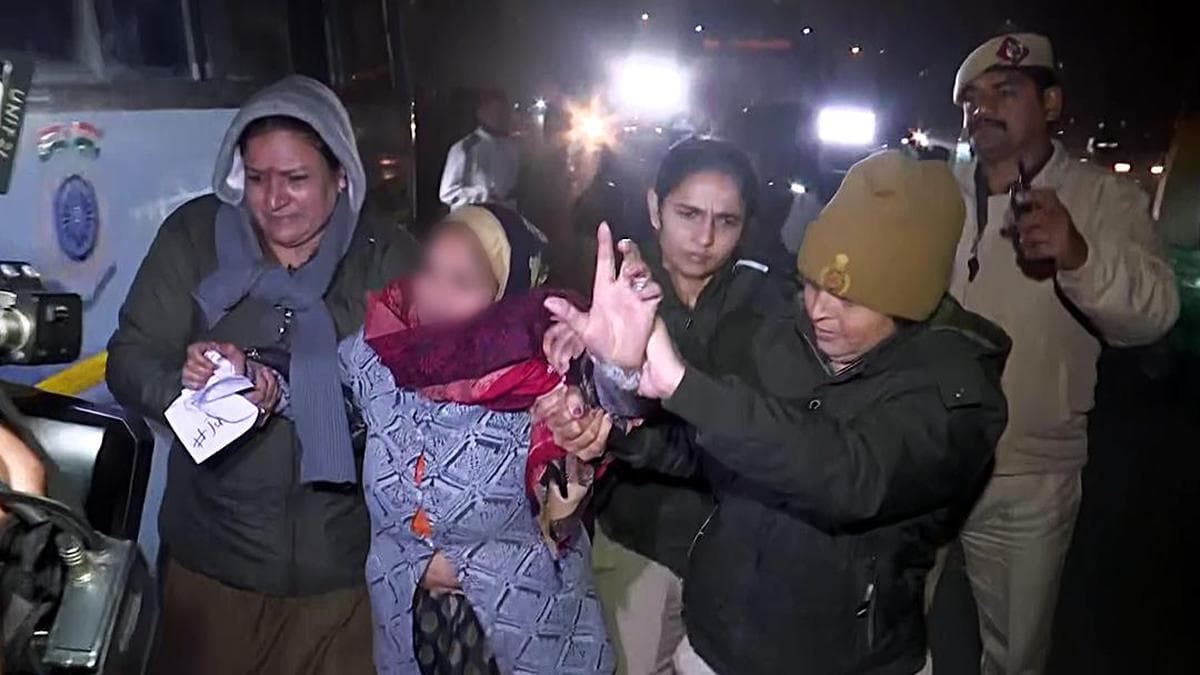
The Unnao rape survivor met Congress leaders Rahul Gandhi and Sonia Gandhi, appealing to them to intervene and stop the bail of former BJP MLA Sengar. This meeting followed an incident where she was manhandled by Delhi Police during a protest on Tuesday. This case remains significant for competitive exams as it highlights issues of victim's rights, police conduct, and the interplay between politics and the justice system, crucial for understanding governance and legal affairs.
Key Points
- 1The Unnao rape survivor appealed to national leaders to stop the bail of former BJP MLA Sengar.
- 2She met Congress leaders Rahul Gandhi and Sonia Gandhi to discuss her appeal.
- 3The meeting took place after the survivor was manhandled by Delhi Police personnel during a protest.
- 4The protest and subsequent meeting occurred on a Tuesday in Delhi.
- 5The case pertains to the bail proceedings of former BJP MLA Sengar.
In-Depth Analysis
The appeal by the Unnao rape survivor to national leaders regarding the bail of former BJP MLA Kuldeep Singh Sengar is a stark reminder of the prolonged and often arduous battle for justice faced by victims, especially when the accused are powerful political figures. This incident, culminating in her meeting with Congress leaders Rahul Gandhi and Sonia Gandhi after being manhandled by Delhi Police during a protest, encapsulates several critical issues pertinent to India's governance, social fabric, and legal system.
**Background Context and What Happened:** The Unnao rape case first came to national attention in 2018. The survivor, then a minor, accused Kuldeep Singh Sengar, a powerful four-time BJP MLA from Unnao, Uttar Pradesh, of rape in 2017. Her family faced immense intimidation and violence, including the death of her father in judicial custody, allegedly after being assaulted by Sengar's brother. Later, in 2019, a truck collided with her car, killing two of her aunts and critically injuring her and her lawyer, leading to allegations of an assassination attempt. These events underscored the immense pressure and threats faced by the survivor. Kuldeep Singh Sengar was eventually convicted by a Delhi court in December 2019 for the rape of the minor and sentenced to life imprisonment. He was also convicted in the accident case. The recent development stems from Sengar's application for interim bail to attend his daughter's wedding. The survivor, fearing that his release, even temporarily, could endanger her and her family, staged a protest where she was reportedly manhandled by Delhi Police personnel. Following this, she sought intervention from prominent national leaders, leading to her meeting with Rahul Gandhi and Sonia Gandhi.
**Key Stakeholders Involved:** At the heart of this issue is the **Unnao rape survivor**, a symbol of resilience in the face of immense adversity, whose fight for justice has highlighted systemic failures. **Kuldeep Singh Sengar**, the former BJP MLA, represents the challenge of holding powerful individuals accountable. The **Delhi Police**, by their alleged manhandling of the survivor during her peaceful protest, brought into question police conduct and respect for fundamental rights, particularly the right to protest. **Congress leaders Rahul Gandhi and Sonia Gandhi** became stakeholders by offering a political platform and support to the survivor, drawing national attention to her plight and the broader implications of the case. The **Judiciary**, specifically the courts handling Sengar's bail plea, remains the ultimate arbiter of justice, balancing the rights of the accused with the safety and concerns of the victim. Finally, the **Central and State Governments** have a crucial role in ensuring law and order, victim protection, and the efficient functioning of the criminal justice system.
**Why This Matters for India:** This case is profoundly significant for India across multiple dimensions. Socially, it underscores the persistent challenges of **women's safety and gender-based violence**, particularly when perpetrated by individuals in positions of power. It highlights the long and often traumatic journey survivors undertake to secure justice. Politically, it raises critical questions about **political accountability and ethics**, as well as the potential for **undue influence** on the criminal justice system. The alleged manhandling by the Delhi Police during a protest brings to the fore concerns about **police accountability and reforms**, and the constitutional right to peaceful assembly (Article 19(1)(b)). Economically, while not directly impacting the macro-economy, such cases erode public trust in institutions, which can indirectly affect social stability and investor confidence in the long run. The case also spotlights the need for robust **victim and witness protection programs** to ensure that justice is not derailed by intimidation.
**Historical Context and Future Implications:** Historically, India has grappled with numerous instances where powerful individuals have seemingly evaded justice or prolonged legal battles, often due to their political or economic clout. The Unnao case resonates with other high-profile cases involving sexual assault and challenges in securing justice, such as the Nirbhaya case, which led to significant amendments in rape laws. It serves as a reminder that legislative changes alone are insufficient without effective implementation and a strong commitment from all state actors. The future implications of this event are multifaceted. The outcome of Sengar's bail plea will be closely watched, potentially setting precedents for how courts balance the rights of the accused with the concerns of victims, especially in cases of grave sexual offenses. It could reignite calls for more comprehensive **police reforms**, emphasizing sensitivity towards victims and upholding fundamental rights during protests. Furthermore, it might intensify the demand for stricter enforcement of **victim protection schemes** and faster adjudication of cases involving sexual violence. The political involvement also signals a continued public and political discourse on the ethics of power and the imperative of ensuring equitable access to justice for all citizens, regardless of the perpetrator's status.
**Related Constitutional Articles, Acts, or Policies:** Several constitutional provisions and legal acts are pertinent here. **Article 21 (Right to Life and Personal Liberty)** is paramount, encompassing the right to a dignified life, a fair trial, and protection from harm. The survivor's right to protest peacefully is enshrined in **Article 19(1)(b) (Freedom to Assemble Peacefully without Arms)**, and the alleged police action could be seen as a violation. **Article 14 (Equality before Law)** emphasizes that no one, regardless of political status, is above the law. The legal framework for dealing with sexual offenses includes **Sections 375 and 376 of the Indian Penal Code (IPC)**, dealing with rape and its punishment. If the survivor was a minor at the time of the crime, the **Protection of Children from Sexual Offences (POCSO) Act, 2012**, would also apply, which mandates stricter penalties and victim protection measures. The **Criminal Procedure Code (CrPC)** governs bail provisions (Sections 437, 438, 439), and courts must consider factors like the nature of the offense, evidence, and potential for witness intimidation when deciding bail. Policies like the **Victim Compensation Scheme** under the CrPC (Section 357A) are also relevant for supporting survivors. This case highlights the intricate interplay of these legal and constitutional safeguards in practice.
Exam Tips
This topic falls under GS Paper II: Polity & Governance (Criminal Justice System, Role of Judiciary, Police Reforms) and Social Justice (Women's Rights, Vulnerable Sections). For State PSCs and other exams, it relates to Indian Polity, Current Affairs, and Social Issues.
When studying, connect this case to broader themes like victim protection laws, bail jurisprudence, police accountability, and the challenges of ensuring justice against powerful individuals. Understand the difference between regular bail, anticipatory bail, and interim bail.
Expect analytical questions on the effectiveness of India's criminal justice system, the role of political influence in legal matters, the importance of victim protection, and the need for police reforms. Be prepared to quote relevant constitutional articles and legal provisions.
Related Topics to Study
Full Article
The survivor, who was manhandled by Delhi Police personnel during a protest on Tuesday, meets Congress leaders Rahul Gandhi and Sonia Gandhi