



Relevant for Exams
Margazhi December Music Season begins, with Sabhas celebrating milestones in Carnatic cultural festivities.
Summary
The annual December Music Season, coinciding with the Tamil month of Margazhi, has commenced, with various cultural organizations known as 'Sabhas' marking significant anniversaries. This festival is a cornerstone of India's classical arts, particularly Carnatic music and dance, primarily centered in Chennai. For competitive exams, understanding this event's cultural significance, its association with classical music, and its geographical hub is crucial for the Art & Culture section.
Key Points
- 1The 'Margazhi season' refers to a traditional Tamil month, typically observed from mid-December to mid-January.
- 2It is synonymous with the 'December Music Season' in Chennai, a globally renowned festival for Carnatic music and dance.
- 3Cultural organizations, known as 'Sabhas', are central to organizing hundreds of performances during this period.
- 4The festival is a crucial annual event in India's classical arts calendar, attracting artists and connoisseurs.
- 5The Margazhi Utsavam (festival) showcases diverse forms of classical Indian performing arts, primarily Carnatic music and Bharatanatyam.
In-Depth Analysis
The annual Margazhi Music Season, often referred to as the 'December Music Season,' is a cultural phenomenon deeply embedded in the fabric of South Indian heritage, particularly in Chennai. This month-long festival, coinciding with the Tamil calendar month of Margazhi (mid-December to mid-January), transforms Chennai into a vibrant hub of classical Indian performing arts. Its significance extends far beyond mere entertainment, touching upon cultural preservation, economic impact, and India's soft power.
**Background Context and Historical Roots:**
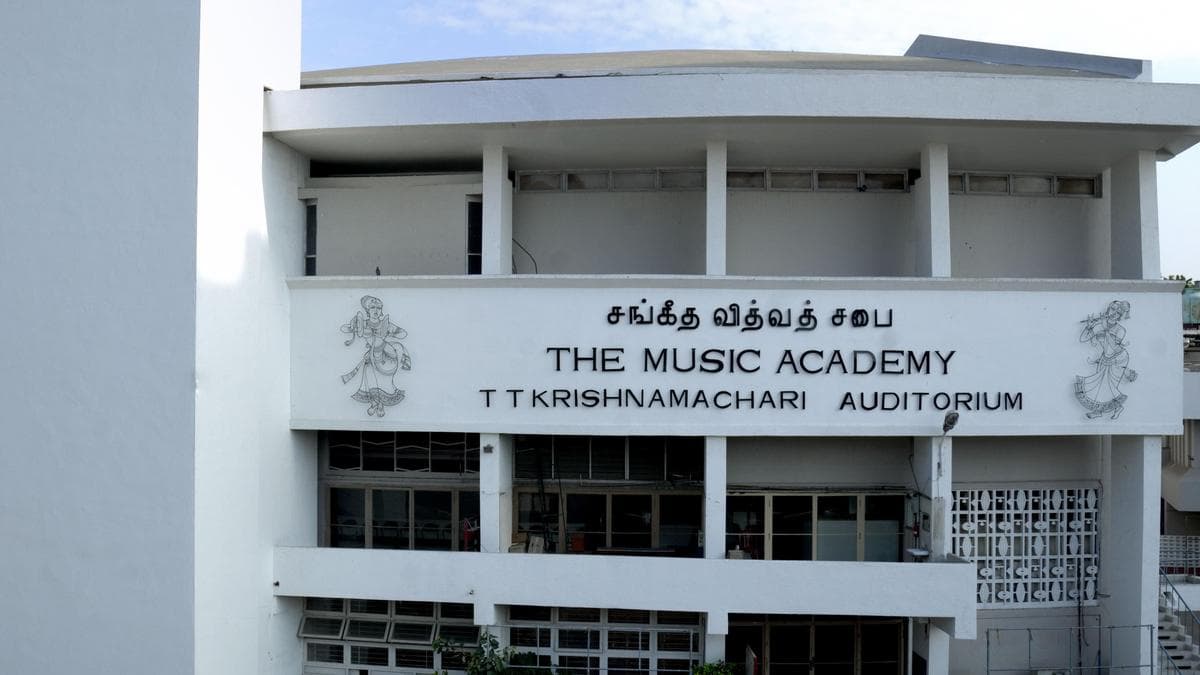
Historically, Margazhi is considered a sacred month in Tamil tradition, dedicated to spiritual contemplation, devotion, and artistic expression rather than worldly affairs like weddings. This spiritual ambiance fostered an environment conducive to the pursuit of arts, especially music and dance, as forms of devotion. The origins of the modern December Music Season can be traced back to the early 20th century, with the establishment of institutions like The Music Academy, Chennai, in 1928. This institution, initially formed to commemorate the All India Congress session, quickly evolved into a premier platform for Carnatic music, providing a structured space for performances, lec-dems (lecture-demonstrations), and scholarly discourse. Over decades, other cultural organizations, known as 'Sabhas,' proliferated, each contributing to the season's growth and diversity.
**What Happens During the Season:**
During Margazhi, Chennai witnesses an unparalleled flurry of cultural activity. Hundreds of 'Sabhas' host thousands of concerts and dance performances, primarily featuring Carnatic music and Bharatanatyam, but also encompassing other classical forms like Kuchipudi, Odissi, and Hindustani music. Artists, ranging from seasoned veterans to budding talents, converge to showcase their art. The season is also marked by numerous academic sessions, workshops, and discussions, making it a comprehensive cultural festival. The article notes that several Sabhas are marking important milestones, underscoring the enduring legacy and continuous evolution of this tradition.
**Key Stakeholders:**
1. **Sabhas:** These cultural organizations are the backbone of the festival. They identify talent, manage venues, curate schedules, and provide the infrastructure for performances. Examples include The Music Academy, Narada Gana Sabha, Mylapore Fine Arts Club, and Krishna Gana Sabha.
2. **Artists:** Musicians (vocalists, instrumentalists like violinists, flautists, veena artists) and dancers (Bharatanatyam, Kuchipudi exponents) are the heart of the season. They dedicate years to mastering their art and present it to discerning audiences.
3. **Audience and Connoisseurs:** A dedicated local audience, along with national and international tourists and critics, forms the crucial reception for these performances. Their appreciation and critique sustain the art forms.
4. **Government and Cultural Bodies:** The Ministry of Culture, Government of India, and state-level cultural departments (e.g., Tamil Nadu Arts and Culture Department) provide grants, recognition, and policy support. Institutions like the Sangeet Natak Akademi play a vital role in promoting and preserving India's performing arts.
5. **Sponsors and Media:** Corporate sponsors and individual patrons provide financial backing, while print, electronic, and digital media play a crucial role in publicizing events and reaching a wider audience.
**Significance for India:**
The Margazhi Season holds immense significance for India. Firstly, it is a powerful vehicle for **cultural preservation**, safeguarding and promoting Carnatic music and Bharatanatyam, which are integral to India's rich intangible cultural heritage. Secondly, it acts as a significant contributor to **cultural tourism**, attracting visitors globally and boosting the local economy through hospitality, transport, and ancillary industries like instrument manufacturing and classical music education. Thirdly, it enhances India's **soft power** on the international stage, showcasing its profound artistic traditions and cultural diversity. It fosters **social cohesion** by bringing together artists and audiences from diverse backgrounds, celebrating a shared cultural identity. Furthermore, it serves as an educational platform, encouraging research, innovation, and the training of new generations of artists.
**Constitutional and Policy Relevance:**
While not directly legislated, the Margazhi Season aligns with several constitutional provisions and government policies. **Article 51A(f)** of the Indian Constitution, a Fundamental Duty, mandates every citizen to value and preserve the rich heritage of our composite culture. The government's support for such festivals through bodies like the Ministry of Culture and the Sangeet Natak Akademi directly flows from this constitutional directive. **Article 49**, a Directive Principle of State Policy, calls for the protection of monuments and places and objects of national importance, which can be broadly interpreted to include the preservation of cultural heritage and traditions. Policies under the **Ministry of Culture**, such as schemes for financial assistance to cultural organizations and promotion of performing arts, directly benefit festivals like Margazhi. The Sangeet Natak Akademi, an autonomous body, specifically works towards the preservation and promotion of India's performing arts traditions.
**Future Implications:**
The Margazhi Season faces both opportunities and challenges. The digital age offers new avenues for global outreach through live streaming and online archives, potentially attracting younger audiences and broader international participation. However, challenges include securing consistent funding, balancing traditional purity with contemporary innovation, attracting younger demographics within India, and preventing commercialization from diluting artistic integrity. Despite these, the season's deeply rooted traditions and its vibrant ecosystem suggest its continued relevance as a cornerstone of India's cultural identity and a testament to its enduring artistic legacy.
Exam Tips
This topic falls under the 'Art & Culture' section of the UPSC GS Paper I, State PSCs, and SSC General Awareness. Focus on understanding the historical evolution, key forms of art (Carnatic music, Bharatanatyam), and the role of cultural institutions.
Study related topics such as the origins and evolution of Carnatic music and Bharatanatyam, prominent personalities (composers, musicians, dancers), different 'gharanas' or 'bani' styles, and the role of various cultural bodies like Sangeet Natak Akademi.
Common question patterns include direct questions on the 'Margazhi Season' or 'December Music Season,' its geographical location (Chennai), associated art forms, the role of 'Sabhas,' and the cultural significance. Questions might also link it to constitutional provisions related to cultural preservation or government initiatives for promoting arts.
Related Topics to Study
Full Article
With the December Music Season under way, several Sabhas are marking important milestones