



Relevant for Exams
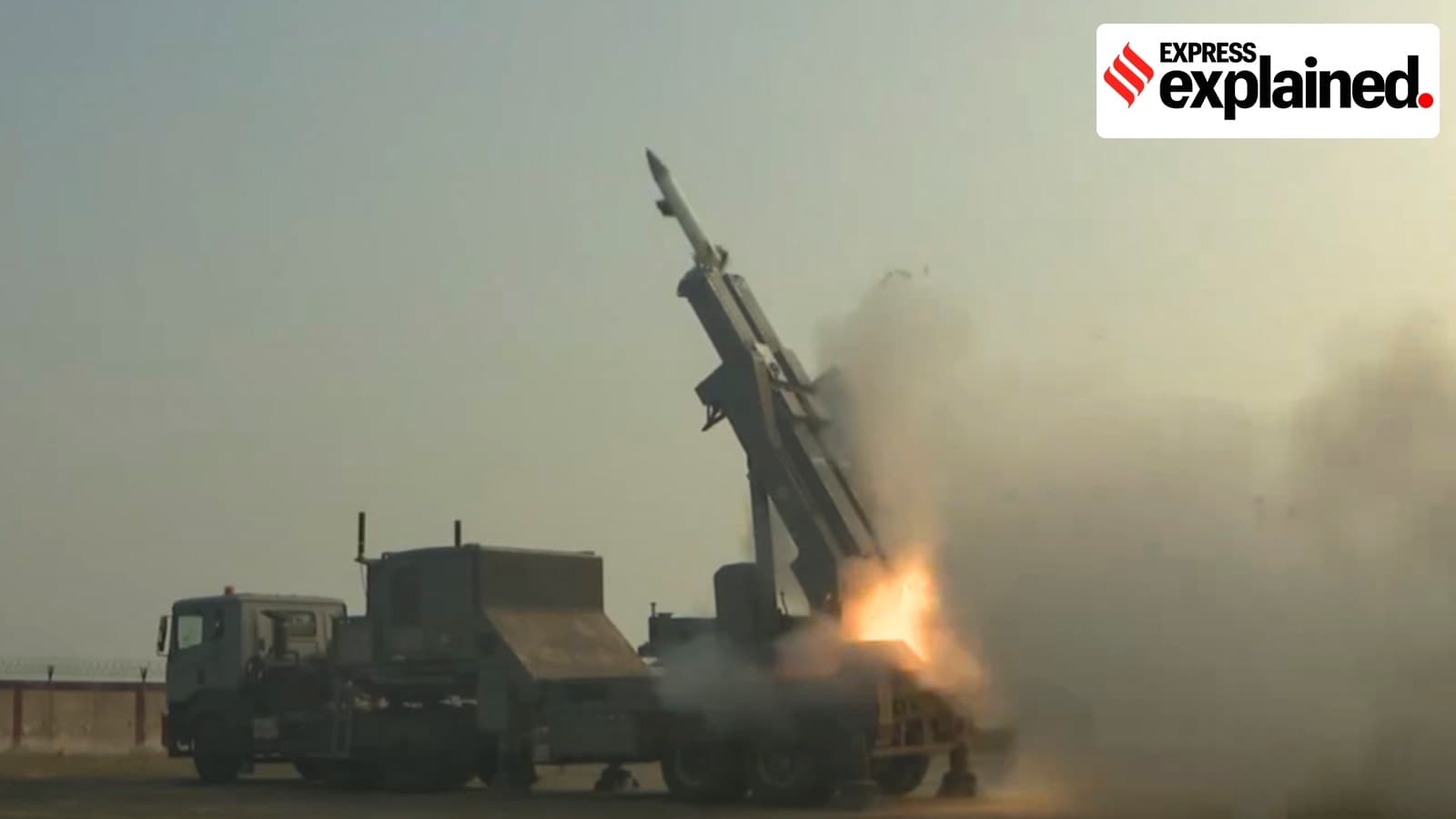
Akash-NG missile completes user evaluation trials, bolstering India's indigenous air defence capabilities.
Summary
The Akash-NG (New Generation) missile system has successfully completed its user evaluation trials, marking a crucial milestone in its development and impending induction. This indigenous medium-range surface-to-air missile, developed by DRDO, significantly boosts India's air defence capabilities against modern aerial threats. Its successful trials underscore India's progress in advanced defence technology, making it vital for competitive exam preparation focusing on national security and scientific advancements.
Key Points
- 1Akash-NG (New Generation) is an advanced medium-range mobile surface-to-air missile (SAM) system.
- 2It is indigenously designed and developed by the Defence Research and Development Organisation (DRDO).
- 3The missile is engineered to intercept high-maneuvering aerial threats including fighter jets, cruise missiles, and drones.
- 4Akash-NG features an improved indigenous active electronically scanned array (AESA) radar and has an estimated range of approximately 80 km.
- 5The successful completion of user evaluation trials is a critical step towards its induction into the Indian Armed Forces, enhancing national security.
In-Depth Analysis
The successful completion of user evaluation trials for the Akash-NG (New Generation) missile system marks a pivotal moment in India's journey towards self-reliance in defence technology. This indigenous medium-range surface-to-air missile (SAM) system is not merely an upgrade; it represents a significant leap in capabilities, designed to counter the sophisticated aerial threats of the modern battlefield.
**The Genesis of India's Missile Prowess: Background and Historical Context**
India's strategic pursuit of missile technology began in earnest with the Integrated Guided Missile Development Programme (IGMDP), launched in 1983 under the visionary leadership of Dr. APJ Abdul Kalam. This ambitious program aimed to achieve self-sufficiency in missile technology, leading to the development of a family of missiles including Prithvi, Agni, Trishul, Nag, and Akash. The original Akash missile, a medium-range surface-to-air missile, was one of the successes, inducted into the Indian Air Force starting in 2009 and the Indian Army in 2012. While effective, the evolving nature of aerial threats, including stealth aircraft, faster cruise missiles, and advanced drones, necessitated a more modern, agile, and technologically superior air defence system. This imperative led to the conceptualization and development of Akash-NG by the Defence Research and Development Organisation (DRDO).
**Akash-NG: What Happened and Its Advanced Features**
Akash-NG is an advanced variant of the Akash missile system, specifically engineered to intercept high-maneuvering aerial threats. Its successful user evaluation trials signify that the system has met the stringent operational requirements and performance parameters set by the Indian Armed Forces. These trials typically involve a series of tests under various operational scenarios, evaluating the missile's accuracy, range, target acquisition capabilities, and overall system reliability. What sets Akash-NG apart are its enhanced features: it boasts an improved indigenous active electronically scanned array (AESA) radar, providing superior tracking and engagement capabilities. With an estimated range of approximately 80 km, it can effectively engage targets such as fighter jets, cruise missiles, and unmanned aerial vehicles (UAVs) at medium altitudes. The 'New Generation' tag underscores its improved reaction time, smaller footprint, and enhanced mobility, making it more adaptable to diverse operational environments.
**Key Players in India's Defence Ecosystem: Stakeholders**
Several critical stakeholders are involved in this indigenous defence success. The **Defence Research and Development Organisation (DRDO)** is the primary architect, responsible for the design, development, and testing of the missile system. Its various laboratories, scientists, and engineers have been at the forefront of this technological achievement. The **Indian Armed Forces** (specifically the Indian Army and Indian Air Force) are the ultimate users and key stakeholders, defining the operational requirements, participating in the trials, and providing crucial feedback. **Bharat Dynamics Limited (BDL)**, a Public Sector Undertaking (PSU), plays a vital role in the manufacturing and production of these missiles once the design is finalized and approved for induction. Furthermore, a growing number of **private sector defence companies** are increasingly involved in supplying components, sub-systems, and providing technological support, fostering a robust domestic defence industrial base.
**A Leap Towards Atmanirbhar Bharat: Significance for India**
The successful trials and impending induction of Akash-NG hold immense significance for India. Firstly, it substantially **enhances India's air defence capabilities**, providing a critical layer of protection against modern aerial threats and bolstering national security. Secondly, it is a shining example of the **'Make in India' initiative** and the broader **'Atmanirbhar Bharat Abhiyan' (Self-Reliant India Campaign)** in the defence sector. Indigenous development reduces India's dependence on foreign suppliers, saving valuable foreign exchange and mitigating the risks associated with geopolitical pressures or technology denial regimes. This strategic autonomy is crucial for India's foreign policy and national interests. Thirdly, it provides a massive boost to the **domestic defence industry**, stimulating innovation, creating high-skilled jobs, and fostering a self-sustaining ecosystem of research, development, and manufacturing. The success of Akash-NG also positions India as a credible player in the global defence market, potentially opening avenues for **defence exports** to friendly nations, aligning with the government's target of achieving a significant turnover in defence manufacturing and exports.
**Constitutional and Policy Framework**
While no specific constitutional article directly mandates missile development, the overarching constitutional framework implicitly supports such endeavours through the state's fundamental duty to ensure **national security and protect its sovereignty and territorial integrity**. Policies like the **Defence Acquisition Procedure (DAP) 2020** explicitly prioritize indigenous design, development, and manufacturing (IDDM), aiming to make India a global defence manufacturing hub. The 'Make in India' initiative (launched in 2014) and the 'Atmanirbhar Bharat Abhiyan' (launched in 2020) provide the policy impetus and financial incentives for indigenous defence production, thereby directly supporting projects like Akash-NG. These policies reflect a concerted effort to move away from being a net importer of defence equipment to becoming a net exporter, securing India's strategic interests and boosting its economic growth.
**Paving the Way for Future Security: Future Implications**
The successful user evaluation trials mean that Akash-NG is now ready for induction into the Indian Armed Forces. This will lead to its mass production and deployment across strategic locations, significantly modernizing India's air defence infrastructure. This success also paves the way for further indigenous development in missile technology, encouraging DRDO and private players to innovate and develop even more advanced systems. It reinforces India's commitment to strategic autonomy and strengthens its position in the regional security matrix. The experience gained from Akash-NG will be invaluable for future projects, contributing to India's long-term goal of becoming a global leader in defence manufacturing and technology.
Exam Tips
This topic falls under the 'Science and Technology' and 'Internal Security' sections of the UPSC Civil Services Exam (Prelims and Mains GS-III), State PSCs, and Defence exams. For SSC, Banking, and Railway exams, factual questions (e.g., DRDO, range, type of missile) are common.
Study related topics like India's Integrated Guided Missile Development Programme (IGMDP), other indigenous missile systems (e.g., BrahMos, Agni series), India's Ballistic Missile Defence (BMD) program, and major defence policies like 'Make in India' in Defence and Defence Acquisition Procedure (DAP).
Expect questions on the significance of indigenous defence production for national security and economic growth (Mains), key features and capabilities of Akash-NG (Prelims, factual), and the role of organizations like DRDO and BDL (Prelims, factual).
Understand the difference between various types of missiles (surface-to-air, air-to-air, cruise, ballistic) and their strategic implications. Pay attention to the technology used (e.g., AESA radar).
Be prepared for questions linking defence indigenization to broader government initiatives like Atmanirbhar Bharat and their impact on reducing import dependency.