



Relevant for Exams
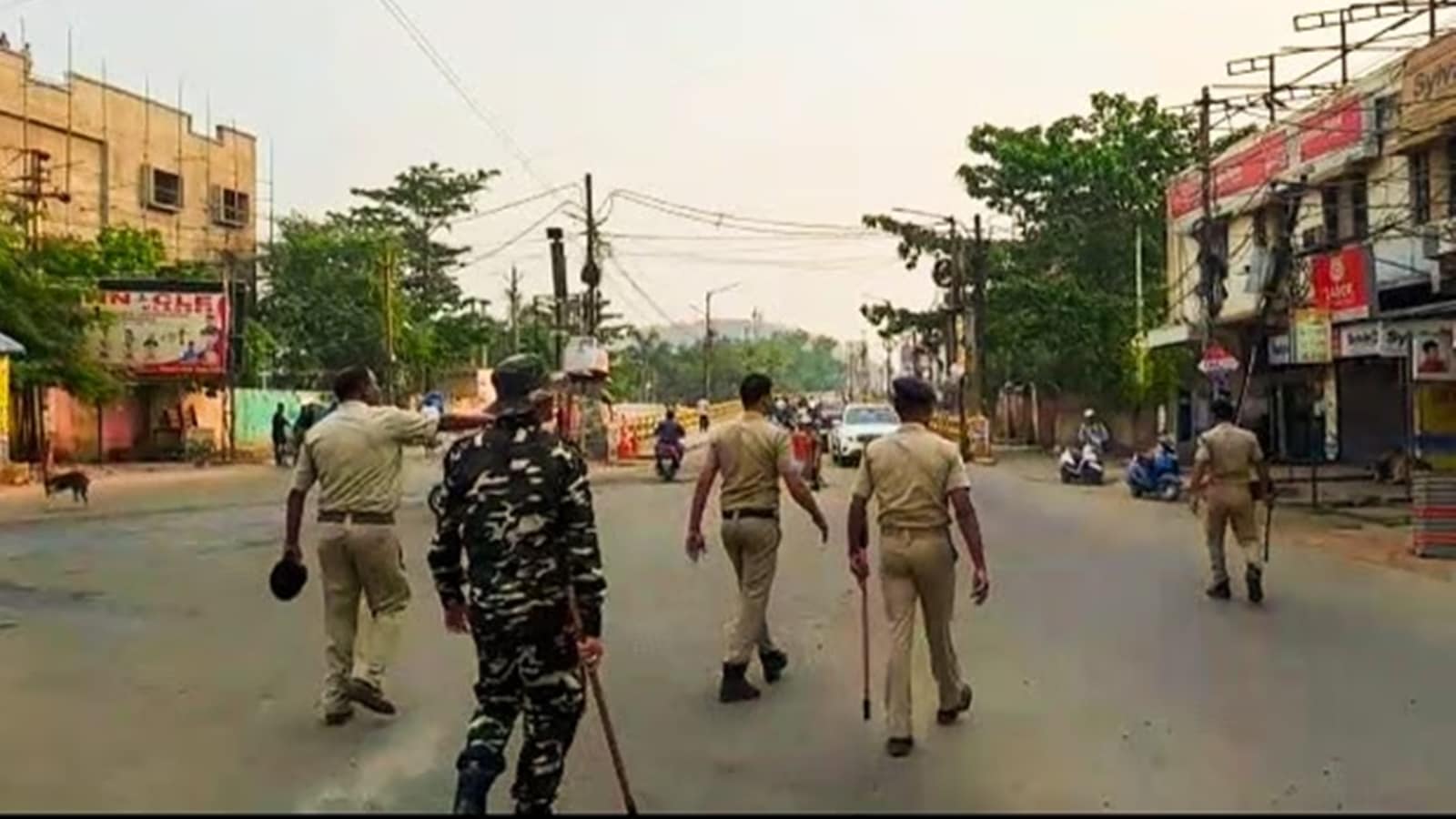
Odisha's Bhadrak on edge after alleged rape and murder; specific details unavailable.
Summary
The article content is unavailable, precluding a detailed summary of the incident and its broader implications. Without specific facts on the case, policy responses, or legal proceedings, its direct relevance for competitive exams cannot be fully assessed, as it appears to be a local law and order issue in Bhadrak, Odisha.
Key Points
- 1Specific details regarding the victim's identity or age beyond '10-year-old' are not available.
- 2The exact date of the alleged 'rape and murder' incident in Bhadrak, Odisha, cannot be determined.
- 3Information on the alleged perpetrator(s), arrests made, or the status of the investigation is not provided.
- 4No legal provisions or constitutional articles invoked in response to the incident are mentioned in the content.
- 5The article lacks details on any policy changes, government actions, or public responses beyond 'on edge'.
In-Depth Analysis
The headline, "10-year-old’s ‘rape and murder’ puts Odisha’s Bhadrak on edge," while devoid of specific content, immediately signals a grave concern that resonates deeply within Indian society. Such incidents, though local in their immediate occurrence, invariably trigger widespread outrage and bring to the fore critical issues related to child protection, law enforcement, judicial efficacy, and societal values. Despite the lack of specific details about this particular case, the very nature of the crime—sexual assault and murder of a minor—demands a comprehensive understanding of the systemic challenges and legal frameworks in place.
**Background Context and What Happened (General Perspective):**
The tragic reality of crimes against children, particularly sexual offenses, is a persistent shadow over India's developmental narrative. While specific data for this Bhadrak incident is unavailable, National Crime Records Bureau (NCRB) data consistently highlights the alarming number of such cases reported annually. These crimes are often rooted in a complex interplay of factors including patriarchal mindsets, lack of awareness, economic vulnerability of families, and systemic failures in child protection mechanisms. When such an incident occurs, it typically involves a young victim, a perpetrator (often known to the family or from the local community), and the immediate community reaction of shock, fear, and anger, leading to demands for swift justice and accountability. The phrase 'on edge' accurately captures the palpable tension and public outcry that follow such heinous acts.
**Key Stakeholders Involved:**
Numerous stakeholders become central to the narrative following such an incident. The **victim and their family** are, first and foremost, the most affected, suffering immense trauma and seeking justice. **Law enforcement agencies**, primarily the police, are responsible for investigation, apprehension of the accused, and maintaining law and order. The **judiciary** plays a crucial role in ensuring a fair trial, delivering justice, and upholding the rule of law. The **State Government** (Odisha, in this case) bears the primary responsibility for ensuring the safety and security of its citizens, implementing child protection policies, and providing victim support. **Civil society organizations and NGOs** often step in to provide counseling, legal aid, and advocacy for victims' rights, alongside raising public awareness. Lastly, the **media** plays a significant role in reporting the incident, shaping public opinion, and often pressing for governmental action.
**Why This Matters for India:**
Such incidents are not isolated law and order problems; they are symptomatic of deeper societal issues. They challenge the very fabric of society, eroding trust and creating an environment of fear, especially for children. The failure to prevent or swiftly address such crimes undermines the rule of law and the state's constitutional obligation to protect its most vulnerable citizens. Economically, while not directly quantifiable for a single incident, a pervasive sense of insecurity can deter investment and impact human capital development. Politically, such incidents often lead to public protests, demanding accountability from elected representatives and the administration. Socially, they spark crucial conversations about gender equality, child rights, and the need for comprehensive sex education and awareness programs.
**Historical Context and Related Constitutional Provisions:**
The legal framework for child protection in India has evolved significantly, particularly in response to increasing awareness and international commitments. Key milestones include the **Protection of Children from Sexual Offences (POSCO) Act, 2012**, which was enacted specifically to address child sexual abuse and exploitation, providing a robust legal framework, defining various forms of sexual abuse, and mandating child-friendly procedures for investigation and trial. This Act was further amended in 2019 to introduce more stringent punishments, including the death penalty for aggravated sexual assault against children. Prior to POSCO, offenses against children were primarily covered under the **Indian Penal Code (IPC), 1860**, which continues to apply for other crimes like murder. The **Juvenile Justice (Care and Protection of Children) Act, 2015**, also plays a role in defining the legal framework for children in conflict with law and children in need of care and protection.
Constitutionally, several articles underpin the state's responsibility towards children. **Article 21** (Right to Life and Personal Liberty) implicitly includes the right to live with dignity and safety. **Article 15(3)** allows the state to make special provisions for women and children. **Article 39(f)**, a Directive Principle of State Policy, mandates that the state direct its policy towards ensuring that children are given opportunities and facilities to develop in a healthy manner and in conditions of freedom and dignity, and that childhood and youth are protected against exploitation and against moral and material abandonment. **Article 24** prohibits the employment of children below 14 years in factories, mines, or other hazardous employment, reflecting the broader constitutional commitment to child welfare. The **Commissions for Protection of Child Rights Act, 2005**, established the National Commission for Protection of Child Rights (NCPCR) and State Commissions (SCPCRs) to monitor the implementation of child rights laws.
**Future Implications:**
Such incidents underscore the urgent need for multi-pronged strategies. This includes strengthening law enforcement capabilities, ensuring speedy trials through dedicated fast-track courts, and providing adequate support to victims. Prevention remains paramount, necessitating widespread awareness campaigns, educational reforms to include child safety and good-touch-bad-touch concepts, and community vigilance. The role of local self-governing bodies (Panchayati Raj Institutions) in identifying vulnerable children and reporting suspicious activities is also crucial. Furthermore, there's a continuous need to address the root causes of violence, including poverty, lack of education, and gender inequality, to create a truly safe environment for all children in India.
Exam Tips
This topic falls under 'Indian Polity and Governance', 'Social Justice', and 'Internal Security' sections of the UPSC Civil Services Syllabus (GS Paper II and III) and State PSC exams. Focus on the legal frameworks like POSCO Act, JJ Act, and relevant Constitutional Articles.
Study the evolution of child protection laws in India, key amendments to the POSCO Act (e.g., 2019 amendment), and the roles of national and state child rights commissions (NCPCR, SCPCRs). Related topics include women's safety laws and criminal justice reforms.
Common question patterns include direct questions on the provisions of the POSCO Act, the constitutional safeguards for children, the role of various institutions in child protection, and essay questions on societal challenges related to child abuse and measures for prevention. Be prepared to analyze the effectiveness of these laws and suggest policy improvements.
Understand the difference between various crimes against children (sexual assault, trafficking, child labor) and the specific laws addressing them. Also, focus on government schemes like the Integrated Child Protection Scheme (ICPS).
Analyze the socio-economic factors contributing to such crimes and the importance of public awareness and community participation in child protection.