



Relevant for Exams
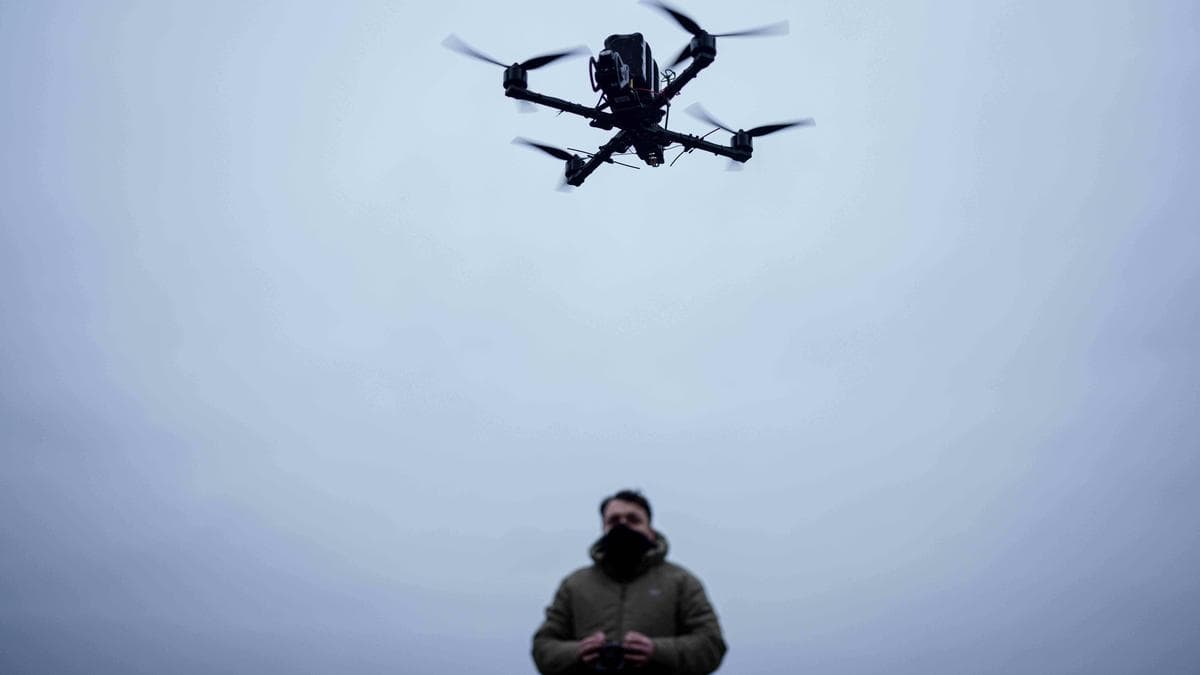
Ukrainian drone attack sparks fire at Russia's Stavrolen plant in Stavropol region.
Summary
Ukraine conducted a drone attack on the Stavrolen plant, an industrial site in Russia's Stavropol region, causing a fire. This strike is part of Ukraine's strategy to cripple Russia’s military efforts within the ongoing conflict, which Moscow initiated nearly four years ago. Understanding such geopolitical developments is vital for competitive exams, particularly in international relations and current affairs sections.
Key Points
- 1Ukrainian drones launched an attack on an industrial site in Russia's Stavropol region.
- 2The specific target of the drone attack was identified as the Stavrolen plant.
- 3The attack resulted in a fire at the industrial facility in the Stavropol region.
- 4Ukraine stated its strikes inside Russia are aimed at crippling Russia’s military effort.
- 5The Russia-Ukraine war, initiated by Moscow, was launched nearly four years ago (as per the article's context).
In-Depth Analysis
The recent Ukrainian drone attack on the Stavrolen industrial plant in Russia's Stavropol region, leading to a fire, is a significant development in the ongoing Russia-Ukraine conflict. This incident underscores Ukraine's evolving strategy to take the war deeper into Russian territory, aiming to cripple Moscow's military-industrial complex and exert pressure away from the front lines. To fully grasp its implications, it's crucial to delve into the background, key stakeholders, India's perspective, and broader geopolitical ramifications.
**Background Context and What Happened:**
The conflict's genesis lies in Russia's annexation of Crimea in March 2014, following a pro-Russian uprising, and its support for separatists in the Donbas region (eastern Ukraine). This simmering conflict escalated dramatically on February 24, 2022, when Russia launched a full-scale invasion of Ukraine. For nearly four years, the war has seen intense fighting, significant territorial shifts, and widespread destruction. Initially, Ukraine focused on defending its territory and repelling Russian advances. However, as the conflict has prolonged, Ukraine has increasingly resorted to drone strikes and other long-range attacks on military and industrial targets within Russia. The attack on the Stavrolen plant, a petrochemical facility, is consistent with this strategy. Ukraine has explicitly stated that such strikes are designed to disrupt Russia's war effort by targeting its logistical, energy, and industrial infrastructure, thereby reducing its capacity to sustain the war.
**Key Stakeholders Involved:**
The primary stakeholders are, of course, **Ukraine** and **Russia**. Ukraine, as the defending nation, aims to protect its sovereignty and territorial integrity. Its drone attacks serve multiple purposes: to disrupt Russian supply lines, damage its war-making capabilities, boost domestic morale, and demonstrate its ability to strike back. Russia, as the aggressor, seeks to achieve its stated war aims, which have evolved but broadly include demilitarizing Ukraine and preventing its alignment with Western powers. Russia views these attacks as acts of terrorism and has often responded with retaliatory strikes on Ukrainian cities and infrastructure. Beyond the immediate belligerents, the **international community** plays a crucial role. Western nations, led by the United States and NATO, provide substantial military, financial, and humanitarian aid to Ukraine, imposing stringent sanctions on Russia. Organizations like the United Nations have called for peace and adherence to international law, though their direct influence on the conflict's trajectory has been limited.
**Significance for India:**
For India, the Russia-Ukraine conflict and incidents like the Stavrolen attack carry multifaceted significance, impacting its economy, foreign policy, and strategic interests. India maintains a complex, balanced foreign policy, often described as 'strategic autonomy.'
1. **Geopolitical Balancing Act:** India has refrained from explicitly condemning Russia, its long-standing strategic partner and a major defense supplier. At the same time, India has emphasized respect for territorial integrity and sovereignty, aligning with its broader foreign policy principles. This balancing act is crucial for India, as it navigates its relationships with both Russia and the Western bloc. Incidents of escalation make this balance even more precarious.
2. **Economic Impact:** The war has had significant global economic repercussions, particularly in energy and commodity markets. India, a major importer of crude oil, fertilizers, and edible oils, has been directly affected. The disruption of global supply chains and volatility in oil prices (e.g., Brent crude) directly impact India's inflation and balance of payments. India has also leveraged discounted Russian oil, leading to a shift in its energy import patterns. Furthermore, Russia and Ukraine are major producers of wheat and sunflower oil; disruptions impact global food security and commodity prices, which in turn affect India's domestic market.
3. **Defence Sector:** India relies heavily on Russia for military hardware and spare parts. The ongoing conflict could potentially impact timely deliveries or access to critical components, necessitating a further diversification of India's defense procurement strategy, in line with the 'Make in India' and 'Atmanirbhar Bharat' initiatives in defense.
4. **International Law and Order:** India consistently champions a rules-based international order. The violation of international law and sovereignty by any nation is a concern, as it sets precedents that could impact regional security elsewhere.
**Historical Context and Future Implications:**
The current conflict is rooted in the dissolution of the Soviet Union in 1991, Ukraine's subsequent independence, and its gradual drift towards Western institutions like NATO and the EU, which Russia views as an existential threat. Historically, Ukraine and Russia share deep cultural and historical ties, making the current animosity particularly tragic. The future implications of such attacks are significant. They signal a potential for further escalation, both in terms of the types of targets and the geographical reach of Ukrainian strikes. This could lead to intensified Russian retaliation, potentially increasing the risk of miscalculation. For India, a prolonged conflict means continued global economic instability, sustained pressure on its foreign policy balancing act, and the imperative to further diversify its strategic partnerships and supply chains. The conflict also highlights the increasing role of drone warfare in modern military strategy, a lesson India is closely observing for its own defense planning. India's stance, guided by principles like those enshrined in **Article 51 of the Indian Constitution** (promoting international peace and security, fostering respect for international law), will continue to evolve, seeking to protect its national interests while advocating for peaceful resolution.
**Related Constitutional Articles, Acts, or Policies:**
While a drone attack doesn't directly invoke specific Indian constitutional articles, India's response and policy are guided by broader principles:
* **Article 51 (Directive Principles of State Policy):** This article mandates the state to promote international peace and security, maintain just and honourable relations between nations, foster respect for international law and treaty obligations, and encourage settlement of international disputes by arbitration. India's calls for dialogue and respect for sovereignty in the Russia-Ukraine conflict are rooted in these principles.
* **Strategic Autonomy:** This overarching foreign policy doctrine dictates India's ability to make independent foreign policy choices based on its national interests, rather than aligning with any particular bloc. This is evident in its nuanced approach to the conflict.
* **Defence Procurement Policy (DPP):** India's defense ties with Russia are governed by DPPs, which outline guidelines for acquisitions. The conflict might accelerate India's push towards indigenous defense production and diversification of suppliers.
* **National Security Doctrine:** India's overall approach to safeguarding its national interests, including energy and economic security, is shaped by its national security doctrine, which is constantly updated to reflect global geopolitical realities.
Exam Tips
This topic falls under the 'International Relations' (GS-II for UPSC, State PSC) and 'Current Affairs' sections for all competitive exams (SSC, Banking, Railway, Defence).
For UPSC and State PSC, focus on analytical aspects: India's foreign policy challenges (strategic autonomy, non-alignment 2.0), economic impacts (energy security, inflation), and geopolitical shifts. For factual exams, remember key dates (Feb 24, 2022), countries involved, major cities/regions (Crimea, Donbas, Stavropol), and international organizations (UN, NATO, EU).
Common question patterns include: 'Discuss the impact of the Russia-Ukraine conflict on India's energy security,' 'Analyze India's balanced approach to the Russia-Ukraine war,' or factual questions like 'Which region was annexed by Russia in 2014?' or 'What is the primary objective of Ukrainian drone attacks on Russian territory?'
Related Topics to Study
Full Article
Ukraine, which has reportedly attacked the Stavrolen plant before, has said its strikes inside Russia and away from the front line are aimed at crippling Russia’s military effort in a war that Moscow launched nearly four years ago.