



Relevant for Exams
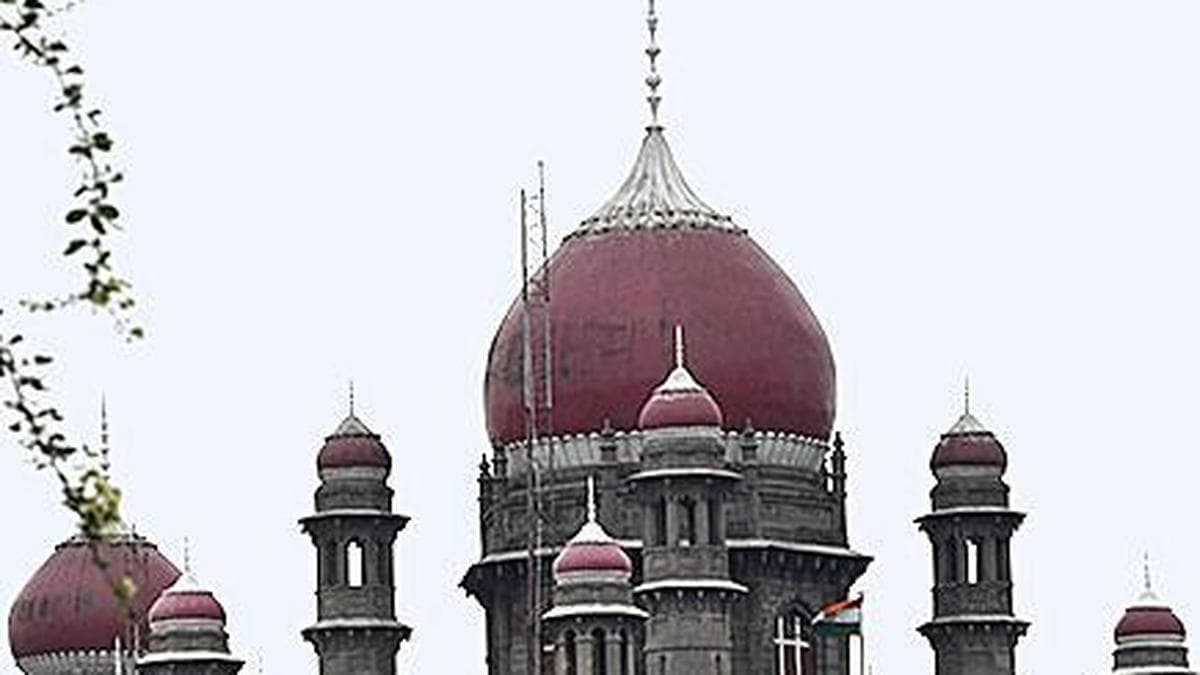
Telangana HC denies interim relief to GITAM university over power disconnection dispute.
Summary
The Telangana High Court recently declined to grant interim relief to GITAM university concerning a power disconnection issue. This judicial decision underscores the legal framework governing disputes between educational institutions and service providers, and the role of High Courts in adjudicating such matters. For competitive exams, this highlights the functioning of the judiciary and legal challenges faced by universities.
Key Points
- 1The judicial body involved in the decision is the Telangana High Court.
- 2The petitioner seeking relief was GITAM university.
- 3The university sought an interim relief from the court.
- 4The core of the dispute was related to a power disconnection issue.
- 5The Telangana High Court ultimately declined to grant the requested interim relief.
In-Depth Analysis
The Telangana High Court's decision to decline interim relief to GITAM University regarding a power disconnection issue offers a compelling case study into the interplay between educational institutions, utility providers, and the judiciary in India. This incident, while specific to a university in Telangana, highlights broader principles of regulatory compliance, judicial review, and the essential services framework.
**Background Context:**
Educational institutions, especially large universities like GITAM, are significant consumers of electricity, crucial for their day-to-day operations, including classrooms, laboratories, hostels, and administrative blocks. Power disconnections can severely disrupt academic activities, research, and student life. Typically, such disconnections by a power distribution company (Discom) occur due to reasons like non-payment of electricity bills, violation of supply conditions, or illegal consumption. Before resorting to disconnection, Discoms usually issue notices, providing an opportunity for the consumer to rectify the issue. When a consumer disputes the disconnection or the underlying reasons (e.g., disputed billing, alleged arbitrary action by the Discom), they often approach courts, seeking relief, frequently in the form of an 'interim injunction' or 'interim relief' to restore the service while the main dispute is adjudicated. This is precisely what GITAM University sought from the Telangana High Court.
**What Happened:**
GITAM University approached the Telangana High Court, requesting interim relief against the power disconnection. Interim relief, in legal terms, is a temporary order granted by a court to protect the rights of a party until the final judgment is delivered. In this context, it would have meant directing the power distribution company to restore electricity supply to the university immediately, pending the final resolution of the dispute over the disconnection. However, the Telangana High Court declined to grant this interim relief. This implies that the court, after initial consideration, did not find sufficient grounds to intervene immediately or that the university did not meet the stringent criteria required for obtaining such a temporary order, such as a prima facie case, the balance of convenience, and irreparable injury. The court might have felt that the Discom's action was prima facie justified, or that the university could seek alternative remedies, or that the financial implications for the Discom if the university continued to default outweighed the immediate need for interim restoration.
**Key Stakeholders Involved:**
1. **GITAM University:** The petitioner, an educational institution impacted by the power disconnection, seeking judicial intervention to restore an essential service.
2. **Telangana High Court:** The judicial body responsible for adjudicating the dispute, ensuring justice, and upholding the rule of law. Its decision reflects the judiciary's role in balancing the rights of consumers with the operational requirements and regulatory powers of utility providers.
3. **Power Distribution Company (Discom):** Though not explicitly named, it is the entity responsible for electricity supply and the one that initiated the disconnection. Its actions are governed by the Electricity Act, 2003, and state-specific regulations. The Discom's primary interest is revenue collection and ensuring compliance with supply agreements.
4. **Students and Faculty:** Indirectly, but significantly, affected by the disruption, as power is indispensable for academic and research activities.
**Why This Matters for India:**
This case underscores several critical aspects for India. Firstly, it highlights the **rule of law** and the judiciary's role as an independent arbiter in disputes involving essential services. The court's refusal of interim relief, despite the petition coming from an educational institution, demonstrates that judicial intervention is not automatic and is based on legal merit and established principles. Secondly, it emphasizes the importance of **regulatory compliance** by institutions, even large ones, with utility providers. Electricity distribution in India is governed by the **Electricity Act, 2003**, which provides a framework for generation, transmission, distribution, trading, and tariff determination, as well as consumer protection. State Electricity Regulatory Commissions (SERCs) play a crucial role in regulating Discoms and addressing consumer grievances. Thirdly, the incident has **social implications** regarding the continuity of education. While the university has legal recourse, prolonged power outages can severely impact students' learning environment, potentially affecting their **Right to Education (Article 21A)**, albeit indirectly, as access to infrastructure is vital. This also brings to light the financial health of Discoms, which often struggle with revenue recovery, leading to such stringent actions.
**Historical Context and Future Implications:**
Historically, India's power sector has undergone significant reforms, particularly with the enactment of the Electricity Act, 2003, which aimed to rationalize tariffs, promote competition, and ensure consumer protection while making the sector financially viable. Prior to this, state electricity boards often faced immense financial losses, partly due to non-payment of dues by various consumers, including government entities and large institutions. The present case is a reminder that even post-reforms, ensuring financial discipline from consumers remains a challenge. For GITAM University, the immediate implication is that it must pursue the main legal challenge without the benefit of restored power, or resolve the underlying issue with the Discom (e.g., pay outstanding dues, negotiate a payment plan). For other institutions, it serves as a cautionary tale about adhering to utility regulations and timely payments. Future implications include potential legal precedents set by the final judgment, further clarity on the rights and obligations of large consumers, and the continuing evolution of dispute resolution mechanisms within the power sector.
**Related Constitutional Articles, Acts, or Policies:**
* **Article 226 of the Indian Constitution:** Grants High Courts the power to issue writs (like mandamus, prohibition, certiorari, habeas corpus, and quo warranto) for the enforcement of fundamental rights and for 'any other purpose'. This is the primary article under which GITAM University would have approached the High Court for interim relief.
* **Electricity Act, 2003:** This is the overarching legislation governing the electricity sector in India. It defines the powers and functions of Discoms, the rights and obligations of consumers, provisions for tariff setting, grievance redressal, and penalties for non-compliance. Section 56 of the Act, for instance, deals with the power of the licensee to disconnect supply for non-payment of dues.
* **State Electricity Regulatory Commissions (SERCs):** Established under the Electricity Act, 2003, these bodies regulate the power sector at the state level, including tariff fixation, licensing, and grievance redressal. Consumers can also approach SERCs with complaints against Discoms.
* **Consumer Protection Act, 2019:** While not directly invoked in a writ petition, the services provided by Discoms fall under the purview of 'service' as defined by this Act, allowing consumers to seek redressal for deficiencies in service before consumer forums.
This case thus offers a multi-faceted learning opportunity, encompassing legal principles, regulatory frameworks, and the practical challenges of governance in India.
Exam Tips
This topic falls under 'Indian Polity and Governance' (UPSC Mains GS-II) and 'Indian Economy' (UPSC Mains GS-III) due to the judicial aspect and the power sector. For State PSCs, it's relevant for General Studies papers covering State Administration and Economy.
Study the writ jurisdiction of High Courts (Article 226) and Supreme Court (Article 32) in detail, including the grounds for granting or declining interim relief. Understand the difference between various types of writs.
Familiarize yourself with the Electricity Act, 2003, its key provisions (e.g., Section 56, role of SERCs), and the broader context of power sector reforms in India. Questions often test knowledge of regulatory bodies and their functions.
Common question patterns include scenario-based questions on judicial remedies, direct questions on constitutional articles related to High Court powers, or questions on the regulatory framework of essential services like electricity.
Link this incident to broader themes like the balance between institutional autonomy and regulatory compliance, and the impact of infrastructure issues on social sectors like education.