



Relevant for Exams
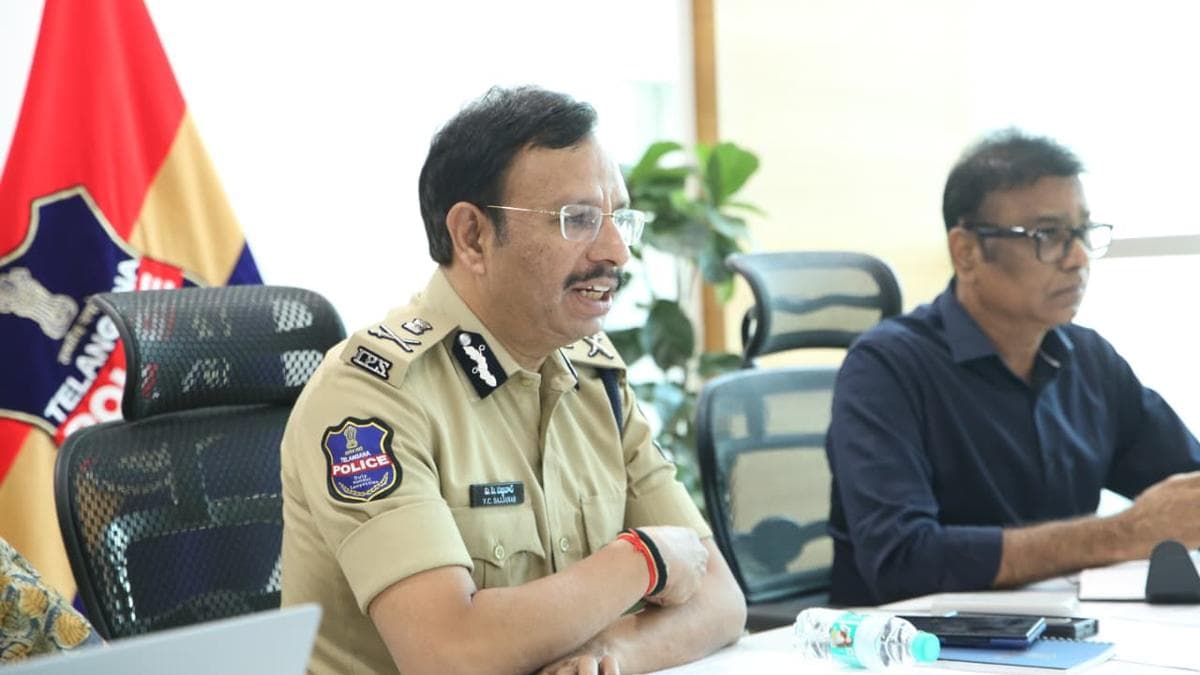
Hyderabad CP announces ₹10,000 fine, 6-month jail, license cancellation for New Year drunk driving.
Summary
Hyderabad City Police Commissioner announced stringent measures against New Year violations, specifically focusing on drunk driving, with checks commencing from Wednesday. Offenders caught will face severe penalties including vehicle seizure, a ₹10,000 fine, a six-month jail term, and permanent cancellation of driving licenses. This reflects a proactive law enforcement strategy to ensure public safety during festive periods, relevant for state-level general awareness on local administration and legal provisions.
Key Points
- 1Hyderabad City Police Commissioner (CP) announced strict action against New Year violations.
- 2Special drunk driving checks were scheduled to commence from Wednesday in Hyderabad.
- 3Penalties for drunk driving include vehicle seizure and a fine of ₹10,000.
- 4Offenders caught drunk driving will face a six-month jail term.
- 5Permanent cancellation of driving licenses is another consequence for drunk driving violations in Hyderabad.
In-Depth Analysis
The announcement by the Hyderabad City Police Commissioner regarding stringent measures against New Year violations, particularly drunk driving, underscores India's ongoing struggle with road safety and the proactive role of law enforcement. This move is not merely about festive period policing but reflects a broader commitment to deterring dangerous driving practices and ensuring public safety, a critical aspect of governance and social welfare in India.
**Background Context and What Happened:**
New Year's Eve celebrations typically witness a surge in social gatherings, often involving alcohol consumption, which unfortunately translates into an increased risk of drunk driving incidents. Indian cities, including Hyderabad, have historically grappled with a higher incidence of road accidents and fatalities during such festive periods. The Hyderabad CP's directive, effective from Wednesday, is a pre-emptive strike to mitigate these risks. The announced penalties are severe: vehicle seizure, a substantial fine of ₹10,000, a six-month jail term, and critically, permanent cancellation of driving licenses. These measures are designed to act as powerful deterrents, signaling a zero-tolerance approach to drunk driving.
**Key Stakeholders Involved:**
Several key stakeholders are central to this issue. Firstly, the **Hyderabad City Police** (and by extension, state police forces across India) are the primary implementers and enforcers of these regulations. Their role involves planning, deployment, execution of checks, and initial legal processing. Secondly, the **citizens**, particularly motorists and riders, are the direct subjects of these regulations. Their adherence to traffic laws and responsible behavior are paramount. Thirdly, the **Telangana State Government** provides the legislative framework, resources, and policy directives that empower the police. Lastly, the **Judiciary** plays a crucial role in adjudicating cases, ensuring due process, and imposing the prescribed penalties, thereby upholding the rule of law.
**Why This Matters for India:**
India faces a severe public health crisis due to road accidents. According to the Ministry of Road Transport and Highways (MoRTH) reports, India accounts for a disproportionately high share of global road crash fatalities. Drunk driving is a significant contributor to these tragic statistics. Strict enforcement, as seen in Hyderabad, is vital for several reasons: it directly enhances public safety by reducing accidents, injuries, and fatalities; it reduces the immense economic burden caused by road accidents (estimated to be 3-5% of GDP by some studies, factoring in healthcare costs, productivity loss, and property damage); and it fosters a culture of responsible driving. This initiative also highlights the importance of effective state administration and law enforcement in maintaining public order and safety.
**Historical Context and Legal Framework:**
India's legal framework concerning motor vehicles and road safety has evolved significantly. The primary legislation is the **Motor Vehicles Act, 1988**. However, a landmark change came with the **Motor Vehicles (Amendment) Act, 2019**. This amendment significantly enhanced penalties for various traffic offenses, including drunk driving, in recognition of the inadequacy of previous fines and punishments to act as deterrents. Specifically, **Section 185** of the Motor Vehicles Act, 1988, deals with driving by a drunken person or by a person under the influence of drugs. The 2019 amendment increased the penalty for a first offense of drunk driving to imprisonment for up to six months, or a fine of up to ₹10,000, or both. For a second or subsequent offense within three years, the punishment is imprisonment for up to two years, or a fine of up to ₹15,000, or both. The provision for permanent cancellation of driving licenses further underscores the severity of the offense. Beyond this, sections of the **Indian Penal Code (IPC)**, such as 279 (rash driving), 304A (causing death by negligence), and 338 (causing grievous hurt by act endangering life or personal safety of others), can also be invoked depending on the consequences of drunk driving.
**Future Implications and Broader Themes:**
The stringent action in Hyderabad could serve as a model for other states and cities to adopt similar proactive measures, especially during peak festive seasons. It signifies a shift towards more rigorous enforcement and a commitment to leveraging legal provisions to their fullest extent. This move contributes to the broader theme of good governance, emphasizing the state's duty to protect its citizens. From a social justice perspective, it aims to protect vulnerable road users and ensure a safer environment for everyone. Challenges remain, including consistent enforcement across diverse terrains, public cooperation, and ensuring the judicial process is swift and fair. However, such initiatives are crucial steps towards instilling greater discipline on Indian roads, ultimately contributing to a safer and more developed India.
**Constitutional Articles and Policies:**
While there isn't a direct constitutional article on road safety, the spirit of such measures aligns with the **Directive Principles of State Policy (DPSP)**, particularly **Article 47**, which states that the State shall regard the raising of the level of nutrition and the standard of living of its people and the improvement of public health as among its primary duties. Road safety is intrinsically linked to public health. Moreover, the enforcement powers of the police are derived from laws passed by Parliament and State Legislatures, consistent with the constitutional framework.
Exam Tips
This topic falls under 'General Studies Paper II: Governance, Constitution, Polity, Social Justice and International Relations' for UPSC Civil Services Exam, and 'General Awareness/Current Affairs' for State PSCs. Focus on the legal framework (Motor Vehicles Act) and its implications for public policy and administration.
Study the Motor Vehicles (Amendment) Act, 2019, in detail, focusing on key changes in penalties for various offenses like drunk driving, rash driving, and non-compliance with traffic rules. Understand the rationale behind these amendments.
Be prepared for questions on road safety initiatives by the government, the role of different stakeholders (police, judiciary, transport ministry), and the socio-economic impact of road accidents in India. Factual questions on specific penalties or analytical questions on the effectiveness of strict enforcement are common.
Connect this local event to broader national policies and constitutional principles. For instance, how do road safety measures align with Directive Principles of State Policy (Article 47) related to public health, or how does police action reflect the state's responsibility in maintaining law and order?
Practice essay writing or analytical answers on topics like 'Road Safety: A Public Health Challenge for India' or 'The Role of Technology and Enforcement in Modern Traffic Management'.
Related Topics to Study
Full Article
Hyderabad CP says riders/motorists caught drunk will face vehicle seizure, a fine of ₹10,000, six-month jail term and even permanent cancellation of driving licences