



Relevant for Exams
Union Minister Pradhan urges Centre to add 108 Odisha SEBC communities to central OBC list.
Summary
Union Education Minister Dharmendra Pradhan urged the Centre to include 108 Socially and Educationally Backward Classes (SEBC) communities from Odisha in the Central List of Other Backward Classes (OBC). This request highlights the significant disparity between state and central OBC lists, a crucial issue for social justice and federal relations. For competitive exams, understanding the process of OBC list inclusion and the constitutional provisions related to backward classes is vital.
Key Points
- 1Union Education Minister Dharmendra Pradhan made the request to the Central government.
- 2The request pertains to the inclusion of 108 Socially and Educationally Backward Classes (SEBC) communities.
- 3These 108 SEBC communities are specifically from the state of Odisha.
- 4The aim is to incorporate these communities into the Central List of Other Backward Classes (OBC).
- 5The core issue highlighted is the disparity between Odisha's State OBC list and the Central OBC list.
In-Depth Analysis
The request by Union Education Minister Dharmendra Pradhan to include 108 Socially and Educationally Backward Classes (SEBC) communities from Odisha in the Central List of Other Backward Classes (OBC) is a significant development that touches upon the core tenets of social justice, federalism, and constitutional provisions in India. This issue is not merely an administrative one but reflects the complex interplay of socio-economic realities and political imperatives.
**Background Context and What Happened:**
India's reservation policy aims to address historical injustices and ensure equitable representation for historically disadvantaged groups. The concept of Other Backward Classes (OBCs) emerged from the need to provide affirmative action beyond Scheduled Castes (SCs) and Scheduled Tribes (STs). Different states have identified their own lists of backward classes based on local socio-economic surveys and criteria. Consequently, a disparity often exists between the State OBC lists and the Central OBC list. Communities recognized as backward by a state government might not be included in the Central list, leading to an inability to avail benefits like reservations in central government jobs and educational institutions. The current request by Minister Pradhan highlights this precise gap for 108 SEBC communities in Odisha, urging the Union government to bridge this disparity by incorporating them into the Central list.
**Key Stakeholders Involved:**
1. **Union Education Minister Dharmendra Pradhan:** As a senior Union Minister and a prominent political figure from Odisha, he is the proponent of this request, advocating for the communities of his home state.
2. **Odisha State Government:** They are the authority that initially identified these 108 communities as SEBCs for state-level benefits. Their data and recommendations would form the basis for the central government's consideration.
3. **Central Government (Ministry of Social Justice and Empowerment):** This ministry is the nodal agency responsible for the Central List of OBCs and processing such requests. They would initiate the necessary procedures.
4. **National Commission for Backward Classes (NCBC):** This constitutional body plays a crucial role. As per Article 338B of the Constitution, the NCBC is mandated to examine requests for inclusion in the Central List of Backward Classes and tender advice to the Central Government. Their recommendation is generally prerequisite for such inclusions.
5. **The 108 SEBC Communities of Odisha:** These communities are the ultimate beneficiaries. Their inclusion in the Central list would enable them to access reservations in central government employment (Article 16(4)) and admission to central educational institutions (Article 15(5)).
**Historical Context and Significance for India:**
The journey of OBC reservations began with the Kaka Kalelkar Commission in 1953, followed by the landmark Mandal Commission in 1979. The Mandal Commission's recommendations for 27% reservation for OBCs in central government services were implemented in 1990. This decision was challenged in the Supreme Court, leading to the *Indra Sawhney & Ors. vs. Union of India* judgment in 1992. This judgment upheld the 27% reservation but introduced the 'creamy layer' concept and mandated the establishment of a permanent statutory body for examining complaints of inclusion, exclusion, and over-inclusion in the OBC lists. This led to the formation of the National Commission for Backward Classes (NCBC) in 1993, initially as a statutory body.
The significance of this request for India is multi-faceted. Firstly, it's a matter of **social justice** and equitable access to opportunities. If a community is genuinely backward, its exclusion from the central list denies its members access to crucial affirmative action programs. Secondly, it highlights the dynamics of **federalism**. States have the power to identify backward classes within their jurisdiction, but the central government maintains its own list for central benefits. This often leads to friction and demands for harmonization. Thirdly, there are **political implications**, as such requests often become electoral issues, demonstrating a commitment to specific vote banks. Lastly, it underscores the **administrative challenges** in maintaining and updating these lists, requiring detailed socio-economic surveys and robust institutional mechanisms.
**Constitutional Provisions and Future Implications:**
Several constitutional articles underpin this issue. **Article 15(4)** and **15(5)** empower the state to make special provisions for the advancement of any socially and educationally backward classes. **Article 16(4)** allows for reservation in appointments or posts in favor of any backward class of citizens which, in the opinion of the state, is not adequately represented in the services under the state. **Article 340** provides for the appointment of a commission to investigate the conditions of backward classes. Most critically, the **102nd Constitutional Amendment Act, 2018**, granted constitutional status to the NCBC (Article 338B) and introduced **Article 342A**, which states that the President, in consultation with the Governor, may specify the socially and educationally backward classes in relation to any State or Union Territory for the purposes of the Central list. Parliament can modify this list by law. However, the **105th Constitutional Amendment Act, 2021**, was passed to clarify that states retain their power to identify and specify socially and educationally backward classes for their *state lists*, thereby restoring a crucial aspect of federalism that was perceived to be curtailed by the 102nd Amendment.
The future implications of such requests are significant. If the Centre agrees to include these 108 communities, it could set a precedent for similar demands from other states facing disparities. This could lead to a more streamlined and transparent process for updating the Central OBC list, potentially involving greater cooperation between state and central governments. It also reignites debates around the need for a comprehensive caste census to accurately identify backwardness and ensure that reservation benefits reach the truly deserving. The NCBC's role will be pivotal in ensuring that such inclusions are based on objective criteria, preventing arbitrary additions and maintaining the integrity of the reservation policy.
Exam Tips
This topic falls under 'Indian Polity and Governance' and 'Social Justice' sections of the UPSC Civil Services Exam (Prelims & Mains GS-II) and State PSC exams. For SSC, it might appear in General Awareness (Polity section) as factual questions.
Study the evolution of OBC reservations: Kaka Kalelkar Commission, Mandal Commission, Indra Sawhney case (1992), and the constitutional journey of NCBC (from statutory body to constitutional body via 102nd Amendment, and the subsequent 105th Amendment). Understand the implications of each.
Focus on Constitutional Articles: Articles 15(4), 15(5), 16(4), 340, 338B, 342A. Understand the specific powers and mandates under each, especially how the 102nd and 105th Amendments modified the identification of OBCs.
Be prepared for analytical questions on federalism (Centre-State relations in social policy), the role and powers of NCBC, and the challenges in implementing reservation policies (e.g., creamy layer, disparity in lists).
Common question patterns include direct questions on the constitutional status of NCBC, the purpose of 102nd/105th Amendments, or case studies on discrepancies between state and central lists.
Related Topics to Study
Full Article
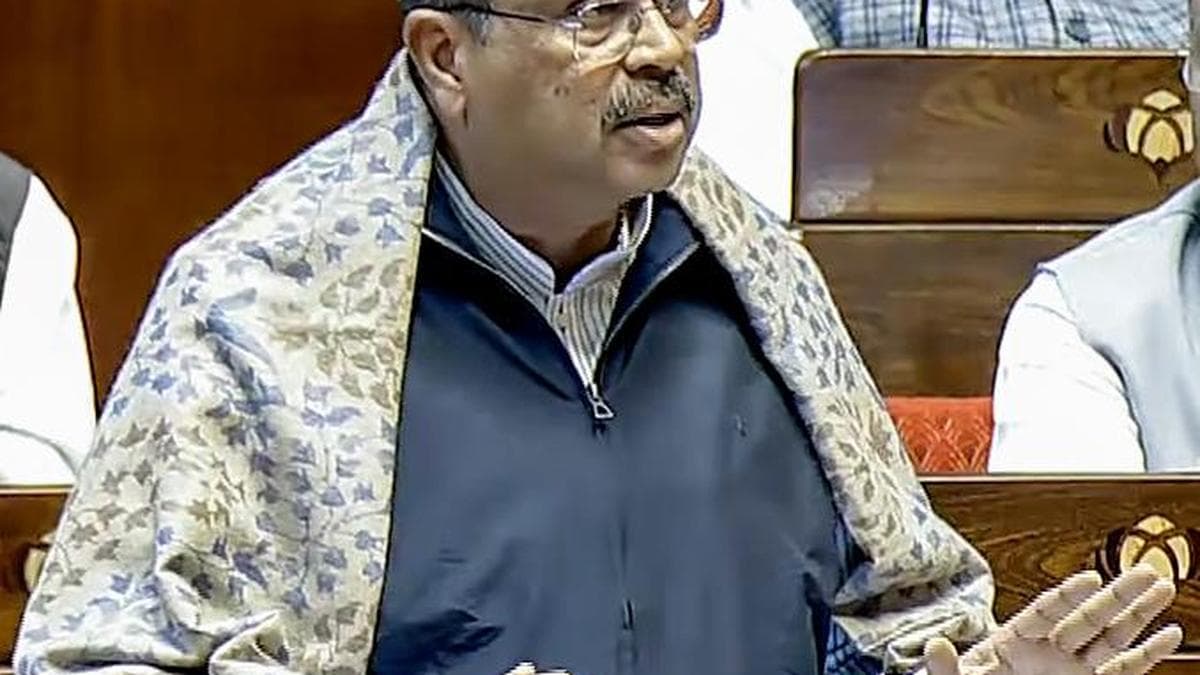
"I would like to draw your kind attention to a matter of great significance concerning the parity between the State and central lists of Other Backward Classes (OBC) in Odisha," says The Union Education Minister