



Relevant for Exams
Over 27 lakh voters deleted from Chhattisgarh draft roll; genuine voters can re-register via Claims & Objections.
Summary
Over 27 lakh voters have been deleted from Chhattisgarh's draft electoral roll following a Systematic Improvement of Records (SIR) process. This significant deletion aims to purify the electoral roll by removing duplicate or invalid entries, ensuring accuracy. Genuine voters, however, retain the crucial right to be re-added during the upcoming Claims and Objections phase, highlighting the Election Commission's commitment to both accuracy and inclusivity in the democratic process.
Key Points
- 1Over 27 lakh voters were deleted from the draft electoral roll.
- 2The deletions occurred in the state of Chhattisgarh.
- 3The action followed a process referred to as "SIR" (Systematic Improvement of Records).
- 4Genuine voters who were deleted can still be added back to the electoral roll.
- 5The re-addition process for genuine voters will take place during the "Claims and Objections phase".
In-Depth Analysis
The recent deletion of over 27 lakh voters from Chhattisgarh's draft electoral roll following a 'Systematic Improvement of Records' (SIR) process is a significant event that underscores the Election Commission of India's (ECI) continuous efforts to maintain the purity and accuracy of electoral rolls. This move, while seemingly drastic, is a crucial step in upholding the integrity of India's democratic process.
**Background Context and the Need for Purification:**
India, as the world's largest democracy, conducts elections on an unprecedented scale. The foundation of free and fair elections rests on an accurate and inclusive electoral roll. Historically, electoral rolls have been plagued by various issues, including duplicate entries (voters registered in multiple places), entries of deceased persons, shifted voters (those who have moved residences), and in some cases, even fictitious entries. These inaccuracies can lead to electoral malpractice, such as bogus voting, where ineligible individuals cast votes, thereby distorting the true will of the electorate. Such malpractices undermine public trust in the election system and compromise the principle of 'one person, one vote'. To combat these challenges, the ECI periodically undertakes intensive electoral roll revision programs, with SIR being a systematic and comprehensive approach.
**What Happened: The SIR Process in Chhattisgarh:**
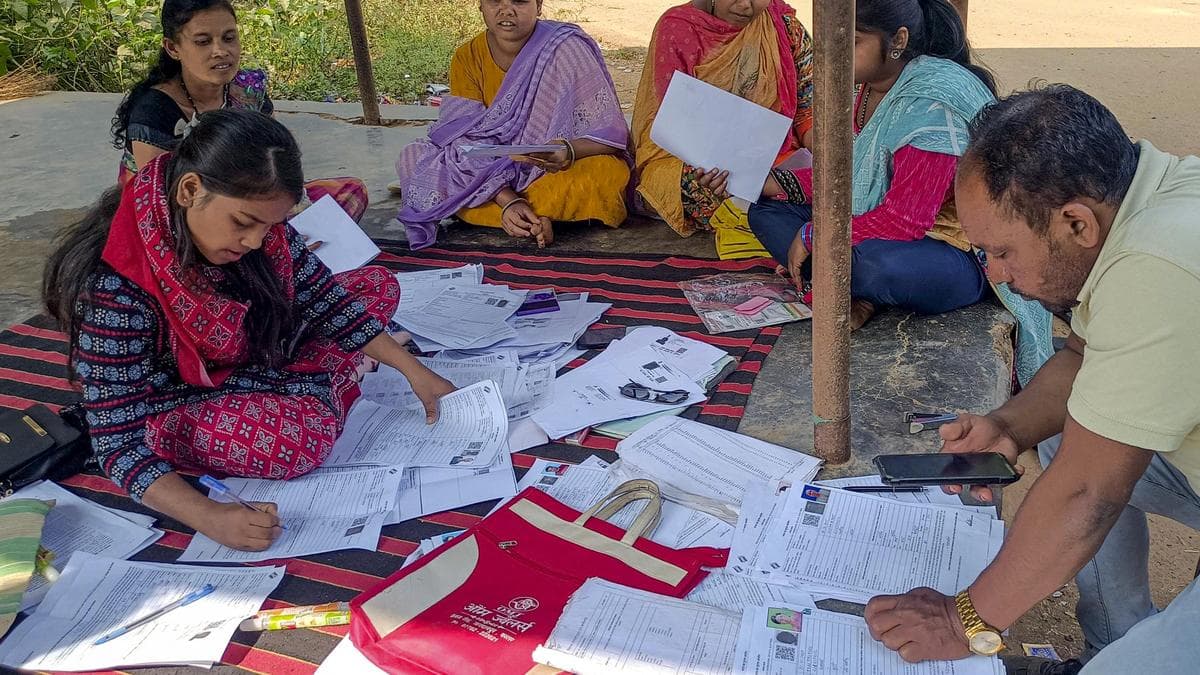
The 'Systematic Improvement of Records' (SIR) is a multi-pronged strategy employed by the ECI to clean up electoral rolls. It involves a combination of data analytics, house-to-house verification, and cross-referencing with other official databases (like death registers or civil registration systems). In Chhattisgarh, this process led to the identification and subsequent deletion of over 27 lakh entries that were found to be either duplicate, deceased, permanently shifted, or otherwise invalid. This substantial number highlights the scale of inaccuracies that can accumulate over time in electoral rolls. It's important to note that such deletions are not arbitrary; they are typically based on rigorous verification processes, often involving Booth Level Officers (BLOs) who are tasked with ground-level checks. The critical safeguard in this process is the 'Claims and Objections phase', which allows genuine voters who might have been inadvertently deleted to apply for re-inclusion, ensuring that no eligible citizen is disenfranchised.
**Key Stakeholders Involved:**
Several key players are central to this process. The **Election Commission of India (ECI)**, a constitutional body established under **Article 324** of the Constitution, holds the ultimate responsibility for the superintendence, direction, and control of elections, including the preparation and revision of electoral rolls. The **Chief Electoral Officer (CEO)** of Chhattisgarh, along with District Election Officers (DEOs), Electoral Registration Officers (EROs), and Booth Level Officers (BLOs), form the state election machinery that implements the ECI's directives on the ground. **Political parties** are also stakeholders, as they are often involved in monitoring the electoral roll revision process and can raise objections or provide feedback. Most importantly, **citizens/voters** are the primary stakeholders, whose right to vote is directly impacted by the accuracy and inclusivity of the rolls. Their active participation in the claims and objections phase is crucial.
**Significance for India:**
This exercise carries immense significance for India's democracy. Firstly, it enhances the **integrity of elections** by ensuring that only eligible citizens are on the voter list, thus preventing electoral fraud and malpractice. Secondly, it strengthens the principle of **fair representation**, where every valid vote contributes meaningfully to the democratic outcome. Thirdly, it fosters **public trust** in the electoral system, which is vital for the legitimacy of elected governments. Accurate rolls also facilitate better election management, from logistics like polling booth allocation to resource deployment. This systematic purification aligns with the ECI's broader objective of making elections free, fair, and transparent.
**Constitutional and Legal Framework:**
The ECI derives its powers and responsibilities from **Article 324** of the Indian Constitution. The legal framework governing electoral rolls is primarily the **Representation of the People Act, 1950 (RPA, 1950)**, particularly sections 13 to 25, which deal with the preparation, revision, and correction of electoral rolls. The **Electoral Registration Rules, 1960**, further elaborate on the procedures. The 'Claims and Objections phase' is a statutory provision under these laws, allowing citizens to file applications for inclusion (Form 6), objection to inclusion (Form 7), or correction of particulars (Form 8). This legal backing ensures that the process is not only systematic but also provides avenues for redressal, safeguarding individual rights.
**Future Implications:**
Such large-scale purifications are likely to continue across states as the ECI leverages technology and data analytics to refine electoral rolls. The future will see increased integration of technology, possibly including AI/ML algorithms for better de-duplication and identification of anomalies. This will lead to more robust electoral rolls, but it also necessitates greater transparency from the ECI and proactive engagement from citizens to verify their details. While purification is essential, the ECI must also ensure that the claims and objections process is streamlined, accessible, and well-publicized to prevent genuine voters from being inadvertently disenfranchised. The success of such initiatives will determine the continued credibility and robustness of India's electoral democracy.
Exam Tips
This topic falls under GS Paper II: Polity & Governance, specifically 'Elections' and 'Constitutional Bodies'. Focus on the role and powers of the Election Commission of India.
Study related topics like the Representation of the People Act, 1950 and 1951, electoral reforms (e.g., EVMs, VVPATs, electoral bonds), and the concept of 'free and fair elections'.
Common question patterns include: (a) Factual questions on Article 324, RPA 1950, or the ECI's functions. (b) Analytical questions on challenges in electoral roll management, the significance of purification, or the balance between accuracy and inclusivity. (c) Policy-oriented questions on the 'Claims and Objections' process or proposed electoral reforms.
Understand the difference between the ECI and State Election Commissions (SECs) and their respective roles in conducting elections.
Be aware of recent debates or proposals related to electoral rolls, such as the Aadhaar-Voter ID linking, and their potential implications.
Related Topics to Study
Full Article
The release added that genuine voters can still be added back in electoral roll during the Claims and Objections phase