



Relevant for Exams
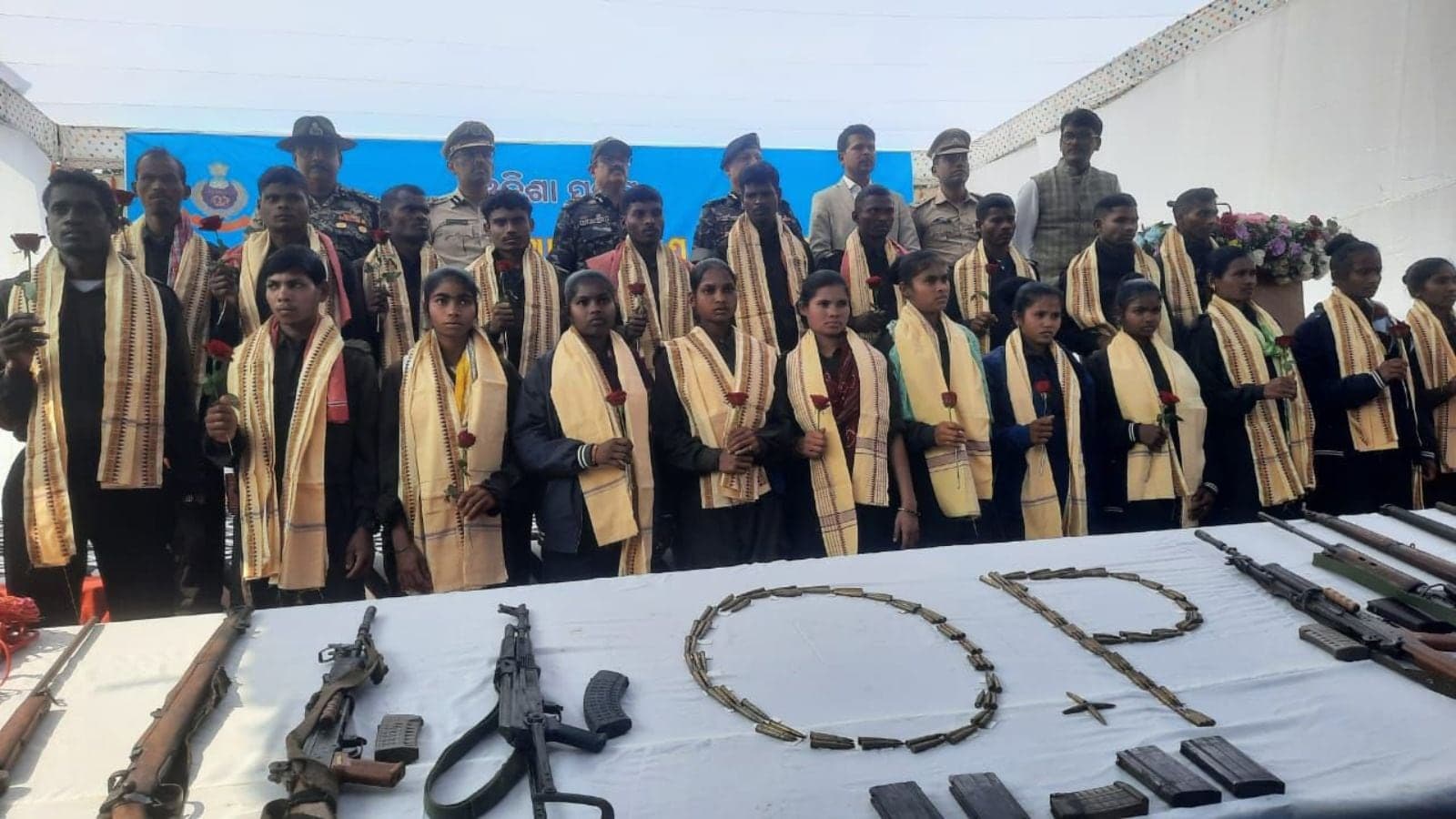
Odisha's revised surrender policy successful, 22 Maoists give up arms.
Summary
Odisha's revised surrender policy has shown positive outcomes, leading to the surrender of 22 Maoists. This development is significant as it indicates the effectiveness of the state's counter-insurgency and rehabilitation efforts, contributing to internal security and peace in affected regions. For competitive exams, understanding such state-specific policies, their impact on internal security, and the number of beneficiaries is crucial for topics like governance and social issues.
Key Points
- 1The state implementing the policy is Odisha.
- 2The policy is specifically identified as a 'revised surrender policy'.
- 3A total of 22 Maoists have surrendered under this policy.
- 4The policy is reported to have 'yielded results', indicating its effectiveness.
- 5The initiative targets Maoist insurgency, contributing to internal security.
In-Depth Analysis
The news of 22 Maoists surrendering under Odisha's revised policy is a significant development, underscoring the effectiveness of a multi-pronged strategy to tackle Left Wing Extremism (LWE) in India. To truly grasp its importance, we must delve into the complex history and ongoing challenges posed by Maoist insurgency.
**Background Context: The Scourge of Left Wing Extremism**
Left Wing Extremism, often referred to as Naxalism or Maoism, originated with the Naxalbari uprising in West Bengal in 1967. Rooted in perceived socio-economic injustices, land alienation, and exploitation of tribal populations, the movement quickly gained traction in neglected, resource-rich, and tribal-dominated regions. Its ideology, inspired by Mao Zedong's 'protracted people's war,' aims to overthrow the democratic state through armed struggle. Over decades, LWE has spread across the 'Red Corridor,' a contiguous stretch of territory from Andhra Pradesh to West Bengal, with Odisha being one of the significantly affected states. The movement thrives on a narrative of fighting for the rights of the marginalized, exploiting governance deficits, and filling the void left by state neglect in areas lacking basic amenities and development.
**What Happened: Odisha's Strategic Shift**
Odisha, with its vast tribal belts and mineral-rich forests, has long been a hotbed of Maoist activity. The continuous struggle led the state to refine its approach, culminating in a 'revised surrender policy.' While the specifics of the revisions aren't detailed in the summary, such policies typically enhance rehabilitation packages, offer better incentives, and streamline the surrender process, making it more attractive and safer for cadres to give up arms. The surrender of 22 Maoists, including senior cadres, signals that this revised policy is indeed 'yielding results.' It indicates a successful blend of sustained security operations, intelligence gathering, and a robust rehabilitation framework that encourages insurgents to return to the mainstream.
**Key Stakeholders Involved**
Several entities play crucial roles in this dynamic. The **Odisha State Government** is the primary architect and implementer of the surrender policy, responsible for its design, funding, and execution, including the rehabilitation of former cadres. The **Ministry of Home Affairs (MHA), Government of India**, provides strategic guidance, financial assistance through schemes like the Security Related Expenditure (SRE) scheme, and coordinates inter-state efforts to combat LWE. The **Security Forces**, including the state police (Odisha Police's Special Operations Group, District Voluntary Force) and central paramilitary forces (CRPF, BSF), are vital for maintaining pressure on Maoist groups, creating an environment conducive for surrenders, and ensuring the safety of those who choose to give up arms. Most importantly, the **Maoist cadres** themselves are the direct beneficiaries, and their decision to surrender is influenced by the policy's attractiveness, disillusionment with the movement, and the pressure from security operations. Finally, **local communities**, particularly tribal populations, are indirect stakeholders, bearing the brunt of LWE violence and benefiting immensely from the return of peace and development.
**Significance for India and Broader Themes**
This development holds immense significance for India's internal security and development agenda. LWE has been consistently identified as one of the gravest threats to national security. Successful surrender policies directly weaken the Maoist movement by depleting their ranks, especially when senior leaders or ideologues surrender, impacting their operational capabilities and morale. Furthermore, it fosters trust between the state and the local populace, demonstrating that the government offers a path to peace and rehabilitation, countering the Maoist narrative of state apathy. From an economic perspective, LWE-affected regions are often underdeveloped. Peace allows for the implementation of vital infrastructure projects (roads, schools, healthcare) and welfare schemes, integrating these areas into the national developmental mainstream. This aligns with broader themes of **Good Governance**, **Social Justice**, and **Inclusive Development** – ensuring that the benefits of growth reach the most vulnerable.
**Historical Context and Policy Evolution**
India's approach to LWE has evolved from primarily a law and order problem to a comprehensive strategy encompassing security, development, and ensuring rights and entitlements of local communities. The National Policy and Action Plan to Address Left Wing Extremism (2015) by the MHA is a testament to this multi-pronged approach. State-specific surrender policies, often aligned with central guidelines, have been in place for decades, offering incentives like monetary rewards, vocational training, housing, and land. Odisha's 'revised' policy indicates a learning curve, adapting to the changing dynamics of the insurgency and feedback from previous attempts, aiming to make rehabilitation more effective and sustainable.
**Related Constitutional Articles, Acts, and Future Implications**
Combating LWE touches upon several constitutional provisions and acts. **Public Order** and **Police** are state subjects under **Article 246 (Seventh Schedule, State List Entry 1 and 2)**, giving states primary responsibility, but the Union Government plays a crucial coordinating and supportive role. The welfare of Scheduled Tribes, often the target of LWE recruitment, is addressed by **Articles 339 and 342**, emphasizing the state's responsibility towards their protection and development. Acts like the **Unlawful Activities (Prevention) Act (UAPA), 1967**, provide the legal framework to deal with terrorist and unlawful organizations, including Maoist groups. Additionally, policies like the **Forest Rights Act (FRA), 2006**, aim to address historical injustices against forest-dwelling communities, a key grievance exploited by Maoists.
Looking ahead, the success in Odisha could serve as a blueprint for other LWE-affected states. Sustaining these surrender policies requires robust rehabilitation programs, continuous monitoring, and addressing the root causes of extremism through accelerated development and good governance. The challenge remains to prevent re-radicalization and ensure the reintegration of former cadres into society. This success brings India a step closer to realizing the vision of a LWE-free nation, fostering peace and development in its most vulnerable regions.
Exam Tips
This topic primarily falls under 'Internal Security' and 'Governance' in the UPSC Mains GS Paper III syllabus. For State PSCs, it's relevant for General Studies on state-specific issues and internal security.
Study related topics like the history of Naxalism, causes of LWE, government's multi-pronged strategy (security, development, rehabilitation), various schemes (SRE, Aspirational Districts Programme), and the role of different security forces. Understand the difference between central and state roles in internal security.
Common question patterns include: 'Analyze the effectiveness of government policies in tackling LWE, with special reference to rehabilitation policies.' 'Discuss the socio-economic factors contributing to LWE and the state's response.' 'Evaluate the challenges faced by India in combating Left Wing Extremism and suggest measures.'