



Relevant for Exams
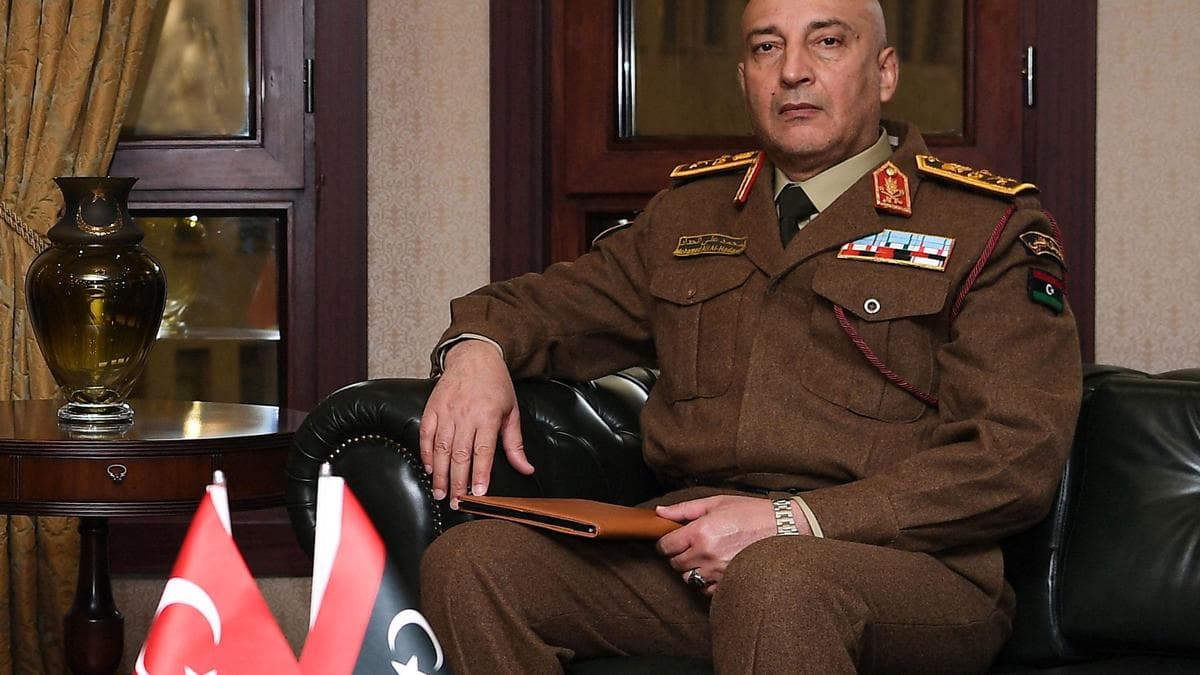
Libya's military chief confirmed dead in plane crash in Turkey due to technical malfunction.
Summary
Libya's Prime Minister has confirmed the death of the country's military chief following a plane crash in Turkey. Officials stated that contact with the aircraft was lost approximately half an hour into the flight, attributing the incident to a technical malfunction. This event serves as a factual update in international current affairs, important for competitive exams to test general awareness regarding global political and military incidents involving key nations like Libya and Turkey.
Key Points
- 1Libya's Prime Minister officially confirmed the death of the country's military chief.
- 2The military chief died as a result of a plane crash.
- 3The fatal plane crash occurred in Turkey.
- 4Officials cited a technical malfunction as the cause of the plane crash.
- 5Contact with the plane was reportedly lost about half an hour into its flight.
In-Depth Analysis
The confirmation of the death of Libya's military chief in a plane crash in Turkey, attributed to a technical malfunction, is more than just a tragic accident; it is a poignant reminder of the enduring fragility of Libya's political landscape and the complex web of international interventions that define the North African nation. For aspirants of competitive exams, this incident serves as a critical update in international relations, demanding an understanding of the historical context, key players, and broader implications.
**Background Context: A Nation in Turmoil**
Libya has been engulfed in chaos since the 2011 NATO-backed uprising that led to the overthrow and death of long-time dictator Muammar Gaddafi. The subsequent power vacuum plunged the oil-rich nation into a protracted civil war. Multiple factions emerged, broadly coalescing around two main entities: the internationally recognized Government of National Accord (GNA), later evolving into the Government of National Unity (GNU), based in Tripoli, and the rival Libyan National Army (LNA) led by Khalifa Haftar, based in the east. This conflict saw various regional and international powers backing different sides, turning Libya into a proxy battleground. Turkey, Qatar, and Italy largely supported the GNA/GNU, while the LNA received backing from Egypt, the UAE, Russia, and France. These external interventions have significantly exacerbated the conflict, providing military aid, mercenaries, and political support, thus prolonging the instability.
**The Incident and Key Stakeholders**
While the specific identity of the deceased military chief is not provided in the summary, his death represents a significant loss for the recognized Libyan government. The plane crash in Turkey highlights the deep military and strategic ties between the two nations. Turkey has been a staunch supporter of the GNA/GNU, providing critical military assistance, including drones, air defense systems, and military advisors, which proved instrumental in turning the tide against the LNA in crucial battles, particularly around Tripoli. The incident underscores Turkey's pivotal role as a key external stakeholder in Libya's security apparatus. The Libyan government, grappling with the ongoing challenges of unification and stability, now faces the immediate task of appointing a successor and managing the potential impact on its military leadership.
**Turkey's Pivotal Role and Strategic Interests**
Turkey's involvement in Libya is driven by a mix of ideological, economic, and geopolitical interests. Ankara views its support for the Tripoli-based government as crucial for its broader strategic goals in the Eastern Mediterranean, particularly regarding maritime boundaries and energy exploration rights. In 2019, Turkey and the GNA signed a controversial maritime delimitation agreement, which was largely condemned by Greece, Cyprus, and Egypt, intensifying regional tensions. This agreement, along with potential energy exploration contracts and military base agreements, forms the bedrock of Turkey's strategic engagement in Libya. The presence of a Libyan military chief in Turkey for official or medical purposes, or even training, is a testament to this close alliance.
**Significance for India: A Distant Echo with Real Impact**
Although geographically distant, events in Libya have tangible implications for India. Firstly, **Energy Security** is paramount. Libya possesses Africa's largest proven oil reserves, and any instability in the region, including the broader Middle East and North Africa (MENA), directly impacts global oil prices and supply chains. As a major oil importer, India's economy is highly susceptible to such fluctuations. Secondly, the **Indian Diaspora** is a significant concern. Historically, a substantial number of Indian professionals and laborers have worked in Libya, particularly in the oil and construction sectors. Political instability necessitates evacuation efforts, as seen during previous escalations. Thirdly, India's **Foreign Policy** principles, enshrined in Article 51 of the Constitution (which directs the state to promote international peace and security, maintain just and honorable relations between nations, foster respect for international law, and encourage settlement of international disputes by arbitration), advocate for peaceful resolution of conflicts and adherence to international law. India, as a non-permanent member of the UN Security Council at various times, has consistently called for a unified, sovereign, and stable Libya, free from external interference. This incident also resonates with India's 'Look West' policy, which aims to strengthen ties with the MENA region for economic and strategic benefits.
**Future Implications**
The death of a senior military leader, even if accidental, can create a power vacuum or at least a temporary disruption in the military command structure. This could potentially affect the ongoing efforts to unify Libya's armed forces, a critical component of the UN-backed peace process. It might also influence the delicate balance of power within the GNU, which is tasked with leading Libya to elections. For Turkey, the incident, while tragic, is unlikely to alter its strategic commitment to Libya, given its deep-seated interests. However, it serves as a stark reminder of the risks involved in its foreign engagements. The broader international community will continue to watch for any signs of renewed escalation, as Libya remains a critical flashpoint in regional geopolitics, with implications for migration, terrorism, and energy security.
Exam Tips
This topic falls under 'International Relations' and 'Current Affairs' in UPSC Civil Services (Prelims & Mains GS-II), SSC CGL, and State PSC exams. Focus on the geopolitical context, key actors, and India's foreign policy stance.
Study related topics like the Libyan Civil War (2011-present), the role of external powers (Turkey, Russia, UAE, Egypt, France), the UN's efforts for peace in Libya, and the geopolitics of the Eastern Mediterranean. Understand the timeline of major events and peace agreements.
Common question patterns include factual questions (e.g., 'Which country is a major ally of the recognized government in Libya?'), analytical questions (e.g., 'Discuss the implications of external intervention in Libya's civil war for regional stability.'), and map-based questions identifying Libya and its neighbors.
Pay attention to the 'Look West' policy of India and its energy security concerns related to the MENA region. Understand how instability in oil-rich nations affects India's economy and foreign policy.
Be prepared to connect such incidents to broader themes like international law, sovereignty, the role of the United Nations, and the challenges of post-conflict reconstruction.
Related Topics to Study
Full Article
Officials in Libya said contact with the plane was completely lost about half hour into the flight because of a technical malfunction