



Relevant for Exams
Kerala releases draft electoral roll after Special Intensive Revision for public verification.
Summary
Kerala has released its draft electoral roll following a Special Intensive Revision (SIR) process. This is a crucial step in ensuring an updated and accurate voter list, allowing citizens to verify their details, add new voters, or request corrections. Such revisions are fundamental for maintaining the integrity of the democratic process and are important for competitive exams focusing on governance and electoral reforms.
Key Points
- 1The draft electoral roll has been released for the state of Kerala.
- 2The release follows a 'Special Intensive Revision' (SIR) process.
- 3The draft roll allows citizens to verify their names and details for accuracy.
- 4It facilitates the addition of new eligible voters and correction of existing entries.
- 5This revision process is essential for updating voter lists before upcoming elections.
In-Depth Analysis
The recent release of the draft electoral roll for Kerala following a Special Intensive Revision (SIR) process is a critical event in India's democratic calendar, reflecting the continuous effort to maintain an accurate and inclusive voter list. For competitive exam aspirants, understanding this process goes beyond mere headlines; it delves into the foundational principles of Indian democracy, the role of constitutional bodies, and the legal framework governing elections.
**Background Context: The Bedrock of Democracy**
At its core, an electoral roll, often called a voter list, is a compilation of all eligible citizens in a constituency who are entitled to cast their votes in an election. Its accuracy is paramount for the conduct of free, fair, and transparent elections. In India, with its vast population and dynamic demographics, maintaining an up-to-date electoral roll is a monumental task. People move, turn 18, or pass away, necessitating regular updates. This is where processes like the Special Intensive Revision (SIR) come into play. SIR is not a routine update; it is a focused, time-bound exercise initiated by the Election Commission of India (ECI) to thoroughly cleanse and update the electoral rolls. It involves door-to-door verification, public awareness campaigns, and dedicated camps to ensure maximum participation and accuracy. The objective is to identify eligible voters who may have been missed, remove duplicate or deceased entries, and correct any inaccuracies in existing details.
**What Happened: Kerala's SIR and Draft Roll Release**
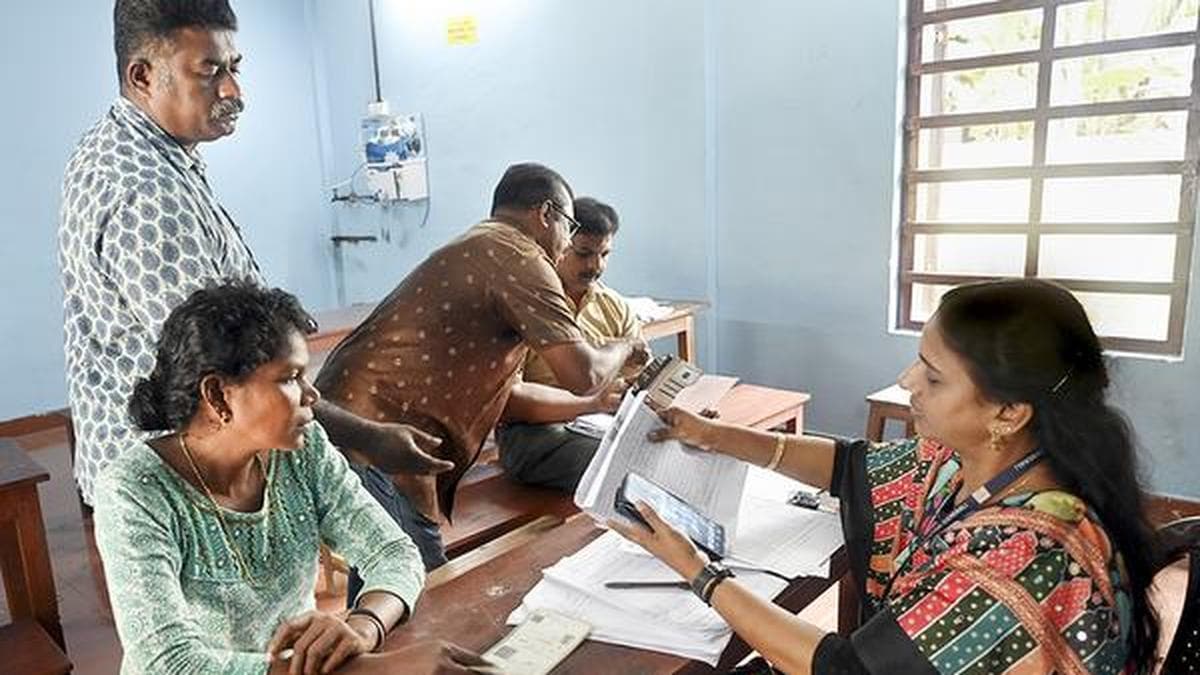
The state of Kerala recently completed such a Special Intensive Revision. This involved a detailed exercise across all assembly constituencies to update the voter database. Following this intensive revision, a draft electoral roll has been published. This 'draft' status is crucial: it signifies a period during which citizens can actively participate in verifying their details. They can check if their names are included correctly, apply to add their names if they are newly eligible (e.g., turned 18 years old on the qualifying date, typically January 1st of the revision year), or request corrections to existing entries (like address or name spelling). Furthermore, provisions exist for citizens to object to the inclusion of ineligible voters, such as those who have passed away or shifted residence. This public consultation phase is a cornerstone of ensuring the final roll is as accurate and legitimate as possible before its final publication.
**Key Stakeholders Involved**
Several key players are instrumental in this elaborate process. The **Election Commission of India (ECI)**, an autonomous constitutional body established under **Article 324** of the Constitution, holds the ultimate superintendence, direction, and control over the preparation of electoral rolls and the conduct of elections. At the state level, the **Chief Electoral Officer (CEO)**, appointed by the ECI in consultation with the state government, oversees the implementation of electoral processes. Beneath the CEO are **District Election Officers (DEOs)** at the district level and **Electoral Registration Officers (EROs)** for each assembly constituency, who are directly responsible for the preparation and revision of electoral rolls. **Booth Level Officers (BLOs)**, typically local government employees, conduct door-to-door verification. Crucially, **citizens (voters)** themselves are primary stakeholders, as their active participation in checking and rectifying details is indispensable. Finally, **political parties** also play a role by scrutinizing the draft rolls and encouraging their supporters to participate in the revision process.
**Why This Matters for India: Upholding Democratic Integrity**
The accuracy of electoral rolls is fundamental to the health of India's democracy. Firstly, it ensures **free and fair elections** by preventing electoral malpractice like bogus voting or multiple entries. Secondly, it promotes **inclusivity**, guaranteeing that every eligible citizen, regardless of their background, has the opportunity to exercise their franchise, thereby strengthening the principle of **universal adult suffrage** enshrined in **Article 326** of the Constitution. An accurate roll enhances voter confidence in the electoral system and the legitimacy of elected representatives. Socially, it empowers marginalized communities by ensuring their representation. Politically, it strengthens accountability, as elected leaders are chosen by a legitimate mandate. Economically, reliable voter data can also aid in better demographic planning and resource allocation by the government.
**Historical Context and Constitutional Basis**
India's electoral system has evolved significantly since its first general elections in 1951-52. The ECI has continuously strived for reforms to make the process more robust. The legal framework primarily stems from the **Representation of the People Act, 1950**, which specifically deals with the preparation and revision of electoral rolls, prescribing the qualifications for voters and the procedures for registration. The **Electoral Registration Rules, 1960**, further detail the process. Over the decades, the ECI has introduced various measures, including the introduction of Electoral Photo Identity Cards (EPICs) in 1993, continuous online enrolment facilities, and technological solutions to detect duplicate entries, all aimed at enhancing the accuracy and integrity of the voter list. The SIR process is a testament to this ongoing commitment.
**Future Implications: Towards a More Perfect Roll**
The finalization of Kerala's electoral roll after the draft stage will directly impact upcoming elections in the state, ensuring that the electorate is accurately represented. This process is not a one-off event but part of a continuous cycle of electoral roll management. The ECI is increasingly leveraging technology, such as the National Voter's Service Portal (NVSP) and mobile applications, to make voter registration and verification more accessible. Future implications include greater digitalization of the entire process, potentially leading to more frequent and less cumbersome updates. Challenges remain, such as addressing the issue of migrant voters, ensuring data privacy, and combating voter apathy during verification phases. However, each intensive revision moves India closer to achieving a truly comprehensive, accurate, and inclusive electoral roll, thereby strengthening the foundational pillar of its vibrant democracy and ensuring that the voice of every citizen is heard and counted.
Exam Tips
This topic falls under 'Indian Polity & Governance' for UPSC Civil Services (GS-II), State PSCs, and 'General Awareness/Indian Constitution' for SSC, Banking, Railway, and Defence exams. Focus on the constitutional provisions and statutory bodies involved.
Study the functions and powers of the Election Commission of India (ECI) comprehensively, especially its role in electoral roll preparation (Article 324). Also, understand the key provisions of the Representation of the People Act, 1950, relating to electoral rolls.
Common question patterns include direct questions on constitutional articles (e.g., 'Which article deals with the superintendence of elections?'), the purpose of electoral roll revision, the role of various election officials (CEO, ERO, BLO), and the significance of an accurate voter list for democracy.
Related Topics to Study
Full Article
The draft electoral roll for Kerala after the Special Intensive Revision has been released