



Relevant for Exams
Karnataka to remove deceased beneficiaries from Gruha Laxmi scheme; incentives released Dec 22.
Summary
The Karnataka government is taking steps to remove deceased beneficiaries from its 'Gruha Laxmi' scheme. This measure is crucial for ensuring the integrity of the welfare program and preventing the misuse of public funds, highlighting the state's commitment to efficient scheme administration. For competitive exams, this showcases state-specific welfare initiatives and governance practices related to beneficiary management.
Key Points
- 1The Karnataka government is implementing the 'Gruha Laxmi' welfare scheme.
- 2The government plans to weed out beneficiaries of the 'Gruha Laxmi' scheme who have passed away.
- 3The pending incentive under the 'Gruha Laxmi' scheme was released on December 22.
- 4The initiative aims to ensure the scheme's integrity and prevent financial irregularities.
- 5This action reflects the state government's efforts in efficient beneficiary management for welfare programs.
In-Depth Analysis
The Karnataka government's decision to remove deceased beneficiaries from its flagship 'Gruha Laxmi' scheme is a significant step towards ensuring the integrity and efficiency of welfare programs in India. This move, while seemingly administrative, encapsulates critical aspects of governance, fiscal prudence, and the effective delivery of social justice.
**Background Context: India's Welfare Landscape and Karnataka's Guarantee Schemes**
India has a long history of implementing welfare schemes aimed at poverty alleviation, social security, and empowering vulnerable sections of society. From the 'Garibi Hatao' slogan of the 1970s to the current emphasis on Direct Benefit Transfer (DBT), the evolution has been towards more targeted and leak-proof delivery. State governments often play a crucial role in designing and implementing such schemes, tailored to local needs and political priorities. In Karnataka, the current government introduced a set of 'guarantee schemes' following its election victory in May 2023, promising various benefits to citizens. Among these, the 'Gruha Laxmi' scheme stands out as a major initiative aimed at women's empowerment and financial support. Under this scheme, eligible women heads of households receive Rs. 2,000 monthly, directly transferred to their bank accounts. The scheme was launched with much fanfare, envisioning a substantial upliftment for millions of families.
**What Happened: The Audit and Rectification**
The recent announcement by the Karnataka Minister indicates a proactive measure to refine the beneficiary list of the Gruha Laxmi scheme. The government has identified that some individuals on the beneficiary list have passed away and is now taking steps to 'weed out' these deceased beneficiaries. This action is crucial to prevent the continued disbursement of funds to ineligible recipients, thereby curbing financial irregularities and ensuring that public money is utilized for its intended purpose. The article specifically mentions that pending incentives under the scheme were released on December 22, highlighting the ongoing operational aspects of the program and the need for continuous database reconciliation.
**Key Stakeholders Involved**
Several key stakeholders are involved in this process. Firstly, the **Karnataka Government**, particularly the Department of Women and Child Development (likely the nodal agency) and the Department of Finance, is the primary driver of this initiative. They are responsible for policy formulation, implementation, and oversight. Secondly, the **beneficiaries** themselves, especially the living women heads of households, are directly impacted as the scheme's integrity ensures continued and legitimate support. Thirdly, **taxpayers** have a vested interest, as efficient scheme management ensures that their contributions are not misused. Finally, **local administration units** (like Gram Panchayats and Urban Local Bodies) and various **government departments** (such as the Registrar of Births and Deaths) play a critical role in providing updated demographic data necessary for accurate beneficiary identification and verification.
**Significance for India: Good Governance and Fiscal Prudence**
This move by Karnataka holds significant implications for welfare administration across India. It underscores the importance of **good governance** and **fiscal prudence**. Large-scale welfare schemes are often susceptible to leakages due to outdated beneficiary lists, duplicate entries, or fraudulent claims. By actively removing deceased beneficiaries, the Karnataka government is demonstrating a commitment to accountability and efficient resource allocation. This prevents the siphoning off of public funds, which can then be redirected to genuine beneficiaries or other developmental projects. Moreover, it enhances the **credibility and public trust** in government schemes, assuring citizens that their taxes are being used responsibly. This practice also highlights the growing reliance on **data integration and digital governance** to maintain accurate records, linking scheme databases with civil registration systems (birth and death records) and Aadhaar.
**Historical Context and Constitutional Underpinnings**
The emphasis on welfare schemes in India is deeply rooted in the **Directive Principles of State Policy (DPSP)** enshrined in Part IV of the Indian Constitution. Articles like **Article 38** mandate the State to secure a social order for the promotion of the welfare of the people, striving to minimize inequalities. **Article 39** directs the State to ensure that citizens have the right to an adequate means of livelihood, and that there is equal pay for equal work for both men and women. Furthermore, **Article 41** directs the State to make effective provision for securing the right to public assistance in cases of unemployment, old age, sickness, and disablement. The Gruha Laxmi scheme, by providing financial assistance to women heads of households, directly aligns with these constitutional objectives of promoting social justice and economic empowerment. The use of modern tools for beneficiary management also touches upon the principles of transparency and accountability, often reinforced by acts like the **Right to Information Act, 2005**, and the **Aadhaar (Targeted Delivery of Financial and Other Subsidies, Benefits and Services) Act, 2016**, which facilitates identity verification and de-duplication in welfare programs.
**Future Implications: A Model for Efficient Welfare Delivery**
This initiative by the Karnataka government sets a precedent for other states grappling with similar challenges in welfare scheme administration. It will likely spur greater adoption of robust **data management systems**, cross-referencing databases from various departments (e.g., Aadhaar, death registries, electoral rolls) to ensure cleaner beneficiary lists. The move could also lead to a push for more frequent audits and verification processes for all ongoing welfare programs. While the immediate goal is to save funds and ensure integrity, the long-term implication is a shift towards more sophisticated, technology-driven, and accountable governance in the welfare sector. Challenges will include ensuring seamless data flow between departments, addressing privacy concerns, and continually updating the verification mechanisms to prevent future leakages. Ultimately, such measures are vital for sustaining the viability and impact of large-scale social welfare programs in a fiscally constrained environment.
Exam Tips
This topic falls under GS Paper II (Governance, Social Justice) and GS Paper III (Indian Economy - Government Budgeting, Welfare Schemes) for UPSC. For State PSCs, it's relevant for state-specific welfare policies and public administration.
Study related topics such as Direct Benefit Transfer (DBT), Aadhaar's role in welfare delivery, Public Financial Management System (PFMS), women empowerment schemes, and the challenges of fiscal federalism in India. Understand the difference between central sector, centrally sponsored, and state schemes.
Common question patterns include: direct questions on major state/central welfare schemes (e.g., 'Discuss the objectives and impact of the Gruha Laxmi scheme.'), analytical questions on challenges in welfare delivery (e.g., 'Critically analyze the issues of leakage and beneficiary management in India's welfare programs and suggest solutions.'), and questions linking DPSP to government policies (e.g., 'How do welfare schemes like Gruha Laxmi embody the spirit of Directive Principles of State Policy?').
Focus on the constitutional articles underpinning welfare (DPSP - Articles 38, 39, 41) and the legislative framework for identity and transparency (Aadhaar Act, RTI Act).
Prepare short notes on key government initiatives for good governance and public financial management, such as the use of technology in governance, e-governance, and fiscal responsibility.
Related Topics to Study
Full Article
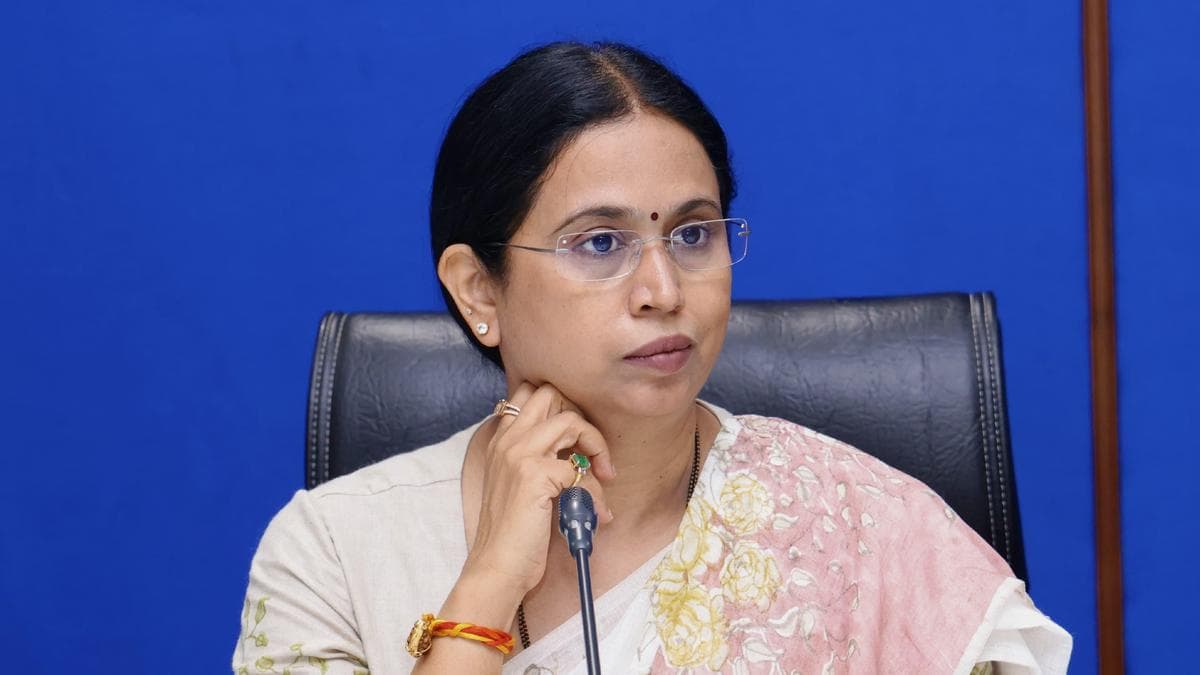
She said that the pending incentive under the scheme was released on December 22