



Relevant for Exams
J&K HC dismisses Mehbooba Mufti's PIL on undertrials, stating courts aren't election campaign forums.
Summary
The Jammu & Kashmir High Court dismissed a Public Interest Litigation (PIL) filed by former Chief Minister Mehbooba Mufti concerning undertrials. The court emphasized that PILs require specific claims, named affected persons, or verifiable material, and cannot be based on vague or unsubstantiated assertions. It also clarified that courts are not forums for electoral campaigns, setting a precedent on the appropriate use of judicial remedies, which is crucial for understanding judicial activism and restraint for competitive exams.
Key Points
- 1The Jammu & Kashmir High Court dismissed a Public Interest Litigation (PIL).
- 2The PIL was filed by former J&K Chief Minister Mehbooba Mufti.
- 3The PIL sought intervention regarding the issue of undertrials.
- 4The court ruled that PIL jurisdiction requires specific claims, named affected persons, or verifiable material, not generalized assertions.
- 5The J&K High Court explicitly stated that courts cannot serve as forums for electoral campaigns.
In-Depth Analysis
The Jammu & Kashmir High Court's dismissal of a Public Interest Litigation (PIL) filed by former Chief Minister Mehbooba Mufti regarding undertrials is a significant development that underscores crucial principles of judicial review, the scope of PILs, and the delicate balance between judicial activism and restraint. This ruling provides valuable insights for competitive exam aspirants into the functioning of India's judiciary and the appropriate use of legal remedies.
**Background Context and What Happened:**
Public Interest Litigation (PIL) emerged in India in the late 1970s and early 1980s, primarily championed by Justices P.N. Bhagwati and V.R. Krishna Iyer. It was conceived as a revolutionary tool to provide access to justice for marginalized sections of society who could not approach the courts themselves, allowing any public-spirited individual or organization to seek legal redress on their behalf. The underlying principle was 'locus standi' relaxation to ensure justice for all. Over the decades, PILs have been instrumental in bringing about significant social reforms, protecting environmental rights, and addressing human rights violations. However, the expansive nature of PILs has also led to concerns about their potential misuse, often termed 'publicity interest litigation' or 'private interest litigation.'
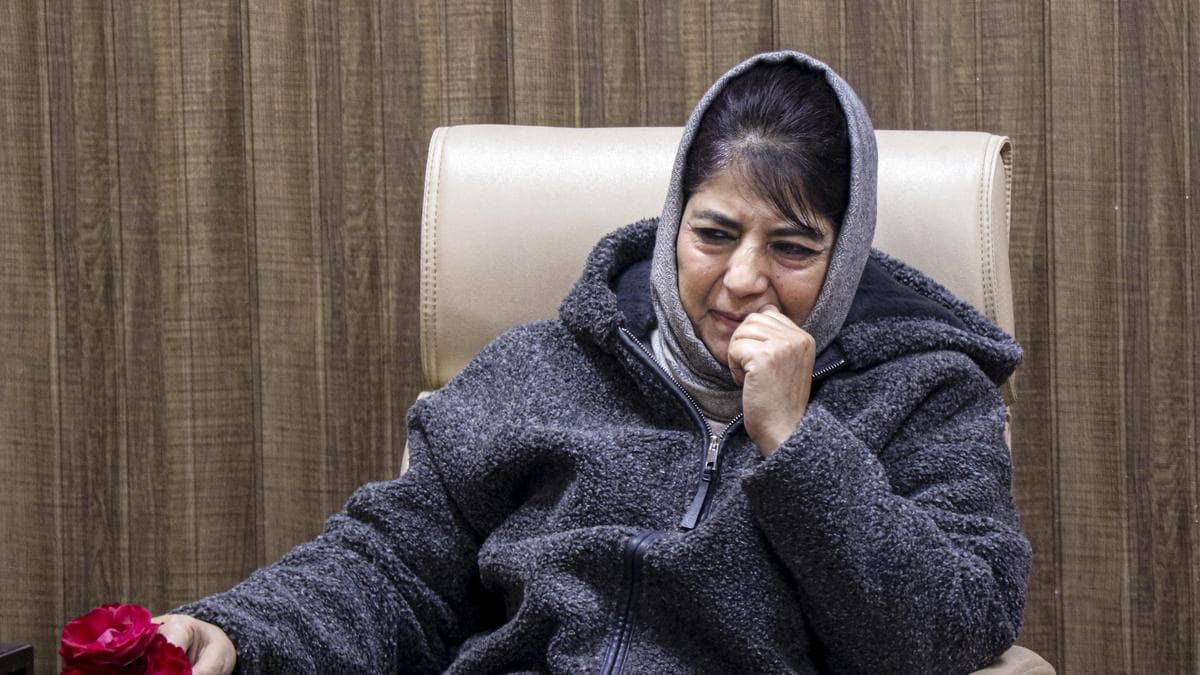
In this specific instance, Mehbooba Mufti, a prominent political figure and former Chief Minister of Jammu & Kashmir, filed a PIL seeking intervention on the issue of undertrials. While the specific details of her petition were not extensively elaborated in the summary, it can be inferred that she aimed to highlight the plight of individuals awaiting trial in jails, a persistent human rights concern across India. The J&K High Court, however, dismissed her PIL. The court's primary reasoning was that the petition was 'grounded in ambiguity,' 'rested on incomplete, vague and unsubstantiated assertions,' and lacked 'named affected persons, challenging specific orders or placing verifiable material on record.' Crucially, the court explicitly stated that the 'jurisdiction of PIL could not be invoked based on generalised claims' and that 'courts cannot serve as forums for electoral campaigns.'
**Key Stakeholders Involved:**
1. **Jammu & Kashmir High Court:** As the judicial authority, the High Court plays a vital role in interpreting laws and upholding constitutional principles. Its decision reflects its commitment to maintaining the sanctity of judicial processes and preventing their misuse for non-judicial purposes. This ruling reinforces the court's prerogative to define the boundaries of its own jurisdiction, especially concerning PILs.
2. **Mehbooba Mufti:** As the petitioner and a seasoned political leader, her action can be seen through multiple lenses. While she may genuinely be concerned about undertrials, the court's observation about 'electoral campaigns' suggests a perception that the PIL might have been motivated, at least in part, by political considerations, especially given the sensitive political landscape in J&K post-Article 370 abrogation.
3. **Undertrials:** These are individuals who have been arrested and are awaiting trial or investigation. Their rights, including the right to a speedy trial (enshrined in Article 21 of the Constitution), are often violated due to systemic delays in the criminal justice system, leading to prolonged detention. They are the ultimate beneficiaries (or intended beneficiaries) of any genuine effort to reform the system.
**Significance for India:**
This ruling holds immense significance for India's legal and political landscape. Firstly, it reiterates the principle of **judicial restraint**, emphasizing that while courts can intervene in matters of public interest, such interventions must be based on concrete evidence and specific grievances, not vague assertions. This acts as a check against the potential overreach of judicial activism. Secondly, it clarifies the **scope and limitations of PILs**, reminding litigants that these are not platforms for generalized grievances or political posturing. The judiciary is not an alternative forum for political debate or electoral campaigning. Thirdly, it subtly reinforces the **separation of powers**, suggesting that policy matters or broad administrative issues, if not backed by specific legal violations, are best addressed by the executive and legislature. For J&K, a region that has undergone significant constitutional changes with the abrogation of Article 370 in August 2019 and its reorganization into Union Territories, this ruling also signals a firm stance by the judiciary in upholding procedural rectitude amidst a politically charged environment. The underlying issue of undertrial rights, while not the direct cause of dismissal, remains a critical human rights concern, drawing attention to the need for continuous prison reforms and adherence to the provisions of the Criminal Procedure Code (CrPC), such as Section 436A, which allows for the release of an undertrial who has undergone detention for half of the maximum period of imprisonment specified for that offense.
**Historical Context and Constitutional Provisions:**
The evolution of PILs in India saw a shift from strict 'locus standi' to a more liberal approach, enabling the judiciary to address systemic injustices. However, this liberalization also led to debates about judicial overreach. The present ruling aligns with a trend where courts are increasingly scrutinizing PILs to prevent their misuse. Constitutionally, the power of High Courts to entertain such petitions stems primarily from **Article 226**, which grants them vast powers to issue writs for the enforcement of fundamental rights and for 'any other purpose.' The fundamental right to life and personal liberty, guaranteed by **Article 21**, implicitly includes the right to a speedy trial, a cornerstone of fair justice. The prolonged detention of undertrials often violates this fundamental right. While the current PIL was dismissed on procedural grounds, the court's reaffirmation of proper procedure protects the integrity of the judicial system, ensuring that genuine cases receive due attention.
**Future Implications:**
This judgment is likely to serve as a precedent, influencing how future PILs, particularly those filed by political figures or based on broad claims, are handled by courts across India. It encourages litigants to conduct thorough research, gather specific evidence, and identify affected parties before approaching the judiciary. It reinforces the idea that the judiciary's role is to adjudicate specific legal disputes based on facts and law, not to act as an ombudsman for generalized societal problems without proper legal foundation. While the issue of undertrials remains critical, this ruling suggests that addressing it requires well-substantiated legal challenges or focused advocacy rather than broad, unsubstantiated petitions. This could lead to a more disciplined approach to PILs, ensuring that this powerful judicial tool remains effective for its intended purpose of justice delivery to the truly marginalized, rather than becoming a platform for political statements or vague grievances.
Exam Tips
This topic falls under **GS Paper II: Polity & Governance** of the UPSC Civil Services Exam (CSE) and State PSCs. Focus on the 'Indian Judiciary,' 'Fundamental Rights,' 'Criminal Justice System,' and 'Judicial Review' sections.
When studying PILs, understand their origin, evolution, landmark cases (e.g., Hussainara Khatoon, S.P. Gupta), scope, and most importantly, the criticisms and limitations. Relate this case to the broader debate on judicial activism vs. judicial restraint.
Common question patterns include direct questions on the definition and scope of PILs, analytical questions on the judiciary's role in governance, or case-study-based questions asking about the application of judicial principles in specific scenarios. Be prepared to discuss the constitutional provisions (Articles 21, 32, 226) and relevant legal acts (CrPC) related to undertrials and judicial remedies.
Related Topics to Study
Full Article
The court said that the PIL was grounded in ambiguity and rested on incomplete, vague and unsubstantiated assertions. The jurisdiction of PIL could not be invoked based on generalised claims without naming affected persons, challenging specific orders or placing verifiable material on record