



Relevant for Exams
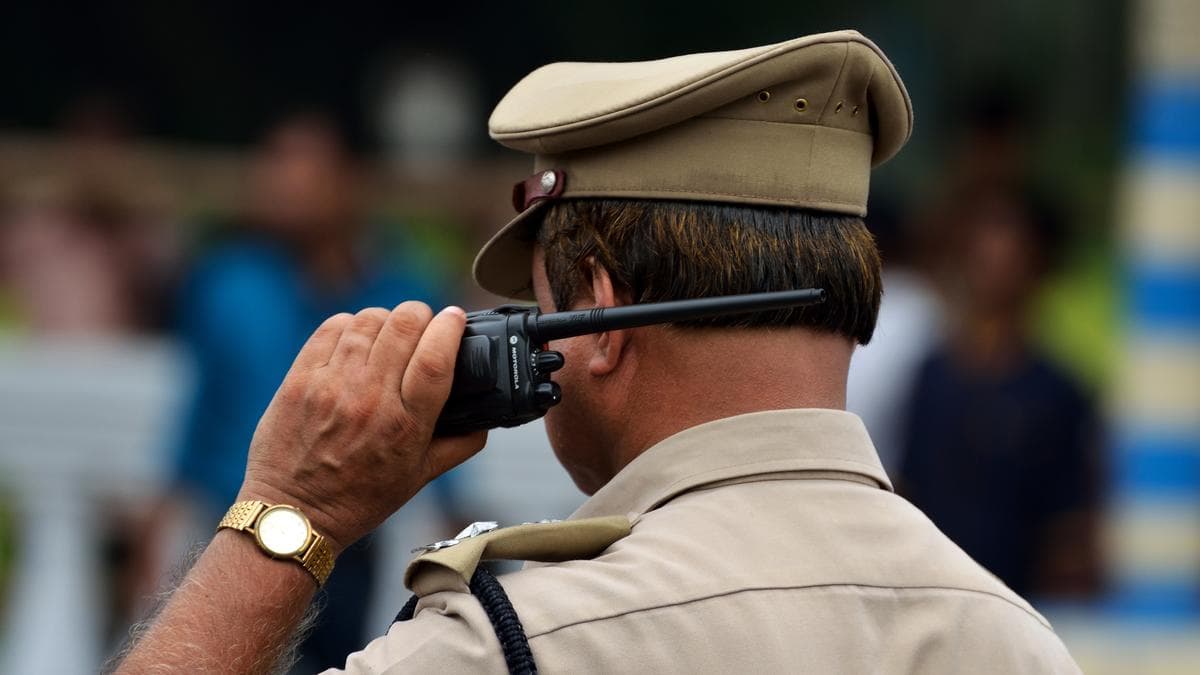
Itanagar Police arrests two from J&K for alleged espionage in Arunachal, linked to Pakistan.
Summary
Itanagar Police arrested two individuals from Jammu & Kashmir for alleged espionage activities in Arunachal Pradesh. The accused were reportedly collecting sensitive information from various parts of the state and transmitting it to handlers based in Pakistan. This incident underscores the persistent national security threats in India's border regions, particularly from hostile foreign elements, making it relevant for exams focusing on internal security and geopolitics.
Key Points
- 1Two individuals were arrested by Itanagar Police in Arunachal Pradesh.
- 2The arrested accused hail from Jammu & Kashmir (J&K).
- 3They were allegedly involved in collecting sensitive information from Arunachal Pradesh.
- 4The collected information was reportedly shared with handlers based in Pakistan.
- 5The arrests highlight ongoing espionage threats in India's sensitive border states.
In-Depth Analysis
The arrest of two individuals from Jammu & Kashmir in Arunachal Pradesh for alleged espionage, with reported links to Pakistan-based handlers, casts a sharp light on India's persistent national security challenges. This incident is not an isolated event but rather a symptom of a broader, well-established pattern of hostile state and non-state actors attempting to undermine India's security and territorial integrity, particularly in its sensitive border regions.
**Background Context and What Happened:**
Arunachal Pradesh, a strategically vital state in India's Northeast, shares a long and disputed border with China. India considers Arunachal Pradesh an integral part of its territory, a claim consistently challenged by China, which refers to it as 'South Tibet'. This geopolitical sensitivity makes the state a prime target for intelligence gathering and destabilization efforts. The incident involved the Itanagar Police apprehending two individuals originating from Jammu & Kashmir. They were accused of collecting sensitive information from various parts of Arunachal Pradesh and transmitting it to handlers reportedly based in Pakistan. This suggests a sophisticated network, possibly exploiting existing vulnerabilities or offering financial incentives for information.
**Key Stakeholders Involved:**
1. **Indian Security Agencies:** The Itanagar Police, backed by central intelligence agencies like the Intelligence Bureau (IB) and potentially the Research and Analysis Wing (RAW), are the primary stakeholders responsible for counter-espionage. Their swift action is crucial for national security. The Ministry of Home Affairs (MHA) oversees these operations. Their objective is to dismantle espionage networks and protect national interests.
2. **The Accused Individuals:** Hailing from J&K, their motivations could range from ideological alignment with anti-India elements, financial inducement, or even coercion. Their origin from J&K, a region with a long history of cross-border infiltration and radicalization, suggests a potential link between different theatres of India's internal security challenges.
3. **Pakistan-based Handlers/State Actors:** While not explicitly named, the reference to 'handlers based in Pakistan' strongly implicates Pakistan's Inter-Services Intelligence (ISI). The ISI has a well-documented history of sponsoring espionage, proxy warfare, and terror activities against India, aiming to gather intelligence, foment unrest, and destabilize the country.
4. **The People of Arunachal Pradesh:** The local population is a crucial stakeholder, as they can be both targets for recruitment and vital sources of intelligence for security forces. Their vigilance and cooperation are paramount in preventing such activities.
**Why This Matters for India:**
This incident carries significant implications for India's national security, internal dynamics, and foreign relations:
* **National Security:** Espionage in a border state like Arunachal Pradesh poses a direct threat to India's territorial integrity and strategic interests. Information collected could pertain to military installations, troop movements, infrastructure projects, or local demographics, all of which could be exploited by hostile foreign powers, particularly China, given the disputed border.
* **Internal Security Linkages:** The involvement of individuals from J&K highlights a concerning nexus, suggesting that hostile agencies might be attempting to create pan-Indian networks or exploit individuals from one sensitive region for operations in another. This underscores the interconnectedness of India's internal security challenges, from Kashmir to the Northeast.
* **Geopolitical Ramifications:** The incident further strains India-Pakistan relations, already fraught with mistrust over cross-border terrorism. It also indirectly touches upon India-China dynamics, as any intelligence gathered from Arunachal Pradesh could potentially benefit China in its territorial claims.
* **Economic and Social Impact:** Such activities can deter investment in border areas, impacting development. They can also sow seeds of suspicion and communal discord if exploited by vested interests.
**Historical Context:**
India has a long history of combating espionage, especially from Pakistan. The ISI's efforts to destabilize India through intelligence gathering, funding of separatist movements, and promoting radicalization have been a constant threat since partition. From the Punjab insurgency to the ongoing proxy war in J&K, and even attempts to infiltrate other states, the pattern of hostile intelligence activities is well-established. Arunachal Pradesh, while historically more focused on the China border, is not immune to such threats, especially as India develops its infrastructure and military presence in the region.
**Future Implications:**
This arrest will likely lead to enhanced vigilance and intelligence gathering in Arunachal Pradesh and other sensitive border states. It will necessitate a review of existing counter-intelligence protocols and potentially lead to more robust screening and monitoring mechanisms. The incident also underscores the need for greater inter-state police and intelligence coordination, especially between states like J&K and those in the Northeast. Furthermore, it highlights the continuous challenge of countering radicalization and recruitment attempts by foreign elements within India. Diplomatic channels might see India raising concerns with Pakistan, though direct attribution and actionable evidence are often complex in such cases.
**Related Constitutional Articles, Acts, or Policies:**
1. **The Official Secrets Act, 1923:** This is the primary legislation dealing with espionage in India. Section 3 specifically deals with spying, making it an offense to approach, inspect, pass over, or be in the vicinity of a prohibited place for any purpose prejudicial to the safety or interests of the State, or to obtain, collect, record, or publish any secret official code, password, sketch, plan, model, article, note, document, or information that is calculated to be or might be or is intended to be directly or indirectly useful to an enemy. Section 5 deals with wrongful communication, etc., of information.
2. **Unlawful Activities (Prevention) Act (UAPA), 1967:** If the espionage activities are found to be linked to terrorist organizations or aim to threaten the sovereignty and integrity of India, UAPA provisions can be invoked, allowing for stricter penalties and investigative powers.
3. **Indian Penal Code (IPC):** Sections like 121 (waging, or attempting to wage war, or abetting waging of war, against the Government of India) and 121A (conspiracy to commit offences punishable by Section 121) could be relevant if the intent is proven to be hostile towards the state.
4. **Constitutional Provisions:** While no direct article mandates counter-espionage, Article 19 (Freedom of Speech and Expression) is subject to reasonable restrictions in the interests of the security of the State. Furthermore, citizens have a fundamental duty under Article 51A (d) to defend the country and render national service when called upon to do so.
Exam Tips
This topic falls under the 'Internal Security' section of the UPSC Civil Services Mains Syllabus (GS Paper III) and is also relevant for SSC CGL, State PSCs, and Defence exams. Focus on the legal framework (Official Secrets Act, UAPA) and the role of intelligence agencies.
Study this alongside related topics like India's border management challenges (especially with Pakistan and China), the geopolitics of Northeast India, cross-border terrorism, and the functioning of various intelligence agencies (IB, RAW, NIA).
Common question patterns include direct questions on the provisions of the Official Secrets Act, case studies on internal security threats, the role of state and central agencies in counter-espionage, and the broader implications of such incidents on India's foreign policy and national security strategy.
Related Topics to Study
Full Article
According to the police officer, the accused were allegedly involved in collecting sensitive information from different parts of Arunachal Pradesh and sharing it with handlers based in Pakistan