



Relevant for Exams
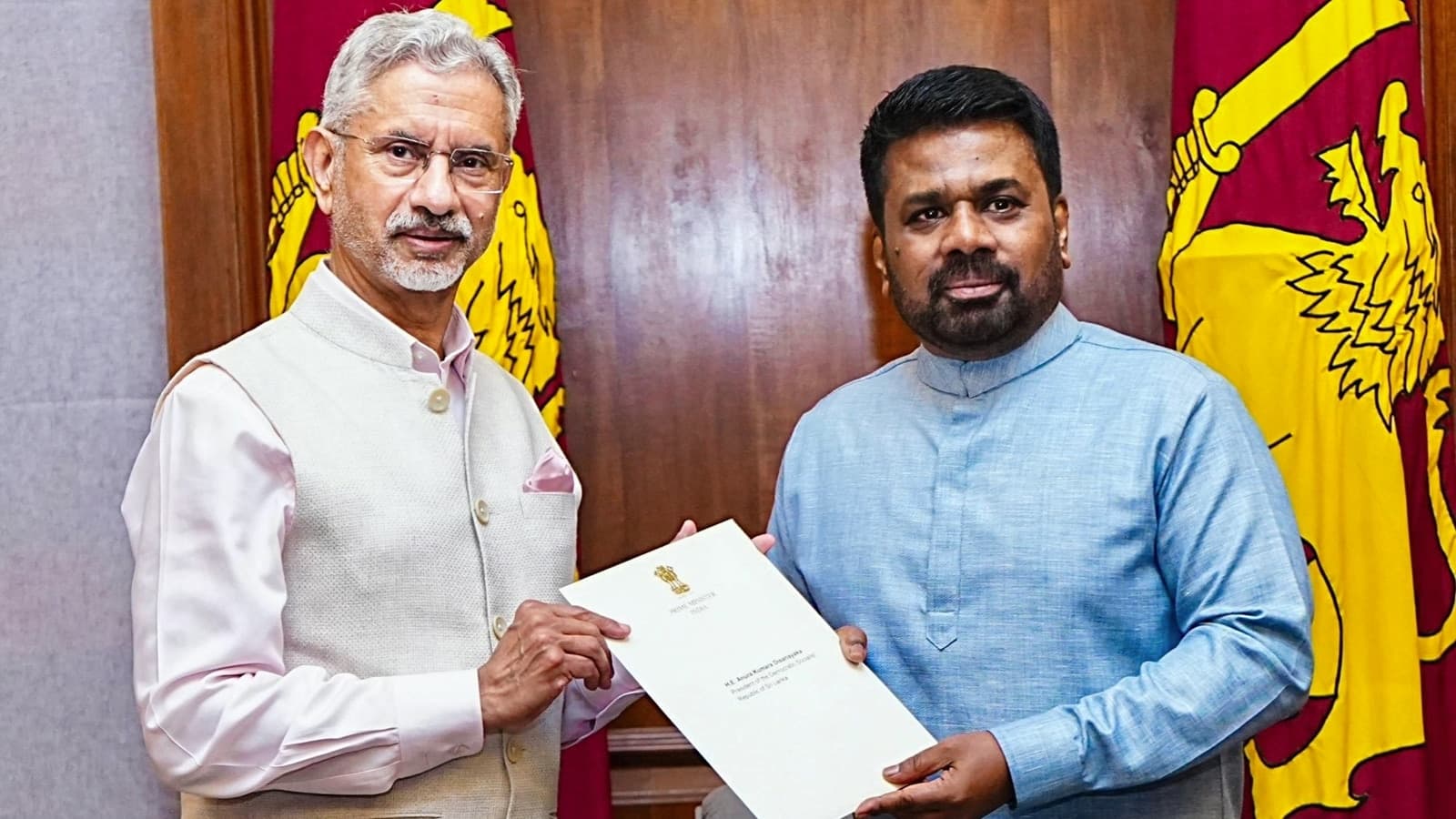
India pledges $450M relief package to Sri Lanka; EAM Jaishankar meets island nation's leaders.
Summary
India committed a $450 million relief package to Sri Lanka following External Affairs Minister S. Jaishankar's meetings with top Sri Lankan leaders. This initiative highlights India's 'Neighbourhood First' policy, reinforcing bilateral relations and regional stability. It's crucial for understanding India's foreign policy and its role as a key partner in South Asia.
Key Points
- 1India announced a $450 million relief package for Sri Lanka.
- 2The announcement came after External Affairs Minister S. Jaishankar met top Sri Lankan leaders.
- 3The relief package signifies India's commitment to its 'Neighbourhood First' policy.
- 4This bilateral aid strengthens India-Sri Lanka relations.
- 5S. Jaishankar represented India in these high-level discussions in Sri Lanka.
In-Depth Analysis
India's commitment of a $450 million relief package to Sri Lanka, following External Affairs Minister S. Jaishankar's discussions with top Sri Lankan leaders, is a significant development underscoring India's 'Neighbourhood First' policy and its pivotal role in regional stability. This aid package arrives at a critical juncture for Sri Lanka, a nation grappling with its most severe economic crisis in decades, and highlights India's proactive diplomacy and humanitarian assistance.
**Background Context: Sri Lanka's Economic Turmoil**
Sri Lanka plunged into an unprecedented economic crisis starting in late 2021, escalating into 2022. The crisis was a culmination of several factors: years of accumulated debt, unsustainable tax cuts in 2019, the devastating impact of the COVID-19 pandemic on its vital tourism sector, a ban on chemical fertilizers that crippled agricultural output, and dwindling foreign exchange reserves. This led to severe shortages of essential goods like fuel, food, and medicine, hyperinflation, and widespread public protests that eventually led to a change in leadership. The nation defaulted on its foreign debt for the first time in its history in April 2022, seeking an urgent bailout from the International Monetary Fund (IMF).
**India's Proactive Assistance and the $450 Million Package**
India has been a steadfast first responder to Sri Lanka's crisis. Prior to this $450 million package, New Delhi had already extended over $4 billion in assistance to Colombo since early 2022. This included lines of credit for essential imports like fuel and food, currency swap agreements, and deferred loan payments. The latest $450 million commitment is part of a broader, ongoing effort to help Sri Lanka stabilize its economy and secure a comprehensive debt restructuring plan with its international creditors. EAM S. Jaishankar's visit to Sri Lanka was crucial for high-level discussions, reiterating India's unwavering support and exploring avenues for long-term economic cooperation and investment.
**Key Stakeholders Involved**
The primary stakeholders are, of course, **India** and **Sri Lanka**. On the Indian side, the Ministry of External Affairs, led by EAM S. Jaishankar, is the chief architect and implementer of this foreign policy initiative. For Sri Lanka, President Ranil Wickremesinghe's government is the recipient, working towards economic recovery and stability. Beyond these two, the **International Monetary Fund (IMF)** is a critical player, as Sri Lanka's ability to secure further international financing and restructure its debt hinges on an IMF bailout package. Other major creditors like **China** and **Japan** also play a significant role, as their willingness to agree to debt restructuring terms is vital for Sri Lanka's recovery. India's assistance often serves as a confidence-building measure, encouraging other international partners.
**Significance for India: 'Neighbourhood First' and Strategic Imperatives**
This relief package is a tangible manifestation of India's 'Neighbourhood First' policy, which prioritizes strong, peaceful, and cooperative relations with its immediate neighbours. For India, a stable and prosperous Sri Lanka is not merely a matter of good neighbourly relations but also a strategic imperative. Sri Lanka's geographical location in the Indian Ocean Region (IOR) is strategically vital, lying along key international shipping lanes. India views any instability in Sri Lanka, or increased influence of rival powers (like China's 'debt-trap diplomacy' concerns through projects like Hambantota Port), as a direct threat to its security and regional influence. By providing timely and substantial aid, India reinforces its position as a reliable partner and a net security provider in the IOR, counterbalancing other external influences. Economically, a stable Sri Lanka facilitates trade, investment, and connectivity projects, benefiting both nations.
**Historical Context and Future Implications**
India-Sri Lanka relations are complex, rooted in millennia of shared cultural heritage, but also marked by periods of tension, particularly concerning the Tamil ethnic issue in Sri Lanka and the influx of refugees into India. Despite these historical challenges, both nations share democratic values and have strong bilateral ties across various sectors. India has consistently advocated for the rights of the Tamil minority in Sri Lanka and has provided assistance for post-conflict rehabilitation. This current aid package deepens the goodwill and strengthens the foundation for future cooperation.
Looking ahead, India's continued support is crucial for Sri Lanka's long-term economic recovery. This could pave the way for increased Indian investment in Sri Lanka's infrastructure, energy, and tourism sectors. Furthermore, it reinforces India's diplomatic leverage in pushing for a sustainable debt restructuring plan for Sri Lanka with the IMF and other creditors. The success of this approach will not only cement India's regional leadership but also serve as a model for its engagement with other neighbours facing similar economic vulnerabilities, aligning with the broader objectives of **Article 51 of the Indian Constitution**, which directs the state to promote international peace and security and foster respect for international law.
In essence, India's relief package to Sri Lanka is more than just financial aid; it is a strategic investment in regional stability, a testament to its 'Neighbourhood First' policy, and a demonstration of its commitment to being a responsible and reliable partner in South Asia.
Exam Tips
**UPSC GS Paper 2 (International Relations)**: Focus on India's foreign policy doctrines ('Neighbourhood First', Act East Policy), India-Sri Lanka bilateral relations, and the geopolitics of the Indian Ocean Region (IOR). Questions might involve analyzing the strategic implications of India's aid or comparing its approach to that of other global powers.
**Current Affairs & General Knowledge (All Exams)**: Keep track of major aid packages, diplomatic visits (e.g., EAM's visits), and significant economic events in India's neighboring countries. Be prepared for factual questions on the amount of aid, the policy name, or the names of key officials.
**Essay & Mains Answer Writing (UPSC, State PSC)**: This topic is excellent for illustrating India's soft power, regional leadership, and humanitarian diplomacy. Use it as a case study to demonstrate the implementation and effectiveness of India's foreign policy objectives.
**Prelims (All Exams)**: Expect questions on specific figures (e.g., $450 million, total aid over $4 billion), the name of the policy ('Neighbourhood First'), the minister involved (S. Jaishankar), and the constitutional article related to foreign policy (Article 51 DPSP).
**Related Topics for Interdisciplinary Questions**: Understand the causes and consequences of Sri Lanka's economic crisis, the role of international financial institutions like the IMF, and the concept of 'debt diplomacy' often associated with China's BRI projects.