



Relevant for Exams
Defence forces plan green energy on unused land; no specific details available.
Summary
The article's title suggests a plan by India's defence forces to optimize unused land for green energy projects. However, no specific details, timelines, involved agencies, or financial implications were provided in the content, making it impossible to extract concrete facts for competitive exam preparation.
Key Points
- 1The article's title indicates a plan by defence forces to utilize unused land.
- 2The primary objective of this land optimization is for green energy generation.
- 3No specific details regarding the type of green energy projects (e.g., solar, wind) were provided in the content.
- 4No information on the specific defence land locations or regions targeted for these projects was available.
- 5The article lacks concrete facts, dates, names, or numbers essential for competitive exam MCQs due to unavailable content.
In-Depth Analysis
India's strategic pivot towards sustainable energy sources has seen various government and public sector entities explore innovative ways to contribute to the national renewable energy targets. The announcement, as suggested by the title, that the defence forces plan to optimize unused defence land for green energy projects, represents a significant step in this direction. This initiative aligns perfectly with India's ambitious goals of achieving 500 GW of non-fossil fuel energy capacity by 2030 and its commitment to Net Zero emissions by 2070, as declared at COP26 in Glasgow.
**Background Context:** India's energy demand is projected to rise significantly in the coming decades, driven by economic growth and a burgeoning population. While coal remains a dominant source, the environmental imperative and energy security concerns necessitate a rapid transition to renewables. The defence sector, being one of the largest landholders in the country, possesses vast tracts of land, much of which is often unused or underutilized due to operational constraints, buffer zone requirements, or geographical remoteness. This presents a unique opportunity to leverage these assets for a dual purpose: enhancing national energy security and contributing to environmental sustainability. Historically, defence land management has primarily focused on strategic and operational needs. However, with increasing emphasis on resource optimization and sustainable development, the paradigm is shifting to explore multi-functional uses for these valuable assets.
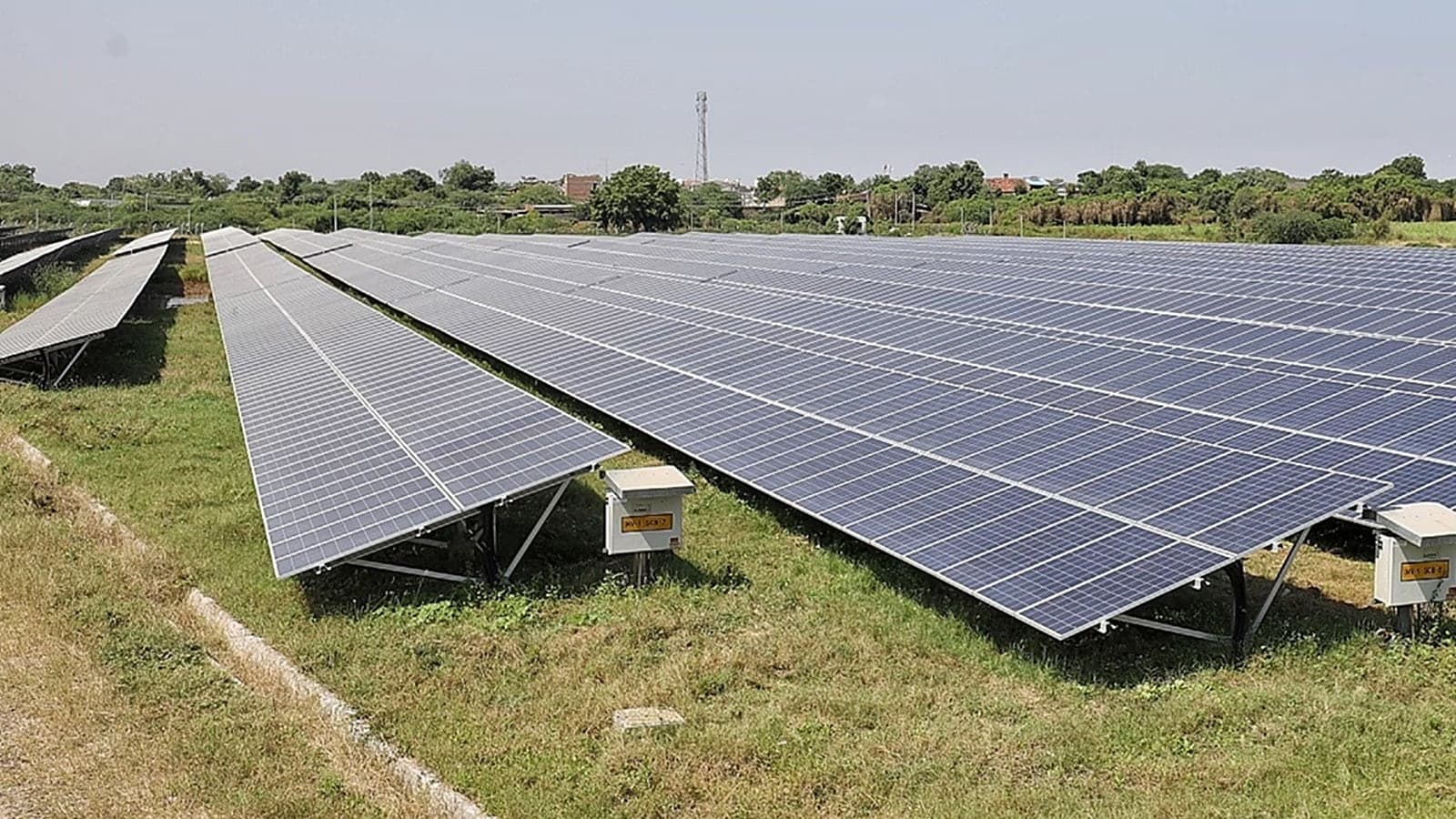
**What Happened (Interpreting the Title):** While specific details from the article are unavailable, the title indicates a conceptual plan or policy direction where the Ministry of Defence (MoD) and the armed forces are looking to identify and utilize their surplus or non-strategic land holdings for renewable energy generation. This could involve setting up large-scale solar power plants, wind farms, or even hybrid projects. Such initiatives would likely be implemented in phases, starting with feasibility studies, land identification, and then moving to tendering and project execution, possibly through public-private partnerships or collaborations with public sector undertakings specializing in renewable energy.
**Key Stakeholders Involved:** The primary stakeholders would be the **Ministry of Defence (MoD)**, which owns and manages defence land, and the **Indian Armed Forces** (Army, Navy, Air Force) themselves, who would be involved in identifying suitable land parcels and ensuring operational security. The **Ministry of New and Renewable Energy (MNRE)** would play a crucial role in providing policy frameworks, technical guidance, and potentially financial incentives for such projects. Public sector entities like the **Solar Energy Corporation of India (SECI)** or state-level renewable energy development agencies could act as implementing partners. Private sector developers would also be key players, bringing in investment, technology, and project management expertise. State governments might also be involved, particularly for grid connectivity and local clearances, though defence land is a Union subject.
**Why This Matters for India:** This initiative holds immense significance for India. Firstly, it directly contributes to **energy security** by diversifying the energy mix and reducing reliance on fossil fuel imports, thereby saving valuable foreign exchange. Secondly, it is a significant step towards **climate change mitigation** and meeting India's international commitments under the Paris Agreement. Thirdly, it promotes **resource optimization** by turning otherwise fallow or underutilized land into productive assets. Economically, these projects can create jobs, attract investment, and spur local development, especially in remote areas where defence land is often located. Furthermore, it showcases **civil-military synergy** and the defence establishment's commitment to national development goals beyond its core security mandate, reinforcing the 'Atmanirbhar Bharat' (self-reliant India) vision by fostering indigenous renewable energy capacity.
**Historical Context and Future Implications:** India has been steadily increasing its renewable energy capacity, from the launch of the National Solar Mission in 2010 to current targets. The defence sector has already seen smaller-scale renewable energy installations, primarily for captive consumption in cantonments. This new plan suggests a more ambitious, large-scale approach. In the future, this could lead to the establishment of massive solar parks and wind farms on defence land, contributing significantly to the national grid. It could also set a precedent for other large government landholders to explore similar initiatives. Challenges might include land demarcation, environmental clearances, ensuring grid integration, and balancing security concerns with energy generation. However, the potential benefits in terms of energy independence, environmental protection, and economic growth far outweigh these challenges.
**Related Constitutional Articles, Acts, or Policies:** The management of defence land falls under the **Union List (List I)** of the Seventh Schedule of the Constitution, specifically Entry 1 (Defence) and Entry 2 (Naval, military and air forces; any other armed forces of the Union). While land itself is generally a State subject (List II, Entry 18), defence land is Union property. Environmental protection and forests are covered by the **Concurrent List (List III)**, with Entries 17A (Forests) and 17B (Protection of wild animals and birds). The directive principles of state policy (DPSP) under **Article 48A** mandate the state to protect and improve the environment and safeguard forests and wildlife. Similarly, **Article 51A(g)** lists it as a fundamental duty of every citizen to protect and improve the natural environment. Key policies include the **National Solar Mission**, the **National Wind-Solar Hybrid Policy**, and the broader **National Action Plan on Climate Change (NAPCC)**, all of which provide the overarching framework for such green energy initiatives. The **Electricity Act, 2003**, also governs the generation, transmission, and distribution of electricity, which would be relevant for connecting these projects to the grid.
Exam Tips
This topic falls under GS Paper I (Geography - Energy Resources) and GS Paper III (Economy - Infrastructure, Energy; Environment - Climate Change, Conservation) for UPSC Civil Services Exam. For SSC and State PSCs, it's relevant for General Awareness, Economy, and Environment sections.
Study related topics like India's renewable energy targets (e.g., 500 GW by 2030), major renewable energy schemes (PM-KUSUM, National Solar Mission), different types of renewable energy technologies (solar, wind, hydro, biomass), and the concept of energy security. Also, understand the role of various ministries (MoD, MNRE) and PSUs (SECI, NTPC) in these sectors.
Common question patterns include: MCQs on India's renewable energy capacity/targets, government policies related to green energy, constitutional provisions related to environment/land, and the significance of such initiatives for India's economy and environment. Descriptive questions might ask about the challenges and opportunities in achieving renewable energy targets or the role of different sectors in green energy transition.