



Relevant for Exams
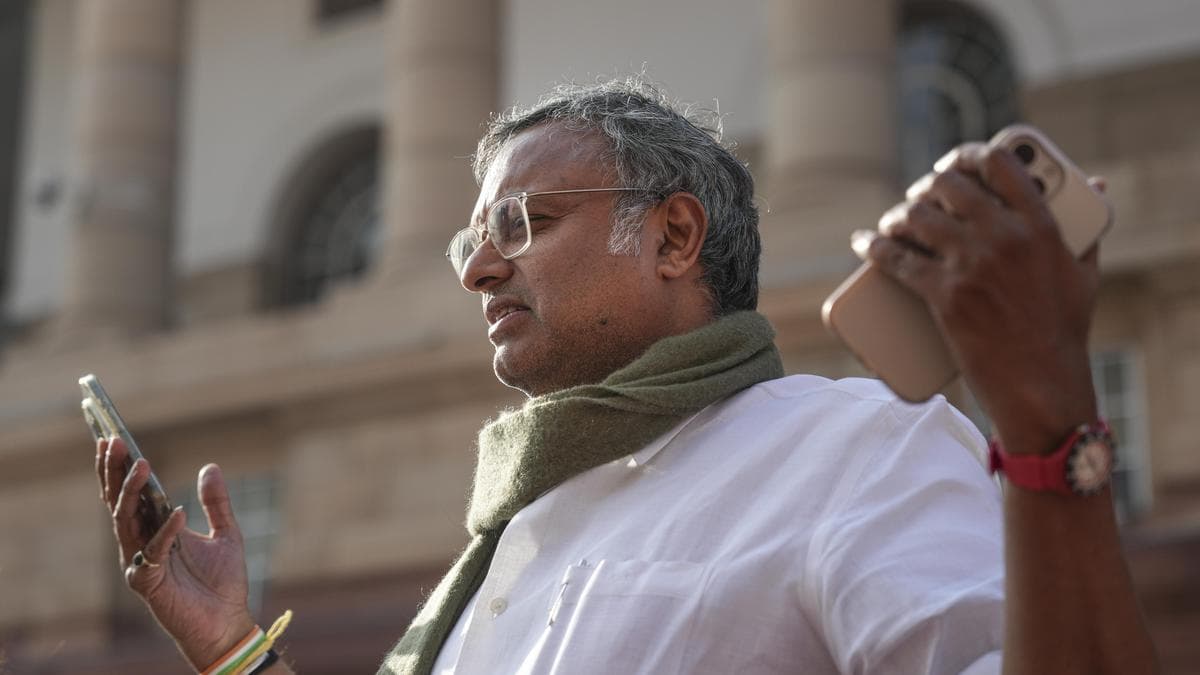
Delhi court orders framing of charges against Congress MP Karti Chidambaram in Chinese visa scam.
Summary
A Delhi court, on December 23, ordered the framing of charges against Congress MP Karti Chidambaram and six other accused in the alleged Chinese visa scam case. This development marks a significant step in the legal proceedings against a prominent political figure, indicating that the court found sufficient grounds for trial. It is crucial for competitive exams as it falls under current affairs, polity, and legal developments concerning public representatives.
Key Points
- 1A Delhi court ordered the framing of charges against Congress MP Karti Chidambaram.
- 2The court order was issued on December 23.
- 3The case pertains to the alleged Chinese visa scam.
- 4Charges were ordered against a total of seven accused individuals.
- 5The alleged offence for which charges were framed is criminal conspiracy.
In-Depth Analysis
The Delhi court's order on December 23 to frame charges against Congress MP Karti Chidambaram and six other individuals in the alleged Chinese visa scam case marks a significant development in India's ongoing battle against corruption and the pursuit of accountability for public representatives. This decision signifies that the court has found sufficient prima facie evidence to proceed with a full-fledged trial, moving the case beyond the investigative stage and into the realm of judicial scrutiny.
**Background Context and What Happened:**
The alleged Chinese visa scam dates back to 2011, a period when Karti Chidambaram's father, P. Chidambaram, was serving as the Union Home Minister. The case, investigated by the Central Bureau of Investigation (CBI), revolves around allegations that Karti Chidambaram facilitated the issuance of project visas to 263 Chinese nationals for a power project in Punjab. Specifically, it is alleged that Talwandi Sabo Power Ltd (TSPL), which was setting up a power plant, was facing delays and needed more Chinese workers than initially permitted. To circumvent the stipulated visa limits, it is alleged that a bribe of Rs 50 lakh was paid through a middleman to Karti Chidambaram for facilitating the re-issuance of project visas. The CBI initiated its investigation in May 2022, conducting searches at multiple locations linked to Karti Chidambaram and others. The core accusation is one of criminal conspiracy, where various individuals allegedly colluded to illegally obtain visas in exchange for gratification, bypassing established procedures and regulations.
**Key Stakeholders Involved:**
* **Karti Chidambaram:** The primary accused, a sitting Member of Parliament from the Congress party, whose alleged involvement brings the issue of political accountability to the forefront.
* **Central Bureau of Investigation (CBI):** India's premier investigative agency, responsible for probing the allegations and filing the chargesheet. Its role is crucial in upholding the rule of law.
* **Delhi Court (Special Judge):** The judicial body that examined the evidence presented by the CBI and determined that there were sufficient grounds to frame charges, thereby initiating the trial process.
* **Ministry of Home Affairs:** The ministry responsible for visa policies and approvals, which was headed by P. Chidambaram at the time of the alleged scam. The case implicitly raises questions about the processes within the ministry.
* **Talwandi Sabo Power Ltd (TSPL):** The company allegedly involved in paying the bribe to secure visas for its Chinese workers.
* **Indian Public:** As beneficiaries of good governance and victims of corruption, the public has a vested interest in the outcome of such cases.
**Significance for India and Broader Themes:**
This case holds immense significance for India on multiple fronts. Firstly, it underscores the principle of **rule of law**, demonstrating that even powerful political figures are subject to legal scrutiny and due process. The framing of charges sends a strong message that no one is above the law. Secondly, it highlights the persistent challenge of **corruption in public life** and its insidious impact on governance. Allegations of facilitating visas for monetary gain touch upon issues of national security, economic integrity, and administrative transparency. Thirdly, it reinforces the crucial role of **independent investigative agencies like the CBI** and the **judiciary** in upholding democratic values and ensuring accountability. The trial will test the robustness of India's legal framework in prosecuting high-profile cases.
**Historical Context and Future Implications:**
India has a history of high-profile corruption cases involving political leaders, from the Bofors scam to the 2G spectrum allocation scam. Each such case tests the resilience of democratic institutions and public trust. The Karti Chidambaram case adds to this narrative, reminding citizens and policymakers of the continuous need for vigilance and reform. The framing of charges is not a conviction but a prelude to a full trial, which could be lengthy and complex. The outcome will have significant implications for Karti Chidambaram's political career and the Congress party's image. More broadly, it could set precedents for how similar allegations are investigated and prosecuted, potentially strengthening anti-corruption mechanisms and fostering greater transparency in administrative processes, particularly those involving foreign nationals and large projects.
**Related Constitutional Articles, Acts, or Policies:**
This case directly engages several legal and constitutional provisions:
* **Prevention of Corruption Act, 1988:** This is the primary legislation under which public servants and those abetting corruption are charged. Sections related to 'taking gratification' (Section 7) and 'criminal misconduct' (Section 13) are often invoked.
* **Indian Penal Code (IPC), 1860:** Specifically, **Section 120B**, which deals with 'criminal conspiracy,' is central to the charges framed against the accused. Other sections like those related to cheating (Section 420) or forgery might also be relevant depending on the specific details of the chargesheet.
* **Article 14 (Equality Before Law):** This fundamental right ensures that all individuals, including public figures, are equal before the law and are subject to the same legal process.
* **Article 21 (Protection of Life and Personal Liberty):** Guarantees due process and a fair trial for the accused.
* **Delhi Special Police Establishment Act, 1946:** Governs the powers and functions of the CBI, the investigating agency in this case.
The case highlights the delicate balance between the powers of public office and the imperative of maintaining ethical conduct and transparency, crucial for a healthy democracy.
Exam Tips
This topic falls under 'Indian Polity and Governance' (UPSC GS-II), 'Current Affairs' (all exams), and 'Ethics, Integrity & Aptitude' (UPSC GS-IV). Pay attention to the legal process, the role of investigative agencies, and ethical dimensions.
Study related topics such as the Prevention of Corruption Act, 1988, the structure and functions of the CBI, the powers of various courts, and the concept of 'framing of charges' vs. 'conviction'. Understand the difference between investigation, prosecution, and judicial pronouncements.
Common question patterns include factual questions (e.g., 'What is Section 120B of the IPC related to?'), analytical questions (e.g., 'Discuss the role of the judiciary in ensuring accountability of public representatives.'), and questions on the implications of such cases on governance and public trust.
Related Topics to Study
Full Article
In an order dated December 23, the court ordered the framing of charges against the seven accused for the alleged offence of criminal conspiracy