



Relevant for Exams
Congress demands Nadda's apology over Jhiram Ghati Naxal attack 'insider' remark.
Summary
Congress has demanded an apology from BJP chief J.P. Nadda for his claim that "Congress insiders" facilitated the 2013 Jhiram Ghati Naxal attack. This political controversy highlights ongoing debates surrounding internal security and historical incidents, making the Jhiram Ghati attack a recurring topic for general awareness in competitive exams, particularly concerning Naxalism and political accountability. It underscores the importance of knowing key facts about significant past events.
Key Points
- 1Congress demanded an apology from BJP chief J.P. Nadda.
- 2The controversy pertains to the 2013 Jhiram Ghati Naxal attack.
- 3J.P. Nadda claimed 'Congress insiders' facilitated the 2013 attack.
- 4The Jhiram Ghati Naxal attack occurred in Chhattisgarh.
- 5The demand for apology is a significant political development related to a major internal security incident.
In-Depth Analysis
The recent demand by the Congress for an apology from BJP chief J.P. Nadda regarding his remarks on the 2013 Jhiram Ghati Naxal attack has reignited a sensitive and tragic chapter in India's internal security history. This controversy not only highlights the persistent political sparring over critical incidents but also underscores the enduring challenge of Left-Wing Extremism (LWE) in India.
**Background Context and The Attack:**
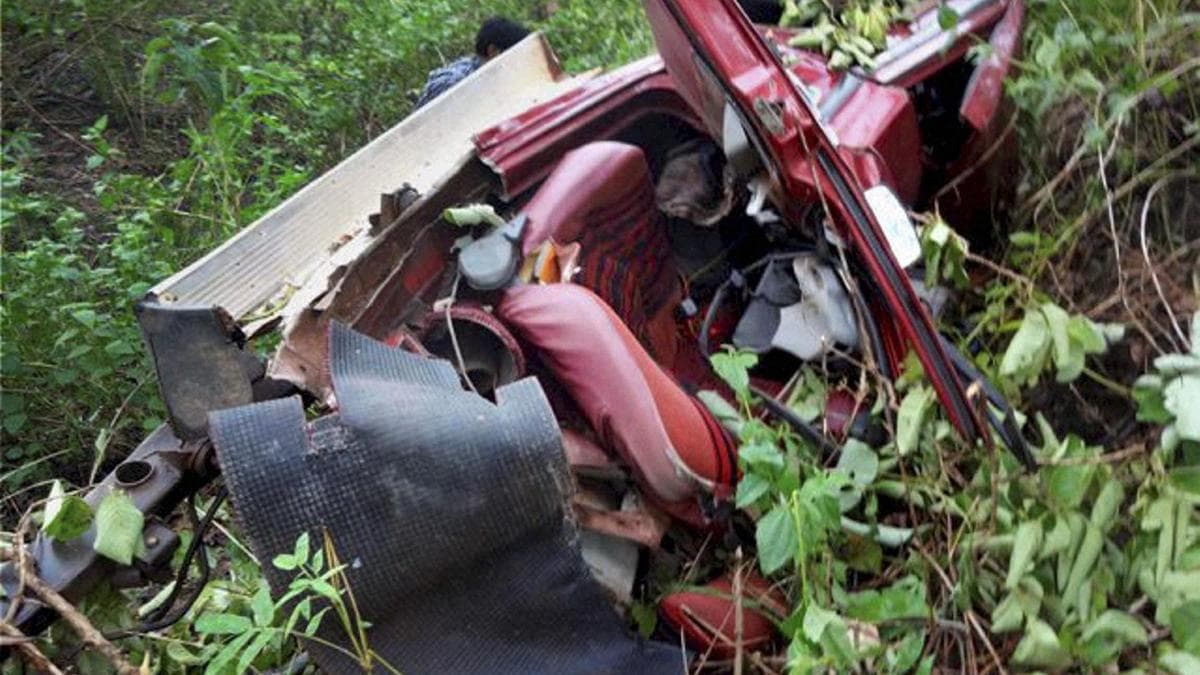
The Jhiram Ghati attack, which occurred on May 25, 2013, in the Jhiram Ghati region of Sukma district, Chhattisgarh, was one of the deadliest Naxal assaults in India's history. Chhattisgarh, particularly its southern Bastar region, has long been a hotbed of Maoist activity, forming a crucial part of India's 'Red Corridor.' This area is characterized by dense forests, difficult terrain, and significant tribal populations, factors that Naxalites exploit for their operations and to garner local support, often by preying on grievances related to land alienation, displacement, and lack of development. The attack targeted a convoy of Congress leaders returning from a 'Parivartan Yatra' (transformation rally). The Maoists ambushed the convoy, triggering landmines and then opening indiscriminate fire. The sheer scale and brutality of the attack shocked the nation.
**What Happened and Key Stakeholders:**
The ambush resulted in the tragic deaths of 25 people, including prominent Congress leaders like former Union Minister Vidya Charan Shukla, Chhattisgarh Congress President Nand Kumar Patel, and former leader of the opposition Mahendra Karma, who was a staunch anti-Naxal crusader (often referred to as 'Bastar Tiger'). Several security personnel also lost their lives. The People's Liberation Guerrilla Army (PLGA) of the Communist Party of India (Maoist) claimed responsibility. The immediate aftermath saw widespread condemnation and a massive security response. Investigations were launched by state police and later by the National Investigation Agency (NIA), established under the National Investigation Agency (NIA) Act, 2008, specifically to deal with terror-related crimes.
The current controversy involves **J.P. Nadda**, the President of the Bharatiya Janata Party (BJP), who claimed that 'Congress insiders' facilitated the 2013 attack. This accusation has drawn sharp condemnation from the **Indian National Congress**, which lost many of its senior leaders in the attack, demanding an apology and accusing Nadda of politicizing a national tragedy. Other key stakeholders include the **Naxalites/Maoists** themselves, who remain a significant internal security threat; the **families of the victims**, who continue to seek justice and truth; and **various investigative agencies** (state police, NIA) whose impartiality and thoroughness are often scrutinized in such politically charged cases. The **Central and State Governments** (then Congress in Chhattisgarh, now BJP; BJP at the Centre) are also critical stakeholders, responsible for maintaining law and order and ensuring justice.
**Significance for India and Historical Context:**
This incident, and the ongoing political debate, carries immense significance for India. Firstly, it underscores the grave and persistent threat posed by Left-Wing Extremism to India's internal security and democratic fabric. The Jhiram Ghati attack highlighted the vulnerabilities of political figures and the challenges faced by security forces in LWE-affected regions. Historically, Naxalism originated with the Naxalbari uprising in West Bengal in 1967 and has evolved into a formidable insurgency, challenging state authority and hindering development in resource-rich but underdeveloped areas. Government responses have ranged from security operations like 'Operation Green Hunt' to socio-economic development initiatives.
Secondly, the politicization of such a severe internal security incident raises concerns about political accountability, ethics, and the potential erosion of public trust in democratic institutions and investigative processes. When ruling party chiefs make such allegations, it can cast a shadow over past investigations and create an environment of distrust, which is detrimental to national unity and effective governance. The incident also brings to the fore the complex Centre-State relations in tackling internal security threats, as law and order falls under the State List (Entry 2, List II, Seventh Schedule) of the Constitution, but the Centre often plays a crucial supporting role, especially in cases of Naxalism and terrorism, invoking provisions like Article 355 to protect states against internal disturbance.
**Future Implications and Constitutional References:**
The future implications of this controversy are multi-faceted. Politically, it might lead to a prolonged war of words, further polarizing the political landscape. For the victims' families, it could reopen old wounds and rekindle hopes or frustrations regarding the pursuit of truth and justice. From a security perspective, it might prompt renewed scrutiny of LWE strategies and the effectiveness of intelligence gathering. The Jhiram Ghati case has seen several commissions of inquiry and investigations, and such political statements can fuel demands for fresh inquiries or the re-evaluation of existing findings.
Relevant constitutional provisions include **Article 355**, which mandates the Union to protect every State against external aggression and internal disturbance and to ensure that the government of every State is carried on in accordance with the provisions of the Constitution. The **Seventh Schedule** clearly delineates powers, with 'Public Order' and 'Police' being State subjects, while 'Defence of India' and 'Armed Forces' are Union subjects. This division necessitates robust Centre-State cooperation to combat LWE. Additionally, the **Unlawful Activities (Prevention) Act (UAPA)** is a key legislative tool used by the government to combat terrorism, including Maoist activities, by providing for stringent measures for the prevention of unlawful activities. The ongoing debate underscores the need for a non-partisan approach to internal security threats and for respecting the integrity of investigative processes to ensure justice and maintain public trust.
Exam Tips
This topic falls primarily under General Studies Paper III (Internal Security) for UPSC, and General Awareness for SSC, Banking, Railway, and State PSC exams. Focus on the causes, consequences, and government strategies (e.g., SAMADHAN doctrine) related to Left-Wing Extremism (LWE).
Study the factual details of major Naxal attacks, key Naxal leaders, and the geographical spread of the Red Corridor. Understand the role and mandate of the National Investigation Agency (NIA) and the Unlawful Activities (Prevention) Act (UAPA).
Prepare for analytical questions on the challenges of internal security, the socio-economic roots of Naxalism, Centre-State relations in combating LWE, and the ethical dimensions of politicizing such incidents. Be ready to discuss solutions involving both security and development aspects.
Related Topics to Study
Full Article
The BJP chief has claimed that Congress insiders facilitated the 2013 Jhiram Ghati Naxal attack