



Relevant for Exams
President Murmu: 'Jan Bhagidari' crucial for security; social media has dual potential.
Summary
President Droupadi Murmu underscored 'Jan Bhagidari' (people's participation) as the cornerstone for people-centric security, emphasizing that citizens should not be passive observers. She also highlighted social media's transformative power in information and communication, noting its potential for both creation and destruction. This statement is significant for understanding the government's approach to citizen involvement in national security and the role of digital platforms.
Key Points
- 1President Droupadi Murmu emphasized 'Jan Bhagidari' (people's participation) in security.
- 2'Jan Bhagidari' was termed the cornerstone of people-centric security by President Murmu.
- 3President Murmu stated that citizens should not be passive observers in security matters.
- 4Social media's transformative impact on the world of information and communication was highlighted.
- 5President Murmu noted social media's potential for both creation and destruction.
In-Depth Analysis
President Droupadi Murmu's recent emphasis on 'Jan Bhagidari' (people's participation) as the cornerstone of people-centric security, coupled with her observations on social media's dual potential, represents a significant policy articulation for India's governance and security landscape. This statement is not merely rhetorical; it reflects an evolving understanding of national security in the 21st century, moving beyond a state-centric approach to one that actively involves its citizens.
**Background Context: The Evolution of 'Jan Bhagidari'**
The concept of 'Jan Bhagidari' is deeply rooted in India's democratic ethos and has historical precedents. Mahatma Gandhi's philosophy of Swaraj emphasized self-governance and active citizen involvement in nation-building. Post-independence, initiatives like Community Development Programmes (1952) sought to foster local participation. More recently, governments have actively promoted 'Jan Bhagidari' through campaigns like Swachh Bharat Abhiyan, where citizen involvement was crucial for its success, and 'Mann Ki Baat', which aims to establish a direct dialogue between the Prime Minister and the populace. This continued emphasis signifies a shift from a top-down governance model to a more collaborative one, recognizing that complex challenges like security cannot be effectively addressed by the state alone. In a democratic setup, citizens are not just beneficiaries but also primary stakeholders and active contributors to national well-being and security.
**What Happened: A Call for Active Citizenship in Security**
President Murmu's statement specifically calls for citizens to transcend the role of 'passive observers' in security matters. This is crucial because modern security threats—ranging from cybercrime, misinformation campaigns, radicalization, and even disaster response—often manifest at the local level and require community intelligence and resilience. 'People-centric security' implies that the security apparatus must be responsive to the needs and concerns of the people, while the people, in turn, contribute to maintaining peace and order. Her highlighting of social media's transformative power, capable of both 'creation and destruction', directly addresses the contemporary challenges posed by digital platforms. Social media can be a powerful tool for civic engagement, disseminating crucial information during crises, and mobilizing support. However, its potential for spreading disinformation, hate speech, and radical ideologies poses significant threats to social cohesion and national security.
**Key Stakeholders Involved**
The stakeholders in this vision are diverse and interconnected. The **Government** (including the President, executive, and various ministries) sets the policy direction and provides the framework for participation. **Security Agencies** (police, intelligence, armed forces) are responsible for implementing security measures but are increasingly reliant on citizen cooperation and intelligence. **Citizens** themselves are the most critical stakeholders, expected to be vigilant, report suspicious activities, participate in community safety initiatives, and act responsibly on digital platforms. **Social Media Platforms** and their operators hold immense responsibility in moderating content, preventing misuse, and cooperating with law enforcement. Finally, **Civil Society Organizations** and **local self-governing bodies** play a crucial role in mobilizing communities, facilitating dialogue, and bridging the gap between citizens and the state.
**Significance for India and Constitutional Context**
This emphasis on 'Jan Bhagidari' holds profound significance for India. It can lead to **enhanced national security** by fostering community-level intelligence gathering, improving disaster preparedness, and building resilience against various threats. It also strengthens **democratic participation** by empowering citizens and fostering a sense of ownership in governance. From a social perspective, it can promote **digital literacy** and responsible online behavior, crucial for combating misinformation and maintaining social harmony. Politically, it aims to build **greater trust between the state and its citizens**, a cornerstone of good governance.
Constitutionally, the call for active citizenship aligns with the **Fundamental Duties** enshrined in **Article 51A** of the Indian Constitution. Specifically, **Article 51A(d)** mandates citizens 'to defend the country and render national service when called upon to do so'. **Article 51A(j)** further states that every citizen shall 'strive towards excellence in all spheres of individual and collective activity so that the nation constantly rises to higher levels of endeavour and achievement'. While not directly enforceable, these duties serve as a moral compass, encouraging citizens to actively contribute to national well-being. Furthermore, the principles of participatory governance are implicitly supported by the **Directive Principles of State Policy**, which aim to create a welfare state where citizens' voices are heard. The **Information Technology Act, 2000**, and its subsequent amendments, are critical for regulating social media and addressing cybercrimes, providing a legal framework to manage the 'destructive potential' highlighted by the President.
**Future Implications and Broader Themes**
The future implications are manifold. This vision could lead to new policy initiatives promoting community policing, digital literacy campaigns, and robust mechanisms for citizen feedback in security matters. It underscores the broader theme of **Good Governance**, where transparency, accountability, and participation are paramount. In an era of **hybrid warfare** and information asymmetry, active and discerning citizens become the first line of defense against propaganda and destabilization efforts. It calls for a more nuanced approach to **digital transformation**, balancing innovation with the imperative of responsible usage and effective regulation. Ultimately, fostering 'Jan Bhagidari' in security aims to build a more resilient, informed, and engaged citizenry, capable of navigating the complex challenges of the modern world and contributing actively to India's progress and safety.
Exam Tips
This topic falls under GS Paper II (Governance, Polity, Social Justice) and GS Paper III (Internal Security, Cyber Security). For GS-II, focus on citizen participation, good governance, and constitutional duties. For GS-III, emphasize the role of citizens in internal security, cybercrime prevention, and disaster management.
When studying, connect 'Jan Bhagidari' with related concepts like Fundamental Duties (Article 51A), E-Governance initiatives, Community Policing models, and the framework of the National Disaster Management Act, 2005. Understand how these policies facilitate or require citizen involvement.
Common question patterns include essay questions on the importance of citizen participation in national development/security, analytical questions on the pros and cons of social media, and direct questions on Fundamental Duties. Be prepared to discuss case studies where 'Jan Bhagidari' has been successfully implemented (e.g., Swachh Bharat Abhiyan, COVID-19 response).
Focus on the dual nature of social media – its potential for positive change (e.g., information dissemination, disaster relief coordination) versus its destructive capabilities (e.g., misinformation, radicalization, cybercrime). Be ready to suggest policy measures for responsible social media usage.
Understand the shift from a state-centric to a people-centric approach to security. This involves recognizing the limitations of state machinery alone and the indispensable role of an informed and active citizenry in addressing contemporary security challenges.
Related Topics to Study
Full Article
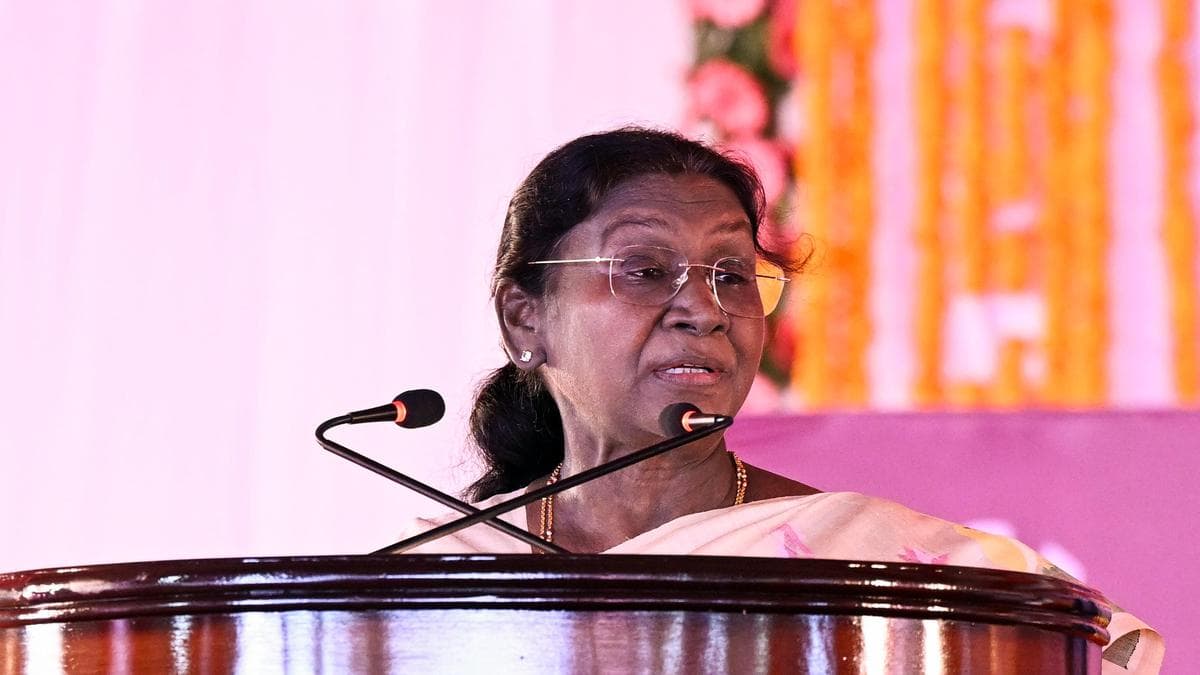
President Murmu said the social media has transformed the world of information and communication, and it has the potential for both creation and destruction