



Relevant for Exams
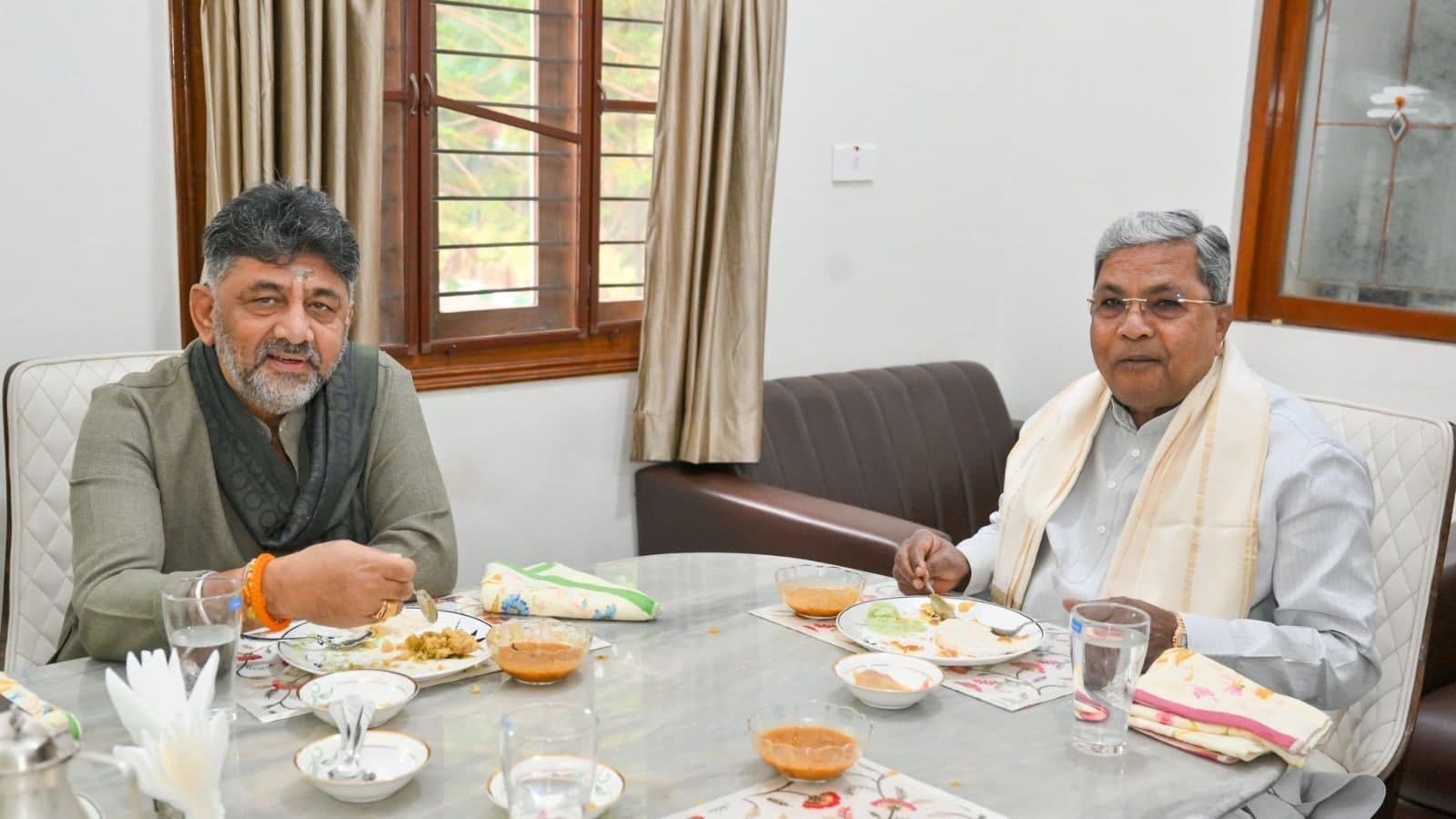
Karnataka Congress leadership row: Delhi meet in January awaited; no content available for details.
Summary
The provided article content was unavailable, preventing a detailed summary. The title indicates an ongoing leadership dispute within the Karnataka Congress, with hopes for resolution pinned on a 'Delhi meet in January'. Without content, specific details on the nature of the dispute, involved leaders, or its potential impact on state governance are unknown, limiting its direct relevance for competitive exam preparation.
Key Points
- 1No specific facts, dates, names, or numbers could be extracted due to unavailable article content.
- 2The article's title indicated an internal leadership dispute within the Karnataka Congress party.
- 3Details regarding the 'Delhi meet in January' to potentially resolve the leadership row were not provided.
- 4Without article content, specific exam-relevant information on the political situation in Karnataka is absent.
- 5The significance of this internal party leadership row for competitive exams cannot be assessed from the provided input.
In-Depth Analysis
The provided article title, "As Karnataka Congress leadership row drags on, hopes pinned on Delhi meet in January," points to a recurring theme in Indian politics: internal party dynamics and leadership struggles. While the specific content of the article is unavailable, the title itself offers a valuable lens through which to examine the functioning of political parties, particularly the Indian National Congress, and its implications for state governance and federalism.
**Background Context and What Happened (Generalised):**
Internal party disputes often arise from various factors, including post-election power-sharing arrangements, factionalism based on caste or regional loyalties, personality clashes, and competition for ministerial berths or party positions. In the context of the Congress party, such 'leadership rows' are not uncommon, especially in states where the party has recently come to power or is a significant opposition force. Following a successful election, as was the case with the Congress in Karnataka in May 2023, the question of who leads the government (Chief Minister) or the state party unit often becomes contentious. Even after a Chief Minister is appointed, multiple power centres can emerge, leading to friction over cabinet portfolios, policy direction, or control over the party apparatus. A "Delhi meet" signifies the involvement of the party's central leadership, often referred to as the 'High Command,' which traditionally plays a decisive role in resolving such state-level disputes, acting as an arbiter to enforce discipline and ensure party unity.
**Key Stakeholders Involved:**
1. **State-level Leaders and Factions:** In Karnataka, prominent figures like current Chief Minister Siddaramaiah and Deputy Chief Minister D.K. Shivakumar are well-known leaders with significant support bases. Any leadership row would primarily involve these top leaders and their respective loyalists vying for influence, portfolios, or future leadership roles. Their ability to command the loyalty of MLAs is crucial.
2. **The Congress High Command:** This refers to the central leadership of the Indian National Congress, including the party President (currently Mallikarjun Kharge) and other senior figures like Sonia Gandhi and Rahul Gandhi. The High Command's role is critical in mediating disputes, making final decisions, and ensuring that internal disagreements do not damage the party's image or electoral prospects.
3. **The Electorate/Public:** The general public in Karnataka is a significant stakeholder. Prolonged internal disputes can lead to a perception of instability, administrative paralysis, and a lack of focus on governance, potentially eroding public trust and affecting future electoral outcomes.
4. **Opposition Parties:** Rivals like the Bharatiya Janata Party (BJP) and Janata Dal (Secular) in Karnataka closely watch these developments, hoping to capitalise on any disunity within the ruling party to gain political mileage or even destabilise the government through tactics like encouraging defections.
**Why This Matters for India:**
Internal party stability is crucial for effective governance in a federal democracy like India. When a ruling party is consumed by internal strife, it can divert attention and resources away from policy implementation and public service delivery. This can lead to:
* **Administrative Paralysis:** Ministers and bureaucrats might become hesitant to take bold decisions if they perceive instability at the top.
* **Policy Inconsistency:** Frequent changes in leadership or factional pressures can lead to shifts in policy priorities, affecting long-term development plans.
* **Impact on Federalism:** While states have autonomy, the central leadership's intervention in state party affairs highlights the centralised nature of many Indian political parties, even in a federal structure. It can sometimes undermine the autonomy of state units.
* **Democratic Health:** The resolution of such disputes through a "Delhi meet" rather than through more transparent internal democratic processes raises questions about intra-party democracy, a critical aspect of India's overall democratic health.
**Historical Context:**
The Congress party has a long history of a powerful High Command. During the Nehruvian era, the High Command was instrumental in state-level leadership selections. Indira Gandhi further consolidated this power, making it a hallmark of the party's functioning. Even today, despite calls for greater internal democracy, the central leadership often acts as the ultimate arbiter in state-level leadership tussles, especially in post-election scenarios or times of crisis. This has often led to a culture where state leaders look to Delhi for endorsements rather than relying solely on local support.
**Future Implications:**
A swift and satisfactory resolution of the leadership row can strengthen the Karnataka Congress government, allowing it to focus on implementing its electoral promises and strengthening its position for upcoming elections, including the Lok Sabha elections in 2024 and the next state assembly elections. Conversely, a prolonged or poorly managed dispute could lead to continued instability, potential defections, and a weakened government. This could open avenues for opposition parties to exploit the situation, potentially leading to a constitutional crisis or even the imposition of President's Rule under **Article 356** in extreme circumstances of governmental breakdown, though this is a rare and extreme outcome. It also influences the party's overall narrative and strength at the national level.
**Related Constitutional Articles, Acts, or Policies:**
* **Article 164 of the Indian Constitution:** Deals with the appointment of the Chief Minister by the Governor and other ministers on the Chief Minister's advice. Leadership rows directly impact the selection and stability of the Council of Ministers.
* **Tenth Schedule (Anti-defection Law):** Enacted via the 52nd Amendment Act in 1985, this law is highly relevant in situations of internal party dissent. If disgruntled MLAs defect from the party, they risk disqualification from the legislature. This law aims to prevent political defections but sometimes leads to internal dissent being managed within the party rather than spilling over into open revolt.
* **Representation of the People Act, 1951:** While not directly about leadership rows, this act governs the registration and recognition of political parties, which are fundamental to the democratic process within which these internal struggles occur. Parties are required to have a constitution and internal democratic procedures, though their implementation for top leadership roles is often debated.
Understanding these internal party dynamics is crucial for comprehending the broader political landscape of India, the challenges of governance, and the evolution of its democratic institutions.
Exam Tips
**Syllabus Section:** This topic primarily falls under 'Indian Polity and Governance' (UPSC Mains GS Paper II, State PSCs). Specifically, it relates to the functioning of political parties, state legislatures, and the executive.
**Related Topics to Study:** Connect this to the 'Anti-defection Law (Tenth Schedule)', 'Role of the Governor in state politics', 'Coalition politics in India', 'Challenges to federalism', and 'Party system in India (e.g., role of High Command vs. state autonomy)'.
**Common Question Patterns:** Expect analytical questions on the impact of internal party disputes on governance and policy implementation, the role of central leadership in state affairs, or the effectiveness of constitutional provisions like the Anti-defection Law in ensuring political stability. Factual questions might arise if specific leaders or events are highlighted (e.g., 'Who is the current CM of Karnataka?' or 'What is the significance of the Anti-defection Law?').