



Relevant for Exams
Naidu declares Amaravati as 'India's Quantum Valley' and future electronics/aerospace hub.
Summary
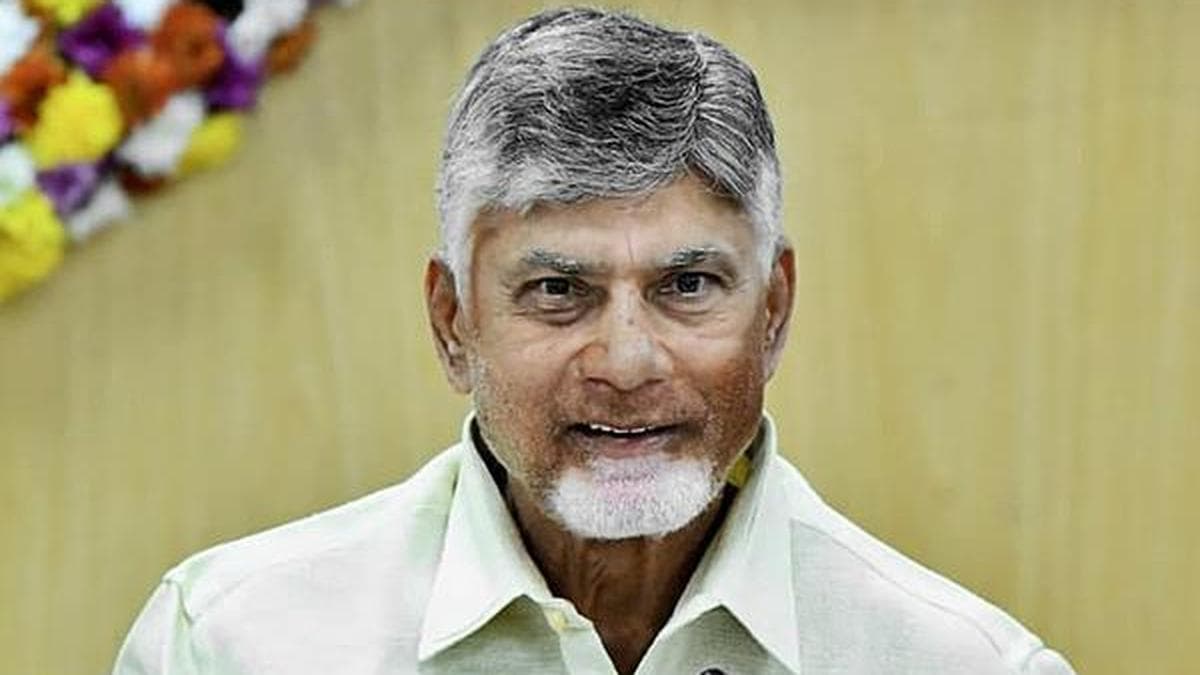
N. Chandrababu Naidu announced that Amaravati is envisioned to become "India's Quantum Valley" and a hub for the Knowledge Economy. The city is projected to evolve into major electronics and aerospace centres, fostering a distributed innovation ecosystem across the state. This initiative is significant for regional development, technological advancement, and attracting investment, making it relevant for questions on smart cities, economic policy, and science & technology in competitive exams.
Key Points
- 1Amaravati is envisioned to anchor the 'Knowledge Economy' as 'India’s Quantum Valley'.
- 2The statement was made by N. Chandrababu Naidu.
- 3Amaravati is projected to evolve into major electronics centres.
- 4Amaravati is also projected to evolve into major aerospace centres.
- 5The plan aims to create a distributed but interconnected innovation ecosystem across the State.
In-Depth Analysis
The announcement by N. Chandrababu Naidu, envisioning Amaravati as "India's Quantum Valley" and a hub for the Knowledge Economy, marks a significant strategic shift and an ambitious technological leap for Andhra Pradesh and India. This declaration proposes to transform Amaravati into a nerve centre for electronics and aerospace, fostering a distributed yet interconnected innovation ecosystem across the state. Understanding this vision requires delving into its complex background, the stakeholders involved, its profound implications for India, and the constitutional and policy frameworks it intersects.
**Background Context and Historical Threads:**
To fully grasp the significance of this announcement, one must revisit the turbulent history of Andhra Pradesh post-bifurcation. The Andhra Pradesh Reorganisation Act of 2014 led to the creation of Telangana and the loss of Hyderabad, a thriving economic and technological hub, as the capital for the residual state of Andhra Pradesh. This necessitated the creation of a new capital. Under N. Chandrababu Naidu's previous tenure as Chief Minister (2014-2019), Amaravati was chosen as the greenfield capital, envisioned as a world-class smart city designed by international architects, aiming to attract global investment and talent. However, a change in government in 2019 led to a significant slowdown and even a proposed shift in the capital's status, creating uncertainty and halting development. Naidu's recent return to power in June 2024 has reignited the Amaravati project, now with an even more ambitious technological focus. India has a history of developing technology clusters, from Bengaluru's IT dominance to Hyderabad's pharmaceutical and IT prowess. This new vision for Amaravati seeks to replicate and even surpass these models by focusing on cutting-edge, future-proof technologies.
**What Happened and Key Stakeholders:**
Chief Minister N. Chandrababu Naidu declared that Amaravati would anchor the 'Knowledge Economy' as 'India’s Quantum Valley'. This involves developing major electronics and aerospace centres, thereby creating a decentralized yet integrated innovation ecosystem across Andhra Pradesh. The primary **stakeholder** is the **Government of Andhra Pradesh**, led by CM Naidu, which is the architect and driving force behind this vision. The **Central Government** will be another crucial stakeholder, providing policy support, potential funding, and aligning this state-level initiative with national programs like the National Quantum Mission (launched in 2023 with an outlay of Rs 6003.65 crore), Make in India, and Digital India. The **private sector and industry leaders** in electronics, aerospace, and quantum computing are vital for investment, technology transfer, and job creation. **Academia and research institutions** will play a critical role in talent development, R&D, and fostering a culture of innovation. Finally, the **local population** of Amaravati and Andhra Pradesh are direct beneficiaries through job opportunities and economic upliftment, though concerns around land acquisition and equitable development often arise in such large-scale projects.
**Significance for India and Broader Themes:**
This initiative holds immense significance for India. Economically, it promises to attract substantial domestic and foreign investment, generate high-skilled employment, and boost the state's GDP. Technologically, by focusing on quantum computing, electronics, and aerospace, Amaravati could position India at the forefront of emerging global technologies, aligning with the "Atmanirbhar Bharat" (self-reliant India) vision by reducing dependence on foreign technology. It contributes to India's broader goal of becoming a 'Knowledge Economy' rather than merely a service or manufacturing hub. This project also fits within the broader theme of **regional development and balanced growth**, aiming to create a new economic pole outside the established metros. Furthermore, it exemplifies the **Smart Cities Mission** (launched 2015) by integrating technology and sustainable urban planning. The success of such a project also reflects on India's federal structure, showcasing effective Centre-State cooperation (or the lack thereof) in large-scale developmental initiatives.
**Constitutional and Policy References:**
The legal and policy framework for such an ambitious project involves several key elements. The **Andhra Pradesh Reorganisation Act, 2014**, remains the foundational legal document that necessitated the new capital. The project's alignment with the **National Quantum Mission (2023)** is critical, as state-level efforts can complement national strategic goals in advanced technologies. Policies like **Make in India (2014)** and **Digital India (2015)** provide the overarching national framework for promoting manufacturing and digital infrastructure, which are integral to the 'Quantum Valley' concept. From a constitutional perspective, **Article 246** and the **Seventh Schedule** are relevant, as subjects like defence (aerospace), atomic energy (related to quantum research), and economic and social planning involve both Union and State lists, necessitating collaborative governance. Issues related to land acquisition would fall under the **Land Acquisition, Rehabilitation and Resettlement Act, 2013**.
**Future Implications:**
The success of Amaravati as "India's Quantum Valley" hinges on several factors: sustained political commitment, robust financial backing from both state and central governments, a conducive policy environment, ability to attract global talent and investment, and the swift development of world-class infrastructure. If successful, it could serve as a blueprint for future high-tech urban developments in India, transforming Andhra Pradesh into a leading state in advanced technology and contributing significantly to India's global technological standing. However, challenges such as competition from existing tech hubs, potential funding shortfalls, environmental considerations, and social equity in development must be carefully managed. The vision is grand, and its execution will be a testament to India's capacity for futuristic development. This initiative could potentially redefine regional economic geography and India's position in the global knowledge economy, making it a critical area of study for competitive exam aspirants.
Exam Tips
**Syllabus Section:** This topic primarily falls under 'Indian Economy' (economic development, infrastructure, industrial policy), 'Science & Technology' (emerging technologies, national missions), and 'Polity & Governance' (Centre-State relations, state reorganisation, urban planning).
**Related Topics to Study:** Connect this topic with the 'National Quantum Mission', 'Smart Cities Mission', 'Make in India' initiative, 'Andhra Pradesh Reorganisation Act, 2014', and the concept of 'Special Economic Zones (SEZs)' and 'Industrial Corridors'. Understanding these broader policies will provide a holistic view.
**Common Question Patterns:** Expect questions on the objectives and significance of such projects for regional and national development, the role of emerging technologies (quantum computing, aerospace) in India's growth, challenges in implementing large-scale infrastructure projects, and the interplay between state and central policies. Map-based questions on the location of Amaravati can also appear.
Related Topics to Study
Full Article
“will evolve into major electronics and aerospace centres, creating a distributed but interconnected innovation ecosystem across the State,” says N. Chandrababu Naidu