



Relevant for Exams
95 lakh names deleted from voter rolls in 3 States, 1 UT; final list by Feb 14.
Summary
Nearly 95 lakh names have been deleted from voter rolls across three states and one Union Territory (UT), signifying a major update in the electoral process. This action underscores the Election Commission's continuous efforts to maintain accurate voter lists, impacting voter eligibility. For competitive exams, understanding the management of electoral rolls, the role of electoral officers, and key dates like February 14 for final roll publication is vital for Indian polity and current affairs sections.
Key Points
- 1A total of 95 lakh names have been deleted from the electoral rolls.
- 2The deletions occurred across three States and one Union Territory (UT).
- 3Voters whose names were deleted can apply for re-inclusion in the rolls.
- 4Electoral officers are responsible for making the final decision on re-inclusion applications.
- 5The final electoral rolls are scheduled to be issued on February 14.
In-Depth Analysis
The recent deletion of nearly 95 lakh names from electoral rolls across three states and one Union Territory is a significant event that underscores the continuous efforts of the Election Commission of India (ECI) to maintain the purity and accuracy of the electoral process. This isn't an isolated incident but a routine, yet crucial, exercise known as the 'revision of electoral rolls'.
**Background Context and What Happened:**
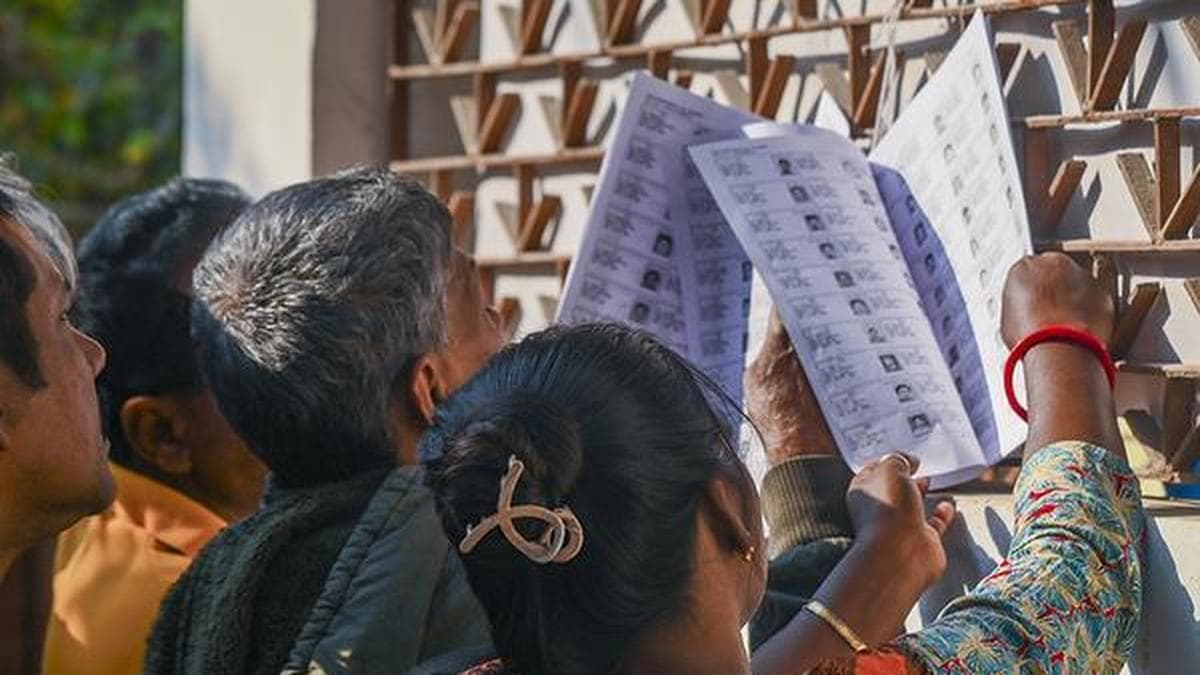
In any vibrant democracy, the integrity of elections hinges on an accurate and updated voter list. An electoral roll is a list of all eligible voters in a particular constituency. Over time, due to various factors like deaths, migration, duplication, or errors in entry, these rolls can become outdated. To address this, the Election Commission periodically undertakes a special summary revision of electoral rolls. This process involves adding new eligible voters (e.g., those turning 18), correcting existing entries, transferring voters who have moved, and deleting names of deceased voters or those who have shifted out of the constituency permanently. The deletion of 95 lakh names is a direct outcome of one such revision exercise, aimed at purging the rolls of ineligible or duplicate entries. The article highlights a critical window for those whose names were deleted to apply for re-inclusion, with electoral officers making the final decision before the final rolls are published on February 14.
**Key Stakeholders Involved:**
Several key players are central to this process. At the apex is the **Election Commission of India (ECI)**, an autonomous constitutional body established under **Article 324** of the Indian Constitution, responsible for the superintendence, direction, and control of the preparation of electoral rolls and the conduct of elections. Beneath the ECI, the **Chief Electoral Officers (CEOs)** in each state and Union Territory oversee the process. At the district level, **District Election Officers (DEOs)**, usually the District Collectors, manage the revision. The actual ground-level work, including receiving applications, conducting field verification, and making initial decisions, is carried out by **Electoral Registration Officers (EROs)** and **Assistant Electoral Registration Officers (AEROs)**. **Political parties** also play a crucial role by scrutinizing the draft rolls and raising objections or suggestions. Finally, the **citizens/voters** are the primary stakeholders, as their right to vote depends on their inclusion in these rolls. They are empowered to apply for inclusion (Form 6), objection/deletion (Form 7), or correction (Form 8) of entries.
**Why This Matters for India:**
This exercise is profoundly significant for Indian democracy. Firstly, it ensures the **integrity and fairness of elections**. Inaccurate rolls can lead to malpractices like 'bogus voting' (where votes are cast in the names of deceased or non-existent voters), thereby undermining the principle of 'one person, one vote'. Secondly, it enhances **legitimacy and public trust** in the electoral system. When citizens perceive the electoral process as fair and transparent, their faith in democratic institutions strengthens. Thirdly, accurate rolls contribute to better **resource management**. Conducting elections for millions of non-existent voters incurs significant costs in terms of ballot papers, security personnel, and logistical arrangements. Purging these names streamlines the process and optimizes public expenditure. Socially, it ensures that genuine voters are not disenfranchised, and their voice is accurately reflected in the electoral outcome. Politically, it minimizes disputes and challenges related to voter lists post-election.
**Historical Context and Broader Themes:**
India has a long history of electoral reforms aimed at perfecting its democratic process. Issues with electoral rolls, such as the inclusion of deceased voters, duplicate entries, and challenges posed by internal migration, have been perennial concerns. The ECI has continuously evolved its methods, moving from manual verification to adopting technology like Electronic Photo Identity Cards (EPIC) in the 1990s and more recently exploring linkages with Aadhaar (though voluntary now after Supreme Court rulings to protect privacy). These efforts reflect a broader theme of strengthening governance, ensuring transparency, and upholding the rule of law in the world's largest democracy. The process also highlights the delicate balance between ensuring universal adult suffrage and preventing electoral fraud.
**Future Implications:**
The continuous revision of electoral rolls suggests a future where the ECI will further leverage technology for real-time updates and more efficient verification processes. This could include greater integration of digital platforms for voter registration and grievance redressal. The emphasis on allowing deleted voters to re-apply underscores the ECI's commitment to inclusivity, ensuring no eligible voter is inadvertently disenfranchised. It also places a greater responsibility on citizens to be vigilant about their electoral details and actively participate in the revision process. The ultimate goal remains to achieve a 'zero-error' electoral roll, which is fundamental to conducting free, fair, and credible elections in India.
**Related Constitutional Articles, Acts, or Policies:**
* **Article 324**: Establishes the Election Commission and vests in it the power of superintendence, direction, and control of elections. This is the bedrock of ECI's authority.
* **Representation of the People Act, 1950**: Specifically deals with the preparation and revision of electoral rolls, delimitation of constituencies, and qualifications for voters.
* **Representation of the People Act, 1951**: Deals with the actual conduct of elections, administrative machinery for elections, and election disputes.
* **Electoral Registration Rules, 1960**: These rules provide the detailed procedural framework for the preparation, revision, and correction of electoral rolls, including the use of forms like Form 6 (for inclusion), Form 7 (for objection to inclusion or deletion), and Form 8 (for correction of particulars).
Exam Tips
This topic falls under 'Indian Polity and Governance' in UPSC, State PSC, and SSC syllabi. Focus on the constitutional provisions (Article 324), statutory bodies (ECI), and specific acts (RPA 1950, 1951).
Study the functions and powers of the Election Commission of India, the process of electoral roll revision, and electoral reforms. Questions often involve matching constitutional articles with functions or analyzing the significance of ECI's actions.
Be prepared for questions on the types of forms used by voters (Form 6, 7, 8), the hierarchy of electoral officers (CEO, DEO, ERO), and the implications of accurate voter rolls for democratic governance. Current affairs questions might ask about recent deletion numbers or specific initiatives by the ECI.
Related Topics to Study
Full Article
The voters whose names have been deleted can apply for re-inclusion. The electoral officers will take a final decision on the applications, and the final rolls will be issued on February 14