



Relevant for Exams
Delhi AQI plummets, Himachal gets yellow fog alert, Kashmir enters 'Chillai-Kalan' winter period.
Summary
This news provides live weather updates, highlighting a significant plummet in Delhi's Air Quality Index (AQI), a yellow fog alert issued for Himachal Pradesh, and the commencement of 'Chillai-Kalan' in Kashmir. This information is crucial for understanding regional climatic phenomena, environmental conditions, and local terminologies, which are relevant for geography and general awareness sections in competitive exams.
Key Points
- 1Delhi's Air Quality Index (AQI) has reportedly plummeted.
- 2Himachal Pradesh has been issued a 'yellow fog alert'.
- 3The Kashmir region has entered the traditional 'Chillai-Kalan' period.
- 4'Chillai-Kalan' is the 40-day harshest winter period in Kashmir, typically starting around December 21.
- 5The Air Quality Index (AQI) is a standard measure used to communicate daily air quality to the public.
In-Depth Analysis
India, a land of immense geographical diversity, experiences a wide array of climatic phenomena throughout the year. The recent weather updates concerning Delhi's plummeting Air Quality Index (AQI), Himachal Pradesh's yellow fog alert, and Kashmir's entry into 'Chillai-Kalan' perfectly encapsulate this diversity and highlight critical environmental and meteorological challenges facing the nation. These events, while seemingly disparate, are interconnected through the broader themes of climate, environment, public health, and governance.
The significant plummet in Delhi's AQI is an annual winter phenomenon, symptomatic of severe air pollution that plagues the National Capital Region (NCR). This environmental crisis is a confluence of multiple factors: stubble burning in neighboring agricultural states like Punjab and Haryana, vehicular emissions, industrial pollution, construction dust, and unfavorable meteorological conditions such as low wind speeds and temperature inversions that trap pollutants close to the ground. The Air Quality Index (AQI) is a crucial tool, developed by the Central Pollution Control Board (CPCB) and monitored by agencies like SAFAR (System of Air Quality and Weather Forecasting And Research), to communicate daily air quality to the public. An AQI 'plummet' indicates a worsening of air quality, often reaching 'severe' or 'hazardous' levels, posing significant health risks, especially respiratory and cardiovascular diseases. Key stakeholders include the CPCB, State Pollution Control Boards, the India Meteorological Department (IMD), state governments of Delhi, Punjab, Haryana, and Uttar Pradesh, the judiciary (Supreme Court, National Green Tribunal), and the citizens themselves. This issue has profound implications for India, impacting public health, productivity, tourism, and the nation's international image. Constitutionally, the right to a clean environment is implicitly derived from Article 21 (Right to Life). Furthermore, Article 48A, a Directive Principle of State Policy, mandates the State to 'endeavour to protect and improve the environment and to safeguard the forests and wildlife of the country.' Policies like the National Clean Air Programme (NCAP) and the Graded Response Action Plan (GRAP) are government initiatives aimed at mitigating this crisis.
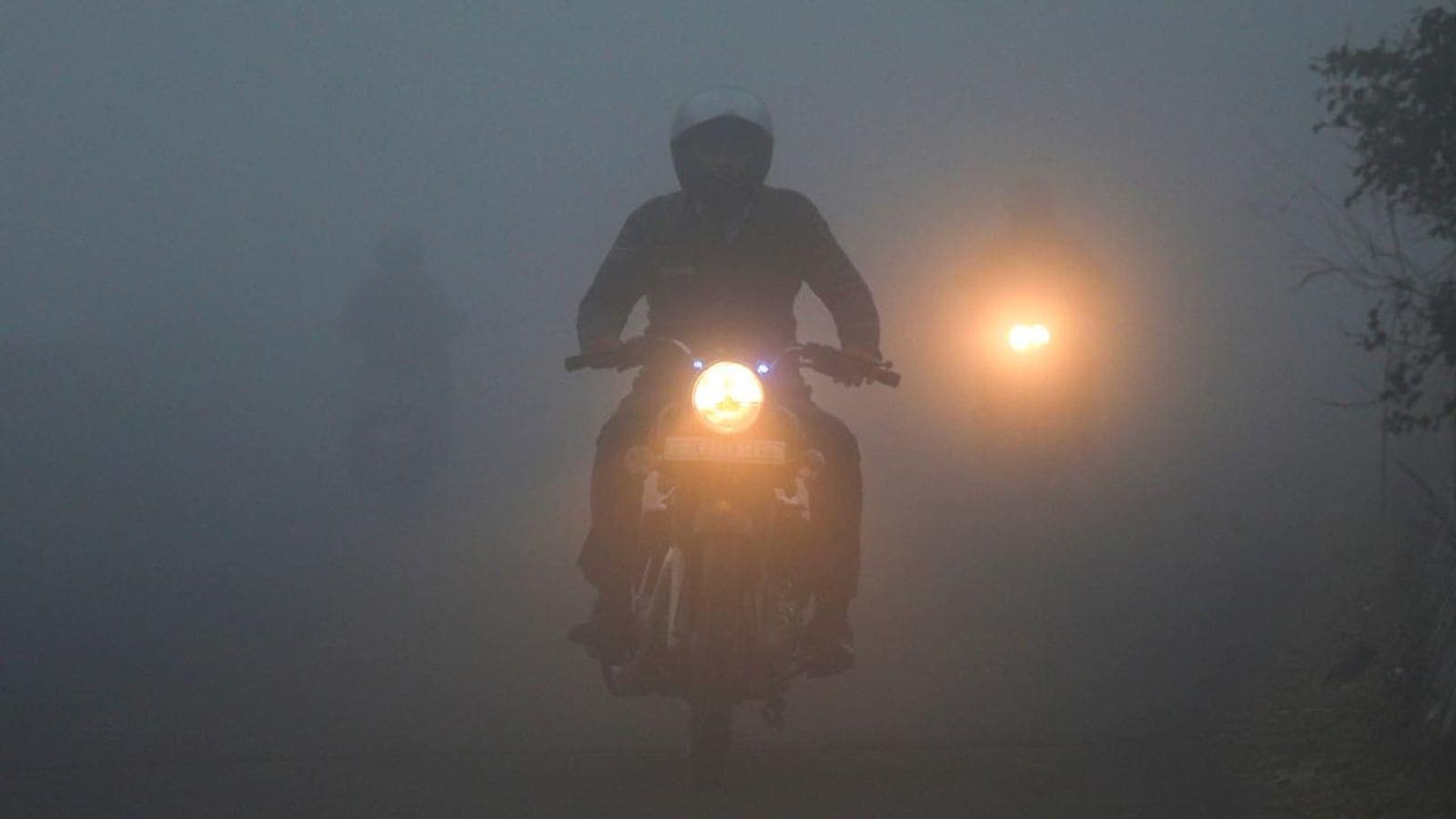
Simultaneously, Himachal Pradesh received a 'yellow fog alert,' indicating moderate risk due to reduced visibility. Fog, a common winter phenomenon, forms when water vapor condenses into tiny droplets near the ground, often due to a drop in temperature and high humidity. While a yellow alert advises awareness, severe fog can disrupt daily life significantly, leading to road accidents, delays in air and rail travel, and impacting economic activities. The IMD plays a crucial role in issuing these color-coded alerts (Green, Yellow, Orange, Red) to forewarn the public and disaster management agencies. State Disaster Management Authorities (SDMAs) and local administrations are key stakeholders in disseminating these warnings and ensuring public safety. The broader theme here relates to disaster preparedness and public safety, falling under the ambit of the Disaster Management Act, 2005, which provides the framework for managing all types of disasters, including weather-related hazards.
Further north, the Kashmir region entered 'Chillai-Kalan,' the traditional 40-day harshest winter period, typically commencing around December 21. This period is characterized by freezing temperatures, heavy snowfall, and icy winds, deeply ingrained in the cultural and daily life of Kashmiris. Historically, 'Chillai-Kalan' has shaped the region's unique architecture, clothing, and food habits, reflecting centuries of adaptation to extreme cold. Its significance extends beyond meteorology, influencing agriculture (reliance on snowmelt for irrigation), tourism (winter sports), and local infrastructure. The local administration, emergency services, and residents are the primary stakeholders during this challenging period. The future implications of such traditional weather patterns are increasingly linked to climate change, which can alter the intensity and duration of these phenomena, posing new challenges for adaptation and resilience in vulnerable regions like Kashmir.
Collectively, these updates underscore India's vulnerability to diverse climatic challenges and the imperative for robust environmental governance, disaster preparedness, and climate action. From tackling urban air pollution to managing regional weather extremes, a multi-pronged approach involving scientific research, policy implementation, inter-state cooperation, and public awareness is essential for ensuring sustainable development and safeguarding the well-being of its citizens. These events also highlight the critical role of scientific bodies like IMD and CPCB in providing timely and accurate information, which is vital for public safety and policy formulation. India's commitment to global climate goals, such as those outlined in the Paris Agreement and the Sustainable Development Goals (SDG 3: Good Health and Well-being, SDG 11: Sustainable Cities and Communities, SDG 13: Climate Action), necessitates continuous effort in these areas.
Exam Tips
This topic falls under Geography (Climatology, Indian Geography, Environmental Geography), Environment & Ecology, Disaster Management, and Current Affairs sections of competitive exams. Focus on understanding the underlying scientific principles and policy responses.
For Delhi's AQI, study the causes of air pollution (stubble burning, vehicular emissions, industrial sources), the health impacts, and government initiatives like NCAP and GRAP. Understand the role of CPCB, SAFAR, and IMD. For 'Chillai-Kalan', focus on its geographical location, duration, and cultural significance. For fog alerts, understand fog formation and IMD's color-coded warning system.
Common question patterns include: factual questions on specific dates (e.g., start of Chillai-Kalan), definitions (e.g., what is AQI?), conceptual questions (e.g., factors contributing to Delhi's air pollution), policy-based questions (e.g., provisions of Environment Protection Act, 1986, or details of NCAP), and mapping questions related to affected regions.