



Relevant for Exams
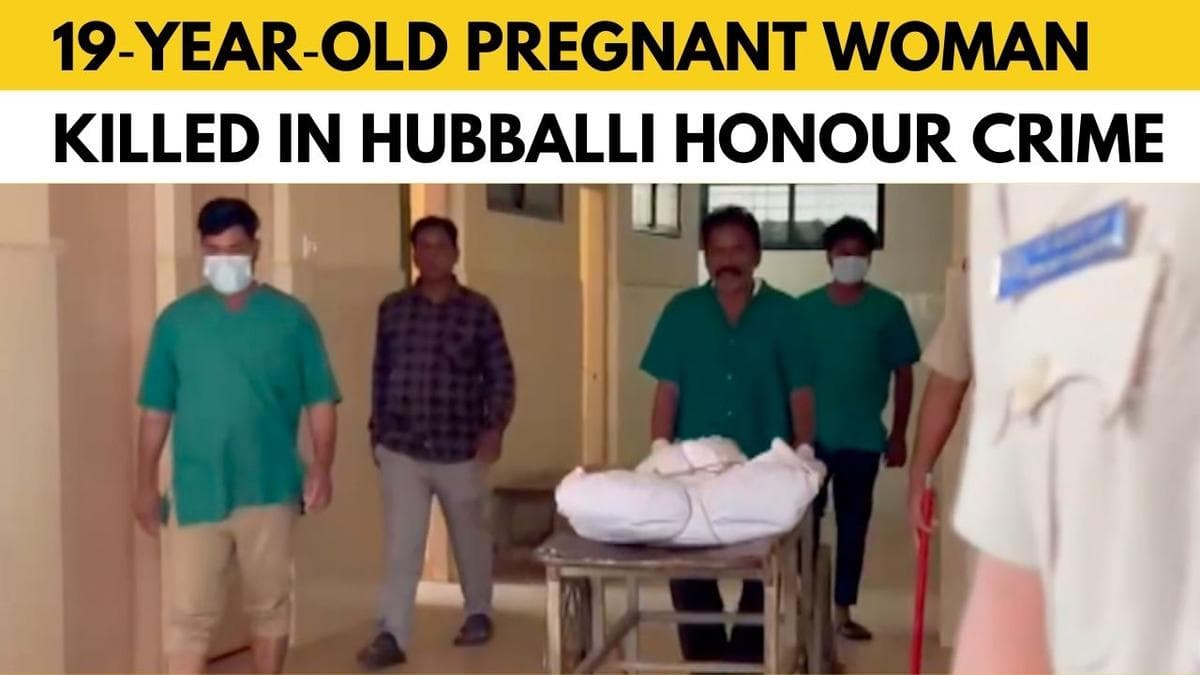
Pregnant woman killed in Karnataka's Inam Veerapur in suspected honour killing over inter-caste marriage.
Summary
A 19-year-old pregnant woman was brutally killed in Inam Veerapur village, Karnataka, in a suspected honour killing following her inter-caste marriage. Her husband and in-laws were also injured in the attack. This incident highlights the persistent societal issue of honour killings, particularly against inter-caste marriages, which is crucial for competitive exams focusing on social justice, crime, and ethics.
Key Points
- 1The incident occurred in Inam Veerapur village, Karnataka.
- 2The victim was a 19-year-old pregnant woman.
- 3The primary motive for the attack is suspected to be an honour killing.
- 4The attack was precipitated by the woman's inter-caste marriage.
- 5Her husband and in-laws were also injured during the attack.
In-Depth Analysis
The tragic incident in Inam Veerapur village, Karnataka, where a 19-year-old pregnant woman was brutally killed in a suspected honour attack following her inter-caste marriage, serves as a grim reminder of the persistent and deeply entrenched social evils plaguing Indian society. This event is not an isolated one but rather a symptom of a larger systemic issue rooted in caste hierarchies, patriarchal norms, and a distorted sense of 'honour' that often trumps individual liberty and human rights.
**Background Context and What Happened:**
Honour killings are acts of violence, usually murder, committed by male family members against female family members, who are perceived to have brought dishonour upon the family or community. The perceived 'dishonour' can stem from various actions, including refusing an arranged marriage, seeking a divorce, having a relationship outside of marriage, or, as in this case, entering into an inter-caste or inter-religious marriage. The victim in Karnataka had recently returned to her village after her inter-caste marriage, indicating that the family's disapproval was the immediate trigger for the horrific crime. Her husband and in-laws were also reportedly injured, highlighting the brutal nature and widespread impact of such attacks.
**Key Stakeholders Involved:**
* **Victim and her immediate family:** The primary victims are the individuals who defy societal norms (the woman and her husband), often facing extreme violence from their own kin. The in-laws are also vulnerable to attacks. Their fundamental rights, especially the right to life and personal liberty (Article 21) and the right to choose a partner, are violated.
* **Perpetrators:** Typically, these are close family members (parents, siblings, uncles) from the woman's side, who believe they are upholding the family's 'honour'. Their actions are driven by caste pride, patriarchal mindsets, and a fear of social ostracization.
* **Local Community/Panchayats:** While not directly involved in every attack, local community leaders or traditional bodies (like Khap Panchayats in some northern states) sometimes play a role in sanctioning or condoning such violence, putting immense pressure on families to 'correct' perceived transgressions. Their influence can create an environment where such crimes are tolerated or even encouraged.
* **Police and Judiciary:** These are the state institutions responsible for law enforcement, investigation, and ensuring justice. Their effectiveness in preventing such crimes, swiftly apprehending perpetrators, and securing convictions is crucial. Often, police face challenges due to local political pressure or societal attitudes.
* **Civil Society Organizations:** NGOs and human rights activists work to raise awareness, provide shelter and legal aid to couples at risk, and advocate for stronger laws and better enforcement.
**Why This Matters for India:**
This incident is deeply significant for India as it underscores several critical challenges. Firstly, it exposes the continuing grip of the caste system and patriarchal structures despite constitutional guarantees of equality and non-discrimination. Inter-caste marriages, though legally valid, remain a flashpoint for violence, particularly in rural areas. Secondly, it highlights the failure of the state apparatus to protect its citizens' fundamental rights, especially the right to life and liberty (Article 21) and the right to choose a life partner, which the Supreme Court has repeatedly affirmed as an integral part of Article 21. Thirdly, these crimes undermine the rule of law and send a chilling message to individuals contemplating defying traditional norms. Socially, they perpetuate fear and restrict individual freedoms, particularly for women, hindering true societal progress and gender equality.
**Historical Context:**
The roots of honour killings in India are deeply intertwined with the historical evolution of the caste system and the patriarchal nature of Indian society. For centuries, caste purity and endogamy (marriage within one's caste) have been central to social structure. Women's sexuality and choice in marriage have often been controlled to maintain caste boundaries and family 'honour'. Any transgression, especially an inter-caste marriage, is seen as an affront to the family's social standing and a dilution of its caste identity. While honour killings are more frequently reported in certain northern states, they are not exclusive to any region, as evidenced by this incident in Karnataka.
**Constitutional Provisions and Legal Framework:**
India's Constitution guarantees several rights that are directly violated by honour killings. **Article 14** ensures equality before the law, while **Article 15** prohibits discrimination on grounds of religion, race, caste, sex, or place of birth. Most importantly, **Article 21** guarantees the right to life and personal liberty, which the Supreme Court, in cases like *Lata Singh v. State of U.P. (2006)* and *Shakti Vahini v. Union of India (2018)*, has explicitly interpreted to include the right to marry a person of one's choice. These judgments have unequivocally condemned honour killings and directed the state to take preventive, remedial, and punitive measures.
Currently, there is no specific law for 'honour killing' in India. Perpetrators are prosecuted under existing provisions of the **Indian Penal Code (IPC)**, primarily **Section 302** (murder), **Section 307** (attempt to murder), **Section 323** (voluntarily causing hurt), **Section 34** (acts done by several persons in furtherance of common intention), and **Section 120B** (criminal conspiracy). The Law Commission of India, in its 242nd Report (2012), recommended a separate law, the 'Prohibition of Interference with the Freedom of Matrimonial Alliances Bill', to address this issue. The Supreme Court in the *Shakti Vahini* case also urged the Parliament to enact a specific law, highlighting the need for legal recognition and stronger deterrence.
**Future Implications:**
The persistence of honour killings necessitates a multi-pronged approach. Legislatively, the enactment of a specific law against honour crimes, as recommended by the Law Commission and the Supreme Court, would provide a stronger legal framework and send a clear message. Administratively, there is an urgent need for better police training, proactive intervention, and establishing safe houses for couples at risk. Socially, sustained awareness campaigns, education, and community engagement are vital to challenge regressive mindsets and promote acceptance of individual choices. Judicial activism will continue to play a crucial role in upholding fundamental rights and ensuring justice. Without comprehensive reforms, such tragic incidents will continue to undermine India's democratic and secular fabric, impacting social cohesion and the realization of true individual freedom.
Exam Tips
This topic falls under GS-I (Indian Society, Social Issues) and GS-II (Governance, Social Justice, Polity) for UPSC, and similar sections in State PSC and SSC exams. Focus on the socio-cultural roots like caste and patriarchy, and the legal/constitutional aspects.
Study related topics such as the evolution of the caste system, women's rights, fundamental rights (especially Article 21), role of judiciary (landmark judgments like *Shakti Vahini*), and criminal justice system reforms. Understand the difference between legal validity of marriage and social acceptance.
Common question patterns include direct questions on 'honour killing' as a social evil, its causes, consequences, and remedies; essay questions on social justice or gender equality; case studies in GS-IV (Ethics) involving dilemmas related to family honour vs. individual rights; and questions on relevant constitutional articles and legal provisions.
Related Topics to Study
Full Article
A 19-year-old pregnant woman was brutally attacked in Inam Veerapur village, Karnataka, in a suspected honour killing, days after returning to her village following an inter-caste marriage. Her husband and in-laws were also injured.