



Relevant for Exams
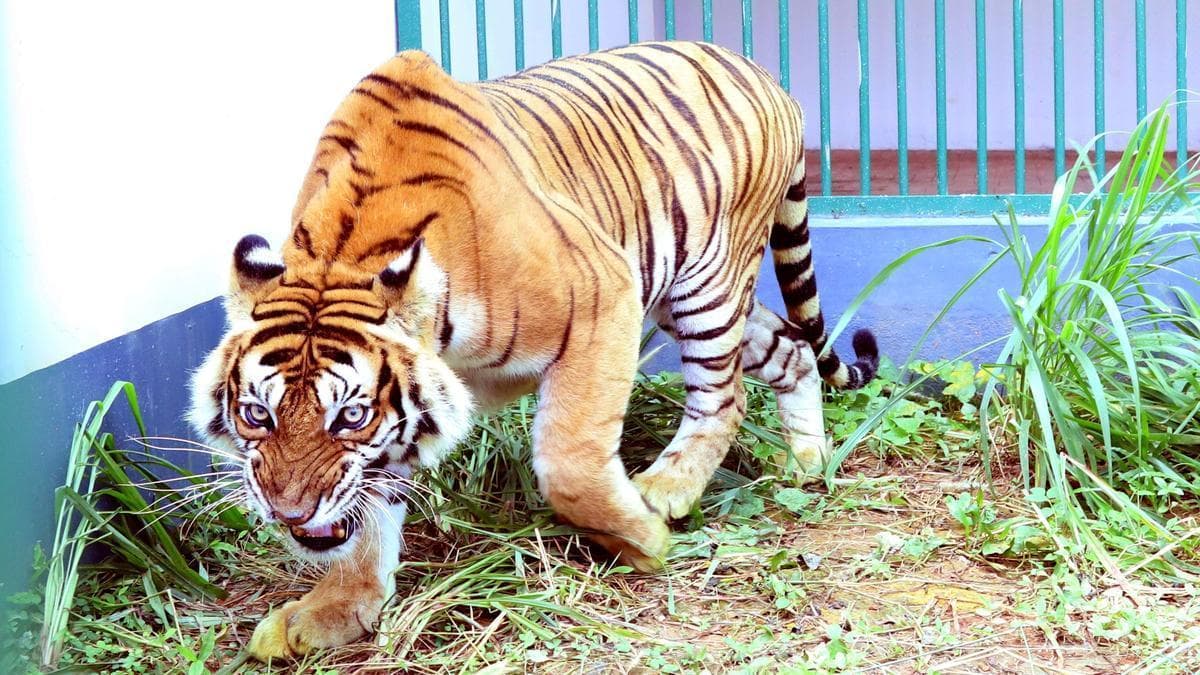
Tiger trapped in Kerala's Pathanamthitta after livestock attacks, highlighting human-wildlife conflict.
Summary
A tiger was successfully trapped in Kerala's Pathanamthitta district after repeatedly attacking livestock, including buffaloes, dogs, and goats, in the Kumbalathamon area. This incident highlights the escalating human-wildlife conflict in regions bordering forest areas, a critical environmental issue for competitive exams. Understanding such local events provides context for broader discussions on wildlife management and conservation challenges.
Key Points
- 1A tiger was trapped in Pathanamthitta district, Kerala.
- 2The trapping occurred after the tiger repeatedly attacked livestock.
- 3The attacks took place at Kumbalathamon, an area close to forests.
- 4Livestock killed by the tiger included buffaloes, dogs, and goats.
- 5The incident underscores the increasing human-wildlife conflict in forest-fringe regions of India.
In-Depth Analysis
The trapping of a tiger in Kerala's Pathanamthitta district, following its repeated attacks on livestock, serves as a stark illustration of the escalating human-wildlife conflict (HWC) that poses a significant challenge to India's conservation efforts. This incident, occurring in the Kumbalathamon area, which borders forest regions, highlights the intricate balance between protecting endangered species and safeguarding human livelihoods.
**Background Context and What Happened:** India is home to over 70% of the world's wild tiger population, a testament to the success of conservation initiatives like Project Tiger, launched in 1973. However, this success comes with its own set of challenges. As tiger numbers increase and their habitats become increasingly fragmented or encroached upon by human settlements, the interface between wildlife and human populations shrinks. This often leads to animals venturing into human-dominated landscapes in search of food or territory, resulting in conflicts. In Pathanamthitta, the tiger in question had reportedly killed buffaloes, dogs, and goats belonging to local farms and residences. Such incidents not only cause economic losses for farmers but also instill fear among residents, sometimes leading to demands for the removal or even culling of the animal. Forest officials successfully trapped the tiger, a standard protocol to mitigate immediate threats and assess the animal's health and behavior.
**Key Stakeholders Involved:** Several key players are central to such incidents. **Local communities and farmers** are the primary affected parties, bearing the brunt of livestock losses and living with the constant threat of encounters. Their economic well-being and safety are directly impacted. The **Kerala Forest Department and wildlife officials** are at the forefront of managing these situations. They are responsible for implementing wildlife protection laws, monitoring animal movements, conducting rescue and trapping operations, and facilitating compensation mechanisms. The **State Government of Kerala** plays a crucial role in formulating and funding conservation policies, managing forest resources, and ensuring law and order. At the national level, the **Ministry of Environment, Forest and Climate Change (MoEFCC)**, along with statutory bodies like the **National Tiger Conservation Authority (NTCA)**, provides policy direction, financial support, and technical guidance for tiger conservation. **Wildlife conservation organizations and scientific experts** also contribute by conducting research, advocating for policy changes, and assisting ground-level conservation efforts.
**Why This Matters for India:** This incident underscores a critical dilemma for India: how to balance its impressive conservation successes with the legitimate needs and safety of its vast rural population. The economic impact on farmers, often belonging to economically vulnerable sections, can be devastating. Loss of livestock, which are often their primary assets, can push families into poverty. Socially, HWC can erode public support for conservation, potentially leading to retaliatory killings of wildlife. Ecologically, maintaining healthy tiger populations is vital for the health of forest ecosystems, as tigers are apex predators that regulate herbivore populations. Politically, HWC issues often become local electoral concerns, pressuring authorities to find immediate solutions. This incident highlights the need for robust HWC mitigation strategies, including effective compensation schemes, rapid response teams, community awareness programs, and habitat enrichment to reduce animal straying.
**Historical Context:** India's journey in wildlife conservation has evolved significantly. From a colonial era marked by extensive hunting, the post-independence period saw a growing awareness of the need for conservation. The landmark **Wildlife Protection Act (WPA) of 1972** provided a legal framework for protecting endangered species, designating national parks and wildlife sanctuaries. The tiger, listed under Schedule I of the WPA, receives the highest level of protection. Project Tiger, launched in 1973, was a pioneering effort that established tiger reserves and focused on habitat protection, leading to a remarkable recovery of tiger numbers from an estimated 1,800 in the early 1970s to over 3,000 by 2022.
**Future Implications and Constitutional Provisions:** The increasing frequency of HWC incidents necessitates a multi-pronged approach. Future strategies will likely involve better land-use planning around forest fringes, use of technology (e.g., early warning systems, camera traps), improved livestock protection methods, and ex-situ management (translocation) in extreme cases. Crucially, community participation and engagement are vital for long-term solutions. From a constitutional perspective, wildlife protection is enshrined in India's legal framework. **Article 48A** of the Directive Principles of State Policy mandates that "The State shall endeavour to protect and improve the environment and to safeguard the forests and wild life of the country." Furthermore, **Article 51A(g)**, a Fundamental Duty, states that "it shall be the duty of every citizen of India... to protect and improve the natural environment including forests, lakes, rivers and wild life, and to have compassion for living creatures." Both 'Forests' and 'Protection of wild animals and birds' are subjects under the **Concurrent List (Entry 17B and 17A respectively) of the Seventh Schedule**, empowering both the Union and State governments to legislate on these matters. The incident in Pathanamthitta underscores the continuous challenge of upholding these constitutional mandates while ensuring human safety and well-being, demanding innovative and collaborative solutions.
Exam Tips
**Syllabus Section:** This topic primarily falls under 'Environment & Ecology' and 'Indian Polity & Governance' for UPSC Civil Services Exam (General Studies Paper III & II), State PSCs, and SSC exams. It also has relevance for 'Current Affairs' and 'Social Issues'.
**Related Topics to Study:** Link this incident to broader issues like 'Project Tiger' (its successes and challenges), 'Wildlife Protection Act, 1972' (key provisions, schedules), 'National Tiger Conservation Authority (NTCA)' (its role and functions), 'Human-Elephant Conflict', and 'Impact of Climate Change on Wildlife Habitats'.
**Common Question Patterns:** Expect questions on the causes and consequences of human-wildlife conflict, government initiatives for wildlife conservation, the role of various stakeholders, constitutional provisions related to environment and wildlife, and policy recommendations for mitigating HWC. Case studies or scenario-based questions are also possible.
Related Topics to Study
Full Article
Forest officials say the tiger had killed buffaloes, dogs and goats belonging to farms and residences at Kumbalathamon, which is located close to forest area