



Relevant for Exams
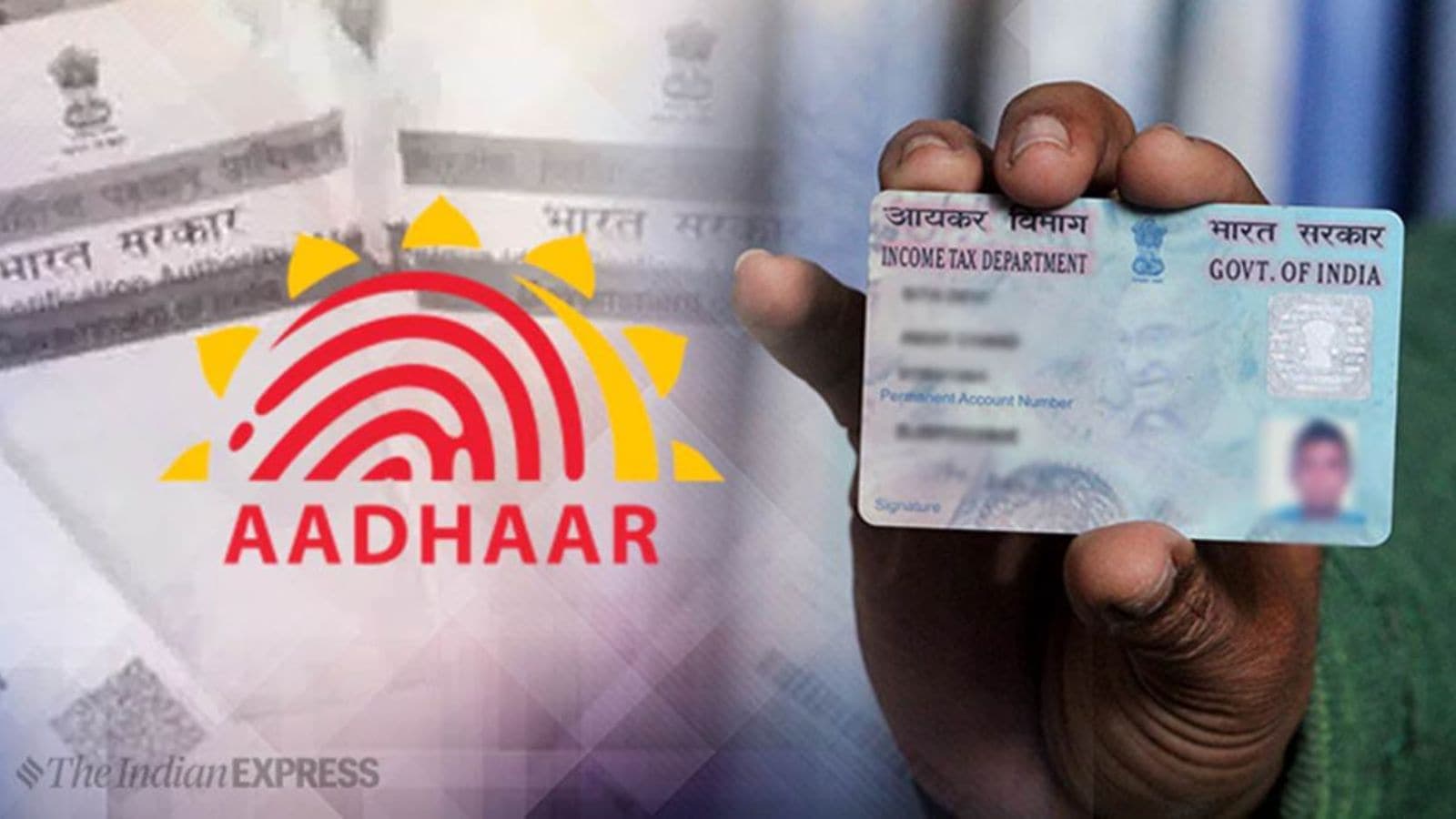
PAN-Aadhaar linking mandatory by 2026; understand deadlines, penalties, and legal provisions.
Summary
The government has mandated the linking of Permanent Account Number (PAN) with Aadhaar before 2026, a crucial step for tax compliance and financial transactions. This measure aims to curb tax evasion, streamline financial identification, and ensure data integrity. For competitive exams, understanding the specific deadline, potential penalties for non-compliance, and the legal provisions governing this mandate is highly important for questions on government policy and taxation.
Key Points
- 1The explicit deadline for linking PAN with Aadhaar, as stated in the title, is "before 2026".
- 2Failure to link PAN with Aadhaar by the stipulated deadline typically results in the PAN becoming 'inoperative'.
- 3An inoperative PAN can lead to severe financial consequences, including higher Tax Deducted at Source (TDS) and Tax Collected at Source (TCS).
- 4Missing the linking deadline usually incurs a penalty fee, which has previously been set at Rs. 1,000 for late submission.
- 5The mandate for PAN-Aadhaar linking is primarily rooted in Section 139AA of the Income Tax Act, 1961.
In-Depth Analysis
The mandate to link Permanent Account Number (PAN) with Aadhaar, with a deadline set "before 2026," represents a significant step in India's ongoing efforts to formalize its economy, enhance tax compliance, and improve governance through digital integration. This directive is not merely an administrative formality but a crucial policy instrument with wide-ranging implications for individual taxpayers, financial institutions, and the broader economic landscape.
**Background Context and Genesis:**
The journey towards linking PAN and Aadhaar began with the core objectives of creating a robust financial identification system and curbing tax evasion. The Permanent Account Number (PAN), introduced under the Income Tax Act, 1961, serves as a unique alphanumeric identifier for all financial transactions liable to tax. However, issues like individuals holding multiple PANs or using benami transactions to evade taxes were prevalent. Simultaneously, the Aadhaar project, initiated in 2009 under the Unique Identification Authority of India (UIDAI) and later given statutory backing by the Aadhaar (Targeted Delivery of Financial and Other Subsidies, Benefits and Services) Act, 2016, aimed to provide a unique identity to every resident of India. The idea behind linking these two powerful identifiers was to create an unshakeable digital footprint, making it exceedingly difficult for individuals to hide their financial activities from tax authorities.
**What Happened: The Mandate and its Consequences:**
The government, through amendments to the Income Tax Act, 1961, made it mandatory to link PAN with Aadhaar. While the current article mentions a deadline of "before 2026," it's crucial for students to note that this has been an evolving deadline, extended multiple times from its initial announcement, reflecting the scale of the task and the need for public compliance. Failure to link PAN with Aadhaar by the stipulated deadline results in the PAN becoming 'inoperative.' An inoperative PAN carries severe financial repercussions: individuals will be subjected to higher Tax Deducted at Source (TDS) and Tax Collected at Source (TCS) on various transactions. Furthermore, they may face difficulties in filing Income Tax Returns, receiving tax refunds, and conducting essential financial transactions such as opening bank accounts, investing in mutual funds, or buying/selling property. A penalty fee, previously set at Rs. 1,000 for late linking, also applies.
**Key Stakeholders Involved:**
Several entities play critical roles in this mandate. The **Government of India**, particularly the **Ministry of Finance** and the **Income Tax Department**, are the primary architects and enforcers of this policy. They formulate the rules, set deadlines, and implement the penalties. The **Unique Identification Authority of India (UIDAI)** is responsible for maintaining the Aadhaar database and ensuring the integrity of the linking process. **Indian citizens and taxpayers** are the direct subjects of this mandate, responsible for ensuring their compliance. Finally, **financial institutions** such as banks, mutual fund houses, and other financial intermediaries are crucial implementers, as they are required to verify the PAN-Aadhaar linkage for their customers and apply the consequences of an inoperative PAN.
**Significance for India:**
This linking mandate holds profound significance for India. Economically, it is a powerful tool for **curbing tax evasion** and bringing a larger portion of the informal economy into the formal fold. By ensuring that every financial transaction can be traced to a unique, verified individual, the government can significantly broaden its tax base and improve tax collection efficiency. This aligns with the broader goal of **financial inclusion** by fostering transparency and accountability. Socially, it promotes **data integrity** and helps in cleaning up databases, which can indirectly aid in the targeted delivery of subsidies and benefits, although the Supreme Court has limited Aadhaar's mandatory use primarily to tax and welfare schemes. Politically, it showcases the government's commitment to **good governance** and leveraging digital infrastructure for administrative efficiency.
**Historical Context and Legal Framework:**
The legal backbone of the PAN-Aadhaar linkage is **Section 139AA of the Income Tax Act, 1961**, which was introduced via the Finance Act, 2017. This section explicitly mandates that every person who is eligible to obtain Aadhaar must quote their Aadhaar number while applying for PAN and also link their existing PAN with Aadhaar. The constitutional validity of this linkage was rigorously tested in the Supreme Court. In the landmark judgment of *Justice K.S. Puttaswamy (Retd.) and Anr. vs Union of India and Ors. (2018)*, while upholding the fundamental **Right to Privacy** under **Article 21** of the Constitution, the Court largely affirmed the constitutional validity of the Aadhaar Act, 2016. Crucially, it upheld Section 139AA, stating that the mandatory linking of PAN with Aadhaar for income tax purposes was a reasonable restriction in the interest of the state to prevent tax evasion, thereby balancing individual rights with state objectives.
**Future Implications and Broader Themes:**
The successful implementation of the PAN-Aadhaar linkage paves the way for enhanced **financial surveillance** capabilities for the government, leading to better policy formulation and enforcement. It is a cornerstone of the **Digital India initiative**, promoting digital identity and seamless online services. In the future, this robust linkage could facilitate further integration of various government databases, leading to a more streamlined and efficient administrative ecosystem. However, it also underscores the ongoing debate between individual privacy and state surveillance, a theme that will continue to evolve with technological advancements and legal interpretations. The policy reflects a global trend towards digital identification for governance and tax administration, positioning India at the forefront of leveraging technology for public policy objectives.
Exam Tips
This topic falls under 'Indian Economy' (Taxation, Government Policies) and 'Indian Polity' (Constitutional Law, Rights, Public Policy) sections of competitive exam syllabi. Be prepared for questions on both economic and legal aspects.
Study related topics like the Income Tax Act, 1961 (especially Section 139AA), the Aadhaar (Targeted Delivery of Financial and Other Subsidies, Benefits and Services) Act, 2016, and the landmark Supreme Court judgments on the Right to Privacy (Justice K.S. Puttaswamy case) and Aadhaar's constitutional validity. Understand the rationale behind these legislative and judicial actions.
Common question patterns include direct questions on the deadline, penalties for non-compliance, the specific legal provision (Section 139AA), and the primary objectives of the linking. Analytical questions may focus on the economic impact (tax compliance, formalization), constitutional implications (privacy vs. state interest), and the overall significance for India's digital governance.
Pay attention to the 'inoperative PAN' concept and its consequences. Understand the difference between an inoperative PAN and a deactivated PAN, as this could be a tricky point in multiple-choice questions.
Keep track of any updated deadlines or changes in penalty structures, as government policies can evolve. While the article states 'before 2026', competitive exams often test the most recent information available at the time of the exam.