



Relevant for Exams
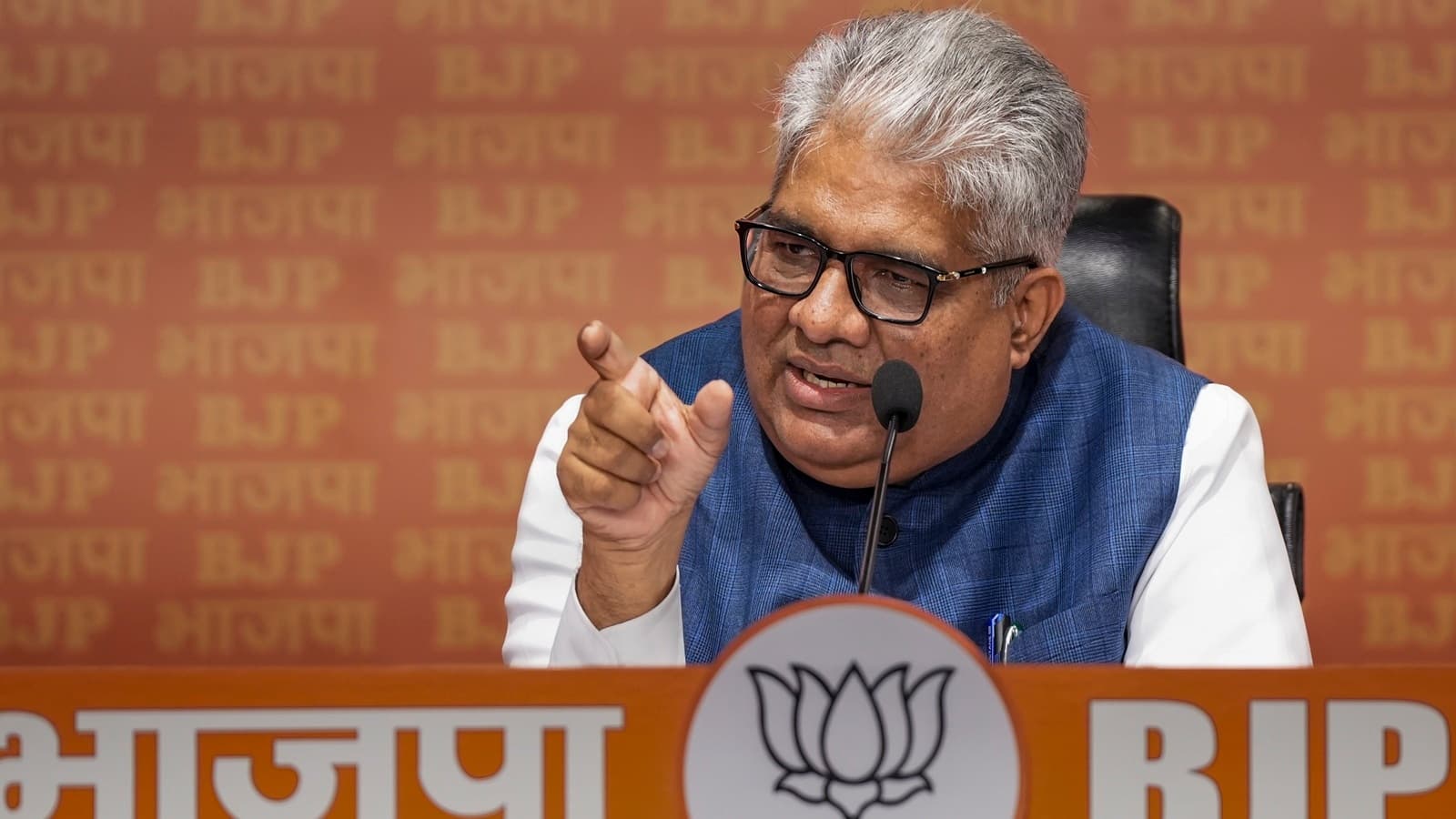
Minister confirms mining in only 0.19% of Aravalli after detailed environmental study.
Summary
A minister announced that mining activities in the ecologically sensitive Aravalli Range are restricted to merely 0.19% of its total area, following a comprehensive study. This statement highlights the government's focus on balancing economic development with environmental conservation in critical biodiversity zones. It's significant for competitive exams covering environmental policy, sustainable development, and Indian geography.
Key Points
- 1The Aravalli Range, one of India's oldest fold mountains, is the geographical focus of the mining policy.
- 2Only 0.19% of the total area of the Aravalli Range is permitted for mining activities.
- 3The decision to limit mining to 0.19% was based on a 'detailed study' conducted prior to approvals.
- 4A government 'Minister' made the announcement, indicating official policy on resource management.
- 5The policy underscores the importance of environmental protection and sustainable development in the Aravalli region.
In-Depth Analysis
The recent announcement by a government minister, limiting mining activities in the ecologically fragile Aravalli Range to a mere 0.19% of its total area following a 'detailed study,' marks a significant moment in India's ongoing struggle to balance economic development with environmental conservation. This policy decision underscores the critical importance of the Aravallis, one of the world's oldest fold mountain ranges, and reflects a growing awareness of the long-term consequences of unchecked resource exploitation.
**Background Context and Historical Conflict:**
The Aravalli Range, stretching approximately 692 km across Gujarat, Rajasthan, Haryana, and Delhi, is not just a geological marvel but a vital ecological corridor. It acts as a natural barrier against the Thar Desert's eastward expansion, recharges groundwater for a vast region, and is a crucial habitat for diverse flora and fauna. Historically, the Aravallis have been subjected to extensive mining for minerals like marble, granite, sandstone, and various minor minerals. This extraction, often illegal and unregulated, has led to severe environmental degradation, including deforestation, soil erosion, dust pollution, groundwater depletion, and loss of biodiversity. For decades, environmentalists and local communities have raised alarms about the irreversible damage, advocating for stricter regulations and a complete ban on mining in sensitive areas. The conflict between the economic imperative of mineral extraction for infrastructure and industrial growth, and the ecological necessity of preserving the Aravallis, has been a contentious issue, frequently reaching the doors of the judiciary.
**What Happened and Key Stakeholders:**
The minister's statement indicates a policy shift towards highly restricted and regulated mining, based on scientific assessment. The 'detailed study' mentioned implies a comprehensive Environmental Impact Assessment (EIA) or a similar scientific evaluation to identify areas suitable for minimal extraction, while protecting the vast majority of the range. Key stakeholders in this decision and its implementation include:
* **Government (Central & State):** The Ministry of Environment, Forest and Climate Change (MoEFCC) is central to policy formulation and environmental clearances. State governments (Rajasthan, Haryana, Gujarat, Delhi) are crucial for enforcement, issuing mining leases, and monitoring. State Pollution Control Boards play a vital role in ensuring compliance with environmental norms.
* **Mining Industry:** Companies involved in mineral extraction are direct beneficiaries or affected parties. Their operations are now subject to stringent limitations, requiring adherence to environmental safeguards and possibly exploring sustainable mining technologies.
* **Environmental Activists & NGOs:** Organizations like the Aravalli Bachao Andolan, citizens' groups, and environmental lawyers have consistently championed the cause of Aravalli protection. Their advocacy and legal interventions have been instrumental in pushing for stricter regulations.
* **Local Communities:** Residents living in and around the Aravallis, including indigenous populations, depend on the range for livelihoods, water, and cultural heritage. They are often the first to bear the brunt of environmental degradation and also stand to benefit from conservation efforts.
* **Judiciary:** The Supreme Court of India has played a pivotal role in environmental governance, particularly concerning the Aravallis. Landmark judgments, such as those arising from the M.C. Mehta v. Union of India case, have repeatedly intervened to ban illegal mining and direct governments to protect the range, especially in areas like the Delhi-Haryana border. These judicial pronouncements have significantly shaped the policy landscape.
**Significance for India and Constitutional Underpinnings:**
This decision holds immense significance for India. Environmentally, it is a crucial step towards preserving a vital ecosystem that acts as the 'green lungs' of a densely populated region, helps recharge groundwater, and prevents desertification. Economically, it signifies a move towards sustainable resource management, recognizing that short-term gains from unchecked mining can lead to long-term ecological and economic costs. Socially, it aims to protect the health and livelihoods of communities dependent on the Aravallis. From a governance perspective, it demonstrates a commitment to sustainable development goals (SDGs), particularly SDG 15 (Life on Land) and SDG 6 (Clean Water and Sanitation).
The legal framework underpinning such decisions is robust. **Article 48A** of the Constitution of India, a Directive Principle of State Policy (DPSP), mandates that "The State shall endeavour to protect and improve the environment and to safeguard the forests and wildlife of the country." Furthermore, **Article 51A(g)**, a Fundamental Duty, enjoins every citizen "to protect and improve the natural environment including forests, lakes, rivers and wildlife, and to have compassion for living creatures." Key legislation includes the **Environment (Protection) Act, 1986**, which empowers the Central Government to take measures to protect and improve the environment, and the **Forest (Conservation) Act, 1980**, which regulates the diversion of forest land for non-forest purposes. The **Mines and Minerals (Development and Regulation) Act, 1957 (MMDR Act)**, governs mining activities, while the **National Green Tribunal Act, 2010**, provides for effective and expeditious disposal of cases relating to environmental protection.
**Future Implications:**
The announcement, while positive, faces significant challenges in implementation. The history of illegal mining in the Aravallis suggests that robust enforcement mechanisms are paramount. Future implications include the need for continuous monitoring using satellite imagery and ground surveillance, fostering community participation in conservation, and promoting the reclamation and rehabilitation of already degraded mining sites. This move could set a precedent for other ecologically sensitive zones in India, pushing for a more balanced approach to development. It also highlights the evolving role of scientific studies and data-driven policymaking in environmental governance, signaling a shift towards evidence-based decision-making for sustainable resource management in the country.
Exam Tips
This topic falls under GS Paper I (Indian Geography - Physical Geography) and GS Paper III (Environment & Ecology, Economy - Infrastructure, Resource Mobilization) for UPSC. For State PSCs and SSC, it's relevant for General Studies (Geography, Environment, Current Affairs).
Study related topics like the geological formation of fold mountains, types of minerals found in India, environmental impact assessment (EIA) process, role of the National Green Tribunal (NGT), and the concept of ecologically sensitive zones (ESZs).
Common question patterns include factual questions on the Aravalli's location, significance, and specific minerals; conceptual questions on the balance between development and environment; and policy-oriented questions on relevant constitutional articles, acts (e.g., Environment Protection Act, MMDR Act), and landmark Supreme Court judgments.
Be prepared for case study-based questions on environmental conflicts, requiring you to analyze the roles of various stakeholders and suggest sustainable solutions. Understand the difference between legal and illegal mining.
Focus on the 'why' behind the policy – why are Aravallis important? Why is mining restricted? What are the long-term benefits of conservation versus short-term economic gains?