



Relevant for Exams
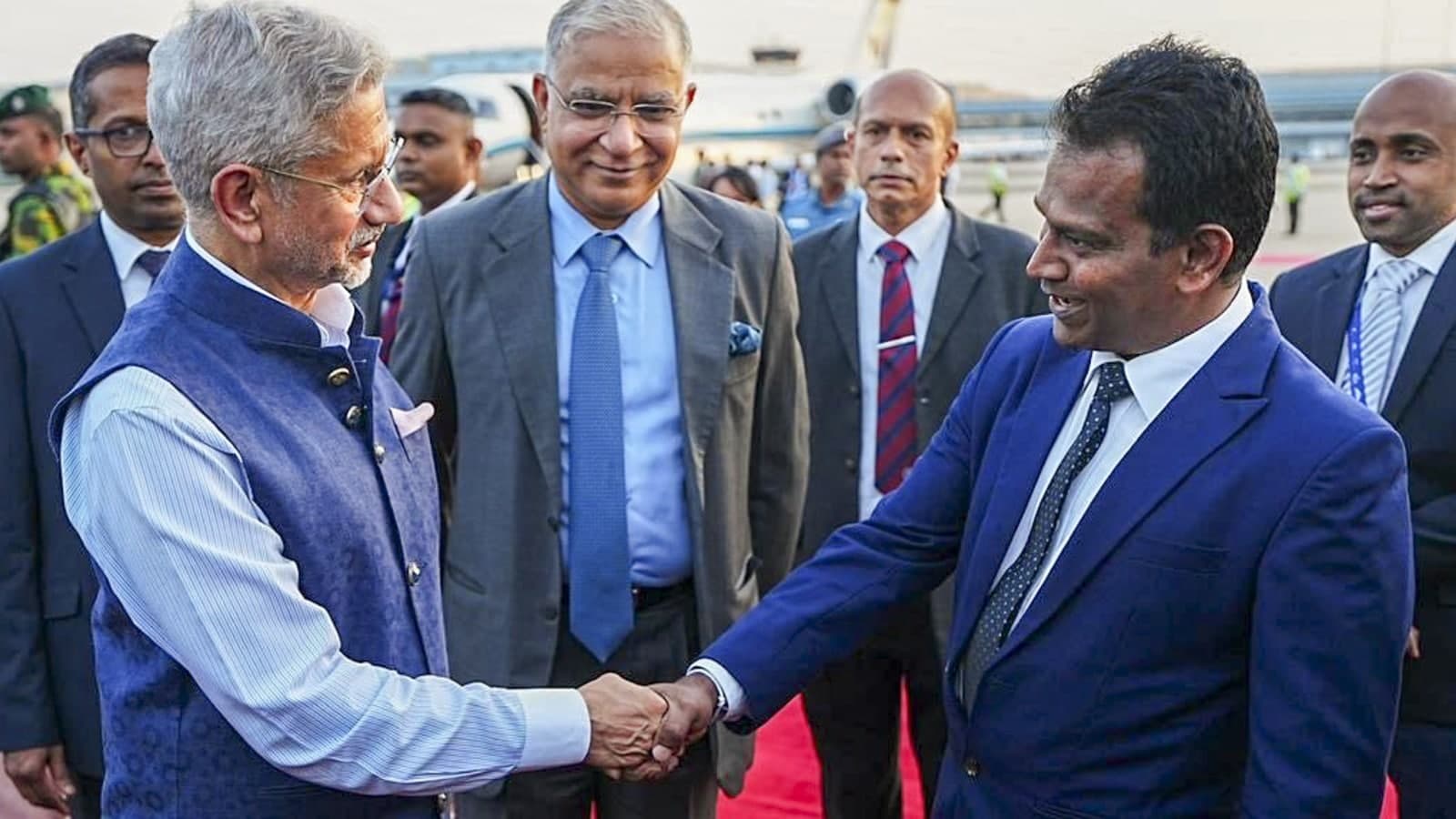
EAM Jaishankar visits cyclone-hit Sri Lanka as PM's envoy, reinforcing India's 'Neighbourhood First' policy.
Summary
External Affairs Minister S. Jaishankar visited cyclone-hit Sri Lanka as the Prime Minister's special envoy. This visit underscores India's commitment to its 'Neighbourhood First' policy and its proactive role in providing Humanitarian Assistance and Disaster Relief (HADR) to regional partners. For competitive exams, this highlights India's foreign policy, disaster diplomacy, and bilateral relations with Sri Lanka, crucial for international relations and current affairs sections.
Key Points
- 1External Affairs Minister (EAM) S. Jaishankar led the Indian delegation.
- 2The visit was to Sri Lanka, an important South Asian neighbour.
- 3EAM Jaishankar acted as the Prime Minister's special envoy for the mission.
- 4The primary purpose of the visit was to assess and provide relief after a cyclone.
- 5This initiative reinforces India's 'Neighbourhood First' foreign policy doctrine.
In-Depth Analysis
External Affairs Minister S. Jaishankar's visit to cyclone-hit Sri Lanka as the Prime Minister's special envoy is far more than a simple humanitarian gesture; it's a potent demonstration of India's strategic foreign policy objectives, particularly its 'Neighbourhood First' doctrine and commitment to being a reliable partner in the Indian Ocean Region (IOR). This event, while seemingly a response to a natural calamity, offers a rich tapestry for understanding India's international relations, disaster diplomacy, and regional geopolitical standing.
**Background Context: A Vulnerable Neighbour and India's Enduring Ties**
Sri Lanka, an island nation strategically located in the Indian Ocean, is frequently susceptible to natural disasters, including cyclones and monsoonal floods. Its geographical position makes it vulnerable to extreme weather events, which can devastate its economy and infrastructure. When a cyclone strikes, as it did in this instance, it presents a severe humanitarian challenge. India and Sri Lanka share a deeply rooted historical, cultural, and economic relationship, spanning millennia. From ancient Buddhist ties to modern trade and strategic partnerships, their destinies are intertwined. However, the relationship has also seen complexities, including the ethnic conflict in Sri Lanka and the growing influence of other global powers, notably China, in the region. India has historically been a significant development partner and a first responder during crises in Sri Lanka.
**What Happened: Proactive Diplomacy in Action**
The visit by External Affairs Minister S. Jaishankar, acting as the Prime Minister's special envoy, immediately after the cyclone, underscores India's proactive and high-level engagement. The purpose was multi-fold: to assess the damage firsthand, convey India's solidarity, offer immediate relief, and coordinate long-term assistance. This wasn't merely a bureaucratic dispatch of aid; it was a visible act of 'disaster diplomacy' led by a senior cabinet minister. Such a high-profile visit ensures direct communication with the Sri Lankan leadership, streamlines aid efforts, and reinforces the personal commitment from India's highest levels of government.
**Key Stakeholders Involved:**
1. **India (Government of India, Ministry of External Affairs, Prime Minister's Office):** As the initiator and provider of aid, India's leadership, particularly EAM Jaishankar, is a central stakeholder. Their actions reflect India's foreign policy goals and commitment to regional stability.
2. **Sri Lanka (Government of Sri Lanka, affected population):** The primary recipient of aid and the nation grappling with the disaster. The Sri Lankan government's cooperation and the well-being of its citizens are paramount. Their response to India's aid also influences bilateral perceptions.
3. **International Community/Regional Organizations:** While not directly involved in this immediate bilateral visit, other countries and regional bodies like SAARC or BIMSTEC often play a role in broader disaster relief efforts, and India's actions set a precedent for regional cooperation.
**Why This Matters for India: Strategic Imperatives and Regional Leadership**
This visit holds immense significance for India. Firstly, it is a direct manifestation of India's 'Neighbourhood First' policy, launched in 2014, which prioritizes friendly relations and cooperation with immediate neighbours. By being the first responder and offering substantive aid, India solidifies its image as a reliable and benevolent power in its immediate vicinity. Secondly, it strengthens India's role as a net security provider and a 'first responder' in the Indian Ocean Region, aligning with its 'Security and Growth for All in the Region' (SAGAR) vision. This proactive engagement helps counter the narrative of other powers, particularly China, which has significantly expanded its economic and strategic footprint in Sri Lanka through projects like the Hambantota Port. India's HADR (Humanitarian Assistance and Disaster Relief) operations are not just about aid; they are about projecting soft power and strategic influence. Furthermore, a stable and prosperous Sri Lanka is crucial for India's own security and economic interests, given its strategic location on vital shipping lanes.
**Historical Context and Policy Foundations:**
India's foreign policy, while guided by the Directive Principles of State Policy (Article 51 of the Constitution, which advocates for the promotion of international peace and security and fostering respect for international law), is pragmatically shaped by its strategic interests. The 'Neighbourhood First' policy is a modern articulation of India's long-standing commitment to its neighbours, albeit with renewed vigour. India has a robust history of providing HADR, from the 2004 Tsunami to earthquakes in Nepal and floods in Bangladesh. Its National Disaster Management Authority (NDMA), established under the Disaster Management Act, 2005, plays a crucial role in coordinating both domestic and international disaster response efforts, enhancing India's capacity to assist neighbours.
**Future Implications: Deeper Engagement and Regional Resilience**
This visit is likely to foster deeper bilateral trust and cooperation between India and Sri Lanka. It opens avenues for enhanced collaboration in disaster preparedness, early warning systems, and capacity building, potentially leading to joint exercises and knowledge sharing. From a broader perspective, it reinforces India's diplomatic credentials as a responsible regional power, encouraging other neighbours to look to India during crises. This consistent engagement can help mitigate the influence of rival powers and ensure India's continued pre-eminence in its immediate strategic space. It also sets a precedent for how India intends to operationalize its foreign policy doctrines in times of need, strengthening regional resilience against future natural calamities.
Exam Tips
This topic falls under 'International Relations' and 'Indian Foreign Policy' in the UPSC Civil Services Exam (GS Paper-II) and 'Current Affairs' for all competitive exams. Focus on the 'Neighbourhood First' policy, 'SAGAR' vision, and India's HADR capabilities.
Study India's bilateral relations with Sri Lanka, including economic ties, strategic importance (e.g., Hambantota Port, Trincomalee Oil Tank Farm), and cultural connections. Questions often test the multi-faceted nature of these relationships.
Understand the concept of 'Disaster Diplomacy' and India's role as a 'first responder' in the Indian Ocean Region. Be prepared for analytical questions on how such visits contribute to India's soft power and strategic objectives.
Familiarize yourself with relevant foreign policy doctrines and initiatives like 'Act East Policy', 'Extended Neighbourhood', and multilateral forums (BIMSTEC, IORA) that govern India's engagement with its neighbours and the broader region. This will help you answer broader context questions.
Practice mapping skills for Sri Lanka – its geographical proximity to India, major ports, and areas prone to natural disasters. Also, know the constitutional provisions (e.g., Article 51 DPSP) that broadly guide India's external relations.