

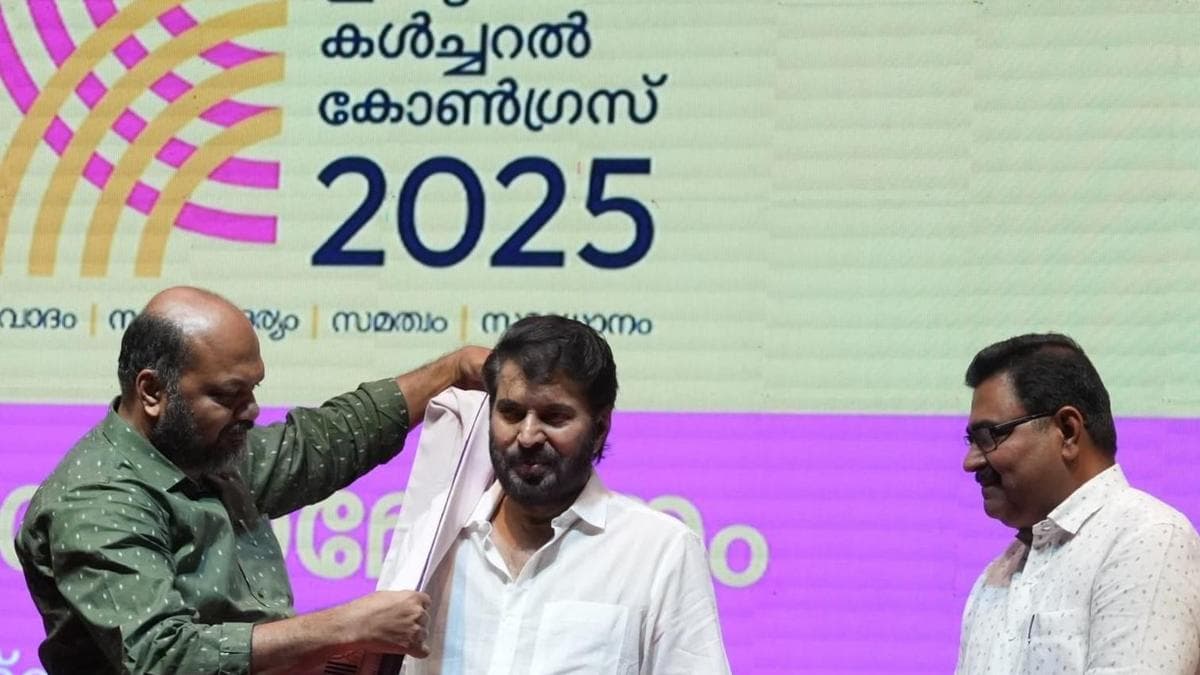


Indian Cultural Congress concludes; no content available for exam-relevant analysis.
Summary
An Indian Cultural Congress reportedly concluded, but the provided article contains no content. This absence prevents the extraction of any specific details such as dates, participants, resolutions, or locations. Consequently, it's impossible to determine the event's significance for competitive exams or to identify any factual information for preparation.
Key Points
- 1The event is identified by the title 'Indian Cultural Congress'.
- 2The news article's category is specified as 'national'.
- 3The source of the news article is 'thehindu.com'.
- 4No specific date of conclusion, venue, or duration of the Congress is provided in the content.
- 5Key details like participants, agenda, resolutions, or outcomes of the Congress are entirely missing from the article.
In-Depth Analysis
The news headline "Indian Cultural Congress concludes" hints at an event of national significance, yet the absence of specific content presents a unique challenge for analysis. Given this lack of detail, it's impossible to discuss the precise outcomes, participants, or resolutions of *this particular* congress. However, we can leverage this opportunity to delve into the broader context and importance of cultural congresses and cultural policy in India, which is highly relevant for competitive exams.
India, a land of unparalleled diversity, boasts a rich tapestry of cultures, languages, art forms, and traditions that have evolved over millennia. This profound cultural heritage is not merely a relic of the past but a living, breathing entity that shapes national identity and societal cohesion. Against this backdrop, an 'Indian Cultural Congress' would typically serve as a crucial platform for dialogue, deliberation, and policy formulation concerning the nation's cultural landscape. Such gatherings often bring together artists, scholars, policymakers, cultural administrators, and civil society representatives to discuss challenges, celebrate achievements, and chart future directions for cultural preservation and promotion.
Historically, efforts to document, preserve, and promote Indian culture have been integral to nation-building, even before independence. Leaders like Mahatma Gandhi emphasized the importance of indigenous arts and crafts, while post-independence, Jawaharlal Nehru envisioned a vibrant cultural ecosystem that would blend tradition with modernity. This vision led to the establishment of various autonomous cultural institutions like the Sahitya Akademi (for literature, founded 1954), Sangeet Natak Akademi (for performing arts, founded 1953), and Lalit Kala Akademi (for visual arts, founded 1954) under the Ministry of Culture. These bodies, along with the Archaeological Survey of India (ASI, established 1861), play a pivotal role in safeguarding India's tangible and intangible heritage.
The key stakeholders in any such cultural congress would invariably include the Union Ministry of Culture and its various subordinate offices and autonomous organizations. State cultural departments and academies would also be crucial participants, reflecting India's federal structure and the regional nuances of its culture. Beyond governmental bodies, artists, performers, writers, historians, archaeologists, anthropologists, and cultural critics form the intellectual backbone of such events. Non-governmental organizations (NGOs) working in heritage conservation, folk art promotion, and cultural education also play a vital role, often bridging the gap between policy and grassroots implementation. Furthermore, representatives from educational institutions and universities contribute academic rigor and research perspectives.
For India, the significance of such a congress is multi-faceted. Firstly, it reinforces national identity and unity in a country marked by immense diversity. By fostering a shared understanding and appreciation of different cultural expressions, it strengthens the idea of 'unity in diversity.' Secondly, culture is a powerful tool for India's soft power diplomacy on the global stage. Events like the International Yoga Day (declared by UN in 2014) and the promotion of Indian classical arts showcase India's rich heritage and intellectual contributions, enhancing its global standing. Thirdly, the cultural sector has substantial economic implications, contributing to tourism, handicrafts, creative industries, and employment generation. Policy recommendations emanating from such congresses can significantly boost the cultural economy. Lastly, these gatherings are vital for addressing contemporary challenges, such as the impact of globalization and digitalization on traditional art forms, intellectual property rights for traditional knowledge, and the illicit trafficking of cultural artifacts.
Several constitutional provisions underpin India's commitment to culture. The Preamble itself, with its emphasis on 'Fraternity assuring the dignity of the individual and the unity and integrity of the Nation,' implicitly supports cultural diversity. More directly, **Article 29** (Protection of interests of minorities) ensures that "Any section of the citizens residing in the territory of India or any part thereof having a distinct language, script or culture of its own shall have the right to conserve the same." **Article 30** further grants minorities the right to establish and administer educational institutions of their choice. Among the Directive Principles of State Policy (DPSP), **Article 49** mandates the State to protect "every monument or place or object of artistic or historic interest, declared by or under law made by Parliament to be of national importance, from spoliation, disfigurement, destruction, removal, disposal or export, as the case may be." The Fundamental Duties under **Article 51A(f)** exhort every citizen "to value and preserve the rich heritage of our composite culture." Key legislations like the Ancient Monuments and Archaeological Sites and Remains Act, 1958, and the Copyright Act, 1957, also provide the legal framework for cultural protection and promotion.
The future implications of such congresses are profound. They can lead to renewed focus on cultural infrastructure development, increased funding for struggling art forms, and more inclusive cultural policies. They might also influence educational curricula to better integrate cultural studies and heritage awareness. In an increasingly globalized world, regular cultural dialogues are crucial for India to maintain its unique cultural identity while engaging with global trends. Such platforms are essential for adapting traditional arts to modern contexts, fostering innovation, and ensuring that India's vibrant cultural legacy continues to thrive for generations to come.
Exam Tips
This topic falls under 'Indian Heritage and Culture' (UPSC GS Paper I, State PSCs) and 'Current Events of National Importance' (all competitive exams). Focus on the roles and functions of various cultural institutions.
Study related topics such as UNESCO World Heritage Sites in India, the difference between tangible and intangible cultural heritage, and major government schemes for cultural promotion (e.g., Kala Sanskriti Vikas Yojana, Ek Bharat Shreshtha Bharat).
Expect questions on constitutional provisions related to culture (Articles 29, 30, 49, 51A(f)), the establishment dates and functions of national academies (Sahitya, Sangeet Natak, Lalit Kala), and the economic and social significance of cultural tourism and creative industries. Analytical questions might probe challenges to cultural preservation and the role of culture in soft power diplomacy.