



Relevant for Exams
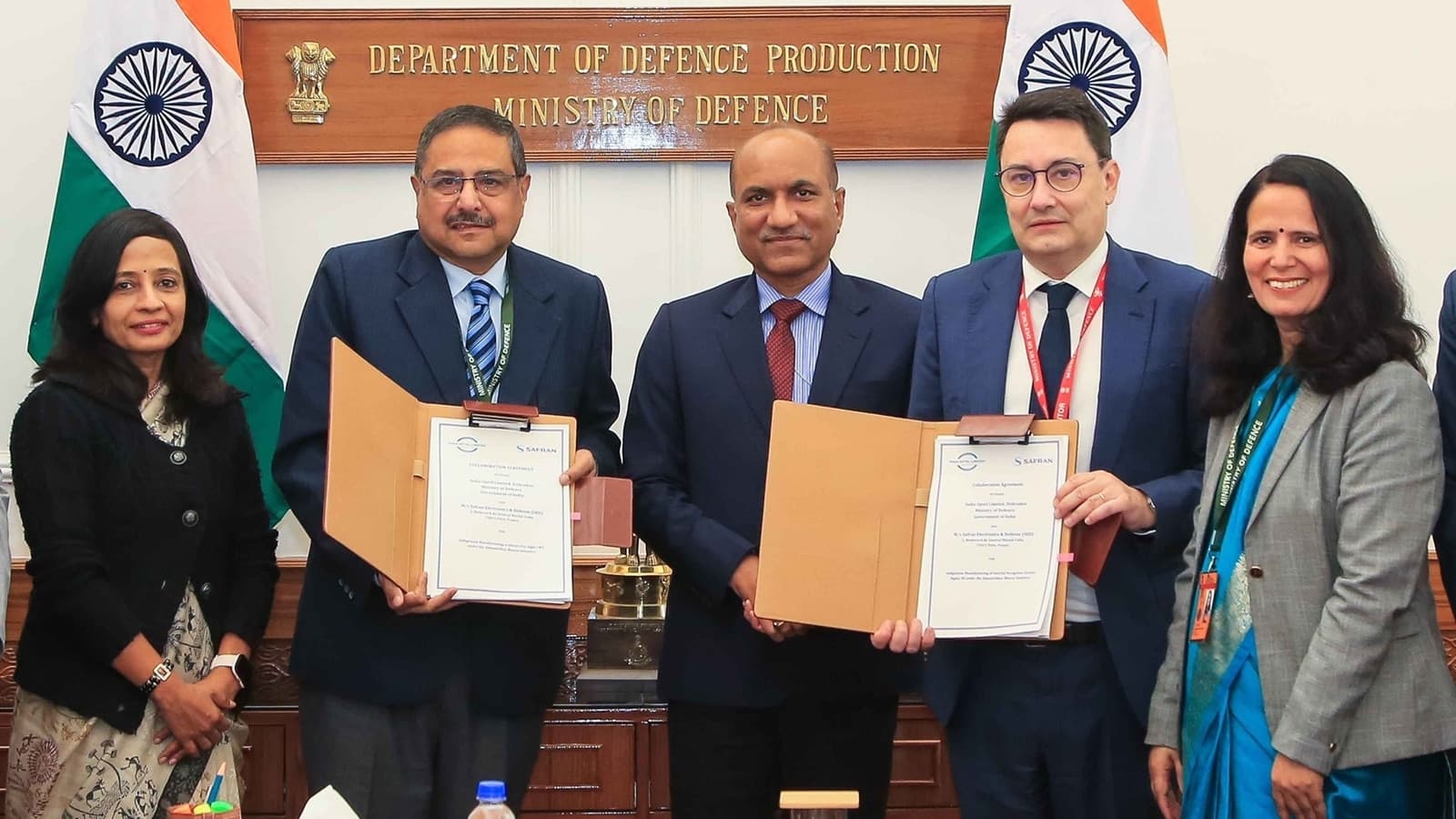
India and France sign pact for joint production of direct firing sight and navigation system.
Summary
India and France have reportedly signed a pact for the joint production of critical defence equipment, specifically direct firing sights and navigation systems. This agreement underscores the deepening strategic partnership and defence cooperation between the two nations. It is significant for India's 'Make in India' initiative in defence, aiming to boost indigenous manufacturing capabilities and reduce reliance on imports.
Key Points
- 1The pact involves two nations: India and France.
- 2The core purpose of the agreement is the joint production of defence equipment.
- 3One specific defence component to be produced is the 'direct firing sight'.
- 4Another key system covered under the pact is the 'navigation system'.
- 5This collaboration aims to enhance defence industrial cooperation and indigenous manufacturing.
In-Depth Analysis
The recent pact between India and France for the joint production of direct firing sights and navigation systems marks a significant milestone in the deepening strategic partnership between the two nations, particularly in the critical domain of defence. This agreement is not merely a transaction; it embodies India's resolute commitment to the 'Make in India' initiative and its broader vision of 'Atmanirbhar Bharat' (self-reliant India) in defence manufacturing.
**Background Context and India-France Strategic Partnership:**
India and France have enjoyed a robust and multifaceted strategic partnership since 1998, a relationship characterized by mutual trust and convergence of interests, especially in defence, space, and civil nuclear energy. Unlike some other global powers, France has historically demonstrated reliability as a defence partner, often providing critical technology without stringent conditions. This long-standing cooperation is evident in major defence acquisitions, such as the induction of Rafale fighter jets (signed in 2016) and the Scorpene submarine project (Project 75), which involved technology transfer and indigenous construction at Mazagon Dock Shipbuilders Limited (MDL). These past collaborations have laid a strong foundation of technical understanding and operational synergy, making France a preferred partner for India's indigenous defence push.
**India's Drive for Defence Indigenisation:**
India, being one of the world's largest importers of defence equipment, has for long recognized the imperative of reducing its reliance on foreign suppliers to enhance its strategic autonomy and secure its national interests. The 'Make in India' initiative, launched in 2014, with a specific focus on the defence sector, aims to transform India into a global manufacturing hub. This ambition was further bolstered by the 'Atmanirbhar Bharat Abhiyan' announced in 2020, which placed a strong emphasis on self-reliance across various sectors, including defence. The Defence Acquisition Procedure (DAP) 2020, which replaced the earlier Defence Procurement Procedure (DPP), explicitly prioritizes indigenous design, development, and manufacturing of defence equipment, reserving several categories for Indian vendors and mandating higher indigenous content. This policy framework actively encourages joint ventures, technology transfer, and co-development with foreign partners to build domestic capabilities.
**The Specific Agreement and its Components:**
This latest pact specifically targets the joint production of 'direct firing sights' and 'navigation systems'. Direct firing sights are crucial for accurate targeting in modern warfare, enabling soldiers to engage targets with precision, especially in complex battle scenarios. Navigation systems are equally vital, providing accurate positioning and guidance for various platforms, from ground vehicles to aerial and naval assets. Joint production means that these critical components will be manufactured within India, leveraging French technology and Indian manufacturing prowess. This will reduce import dependence for these specific, high-tech components, which are essential for the operational effectiveness of India's armed forces.
**Key Stakeholders Involved:**
On the Indian side, the Ministry of Defence (MoD) is the primary driver, formulating policies and overseeing acquisitions. Defence Public Sector Undertakings (DPSUs) and increasingly, the private Indian defence industry, will be the key implementers of this joint production. Organizations like the Defence Research and Development Organisation (DRDO) also play a crucial role in providing the foundational R&D and technological base. From France, major defence manufacturers (like Thales, Safran, Dassault Aviation, Naval Group) are key stakeholders, often working in close coordination with the French government, which actively promotes its defence industry abroad as part of its strategic foreign policy.
**Significance for India:**
This pact holds multi-dimensional significance for India. Firstly, it directly contributes to **strategic autonomy** by reducing reliance on foreign suppliers for critical military hardware, safeguarding India's security interests, especially during geopolitical uncertainties. Secondly, it provides a significant **economic boost**, fostering job creation, skill development, and growth for Indian MSMEs in the defence ecosystem. It encourages technology absorption and indigenous innovation, moving India up the value chain from a mere assembler to a manufacturer and eventually a designer. Thirdly, it **strengthens bilateral ties** with a key strategic partner, France, solidifying a relationship based on shared values and mutual security interests. This collaboration also positions India as a potential defence export hub in the future, aligning with the government's target of achieving a significant increase in defence exports.
**Future Implications and Broader Themes:**
This agreement sets a precedent for future collaborations, potentially leading to more advanced technology transfers, co-development projects, and joint research and development initiatives. It underscores India's evolving role in global geopolitics, where it seeks to balance strategic partnerships with an assertive push for self-reliance. This approach aligns with India's aspirations to become a net security provider in the Indian Ocean Region and a more influential player on the global stage. The success of such joint ventures is crucial for realizing the vision of a robust, self-reliant Indian defence industrial base that can meet the nation's security needs and contribute to its economic growth.
While direct constitutional articles might not govern specific defence deals, the broader policy framework of 'Make in India' and 'Atmanirbhar Bharat' operates within the constitutional mandate for national security (e.g., Article 51, promoting international peace and security, and the Union List entries for Defence in the Seventh Schedule). The Defence Acquisition Procedure (DAP) 2020 is the primary policy document guiding such procurements and collaborations, emphasizing the 'Buy (Indian – IDDM)', 'Buy (Indian)', 'Make' categories, and the 'Strategic Partnership Model' to foster indigenous capabilities.
Exam Tips
This topic falls under GS Paper 2 (International Relations - Bilateral Relations, India's Foreign Policy) and GS Paper 3 (Economy - Defence Sector, Industrial Policy; Internal Security - Defence Preparedness) for UPSC. For other exams, it relates to Current Affairs, National Security, and India's Economy.
When studying, focus on the 'Why' behind such agreements: India's strategic autonomy, 'Make in India' in defence, technology transfer, and strengthening bilateral ties. Compare India's defence partnerships with different countries (e.g., USA, Russia, Israel, France) and their unique aspects.
Common question patterns include: analyzing the significance of India-France strategic partnership; discussing the challenges and opportunities of 'Make in India' in defence; explaining the role of defence indigenisation in India's strategic autonomy; or direct factual questions about specific defence deals/policies in Prelims.