



Relevant for Exams
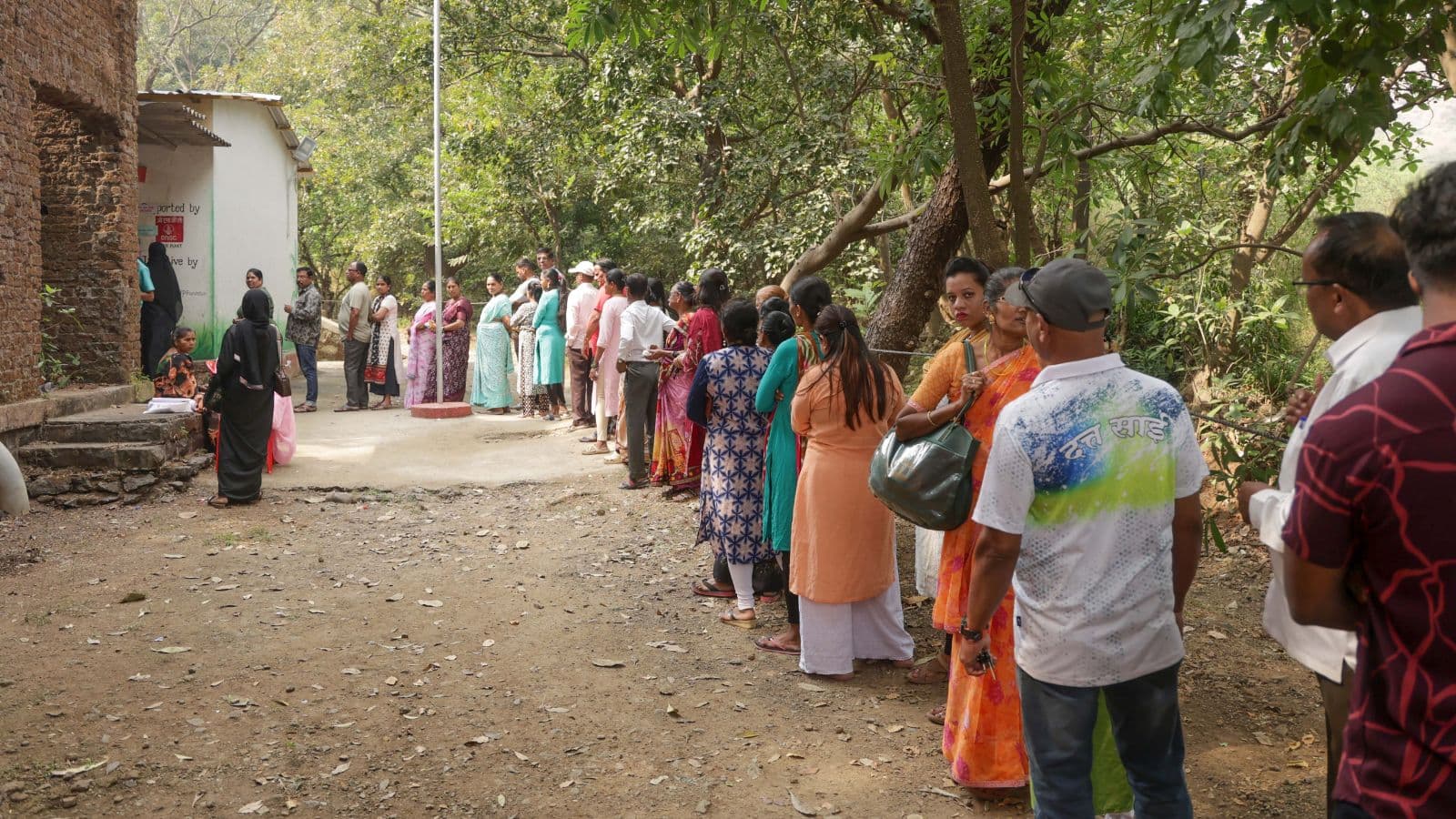
Goa Zilla Panchayat 2025: BJP leads in 9 seats as counting progresses.
Summary
The news reports on the early trends of the Goa Zilla Panchayat Election Results for 2025, indicating the BJP has taken a lead in 9 seats while counting is underway. Zilla Panchayat elections are crucial for grassroots democracy and local self-governance, reflecting the political mood at the district level. This information is relevant for understanding state-level political dynamics and the functioning of Panchayati Raj institutions for competitive exams.
Key Points
- 1The electoral event pertains to the Zilla Panchayat Elections in Goa.
- 2The elections are specifically identified for the year 2025 as per the report title.
- 3The Bharatiya Janata Party (BJP) has secured an early lead in the ongoing counting.
- 4BJP's early lead is observed in 9 Zilla Panchayat seats.
- 5The process of vote counting for these Zilla Panchayat elections is currently underway.
In-Depth Analysis
The news regarding the Goa Zilla Panchayat Election Results 2025, indicating an early lead for the BJP in 9 seats, offers a crucial lens into the functioning and significance of India's grassroots democracy. While the specific details of the results are still emerging, the event itself underscores the pivotal role of Panchayati Raj Institutions (PRIs) in the nation's governance framework.
**Background Context and Historical Journey:**
India's journey towards decentralized governance is deeply rooted in its post-independence vision. The concept of local self-government, though present in various forms even during British rule, gained constitutional recognition much later. Early efforts were guided by committees like the Balwant Rai Mehta Committee (1957), which recommended a three-tier Panchayati Raj system – Gram Panchayat at the village level, Panchayat Samiti at the block level, and Zilla Parishad (or Zilla Panchayat) at the district level. This recommendation led to Rajasthan being the first state to adopt Panchayati Raj in Nagaur district on October 2, 1959. Subsequent committees, such as the Ashok Mehta Committee (1978), further refined these recommendations, advocating for a two-tier system and emphasizing the political nature of PRIs. However, it was the 73rd Constitutional Amendment Act of 1992 that truly institutionalized Panchayati Raj, granting it constitutional status and making its establishment mandatory across the country. This landmark amendment aimed to deepen democracy, ensure local planning, and promote socio-economic development through people's participation.
**What Happened (Goa Zilla Panchayat Elections 2025):**
The news specifically highlights the Zilla Panchayat elections in Goa for the year 2025. Zilla Panchayats are the highest tier of the rural local self-government system in a district. They are responsible for planning and implementing development schemes, managing district-level infrastructure, and overseeing the functioning of lower-tier Panchayats. The report indicates that the counting of votes is underway, and the Bharatiya Janata Party (BJP) has secured an early lead in 9 seats. This early trend is significant as it provides an initial glimpse into the political landscape at the grassroots level in Goa, reflecting voter sentiment and the organizational strength of political parties.
**Key Stakeholders Involved:**
Several stakeholders are crucial in Zilla Panchayat elections. The primary ones include: 1) **Voters:** The electorate residing in the Zilla Panchayat constituencies, who cast their ballots to elect their representatives. 2) **Political Parties:** National parties like BJP and Congress, as well as regional parties and independent candidates, who field candidates and campaign for seats. Their performance in these elections often indicates their grassroots presence and public acceptance. 3) **State Election Commission (SEC):** An independent body, constituted under Article 243K of the Constitution, responsible for conducting, supervising, directing, and controlling the preparation of electoral rolls and the conduct of all elections to Panchayats. 4) **State Government:** Provides the legal framework, administrative support, and financial resources for PRIs. 5) **Elected Representatives:** The Zilla Panchayat members and their leadership, who are entrusted with local governance and development responsibilities.
**Significance for India:**
These elections are vital for India for several reasons. Firstly, they are the bedrock of **grassroots democracy**, ensuring that governance is closer to the people and responsive to local needs. Secondly, they promote **decentralization**, empowering local bodies to plan and implement development programs tailored to their specific areas, rather than relying solely on top-down directives. This includes sectors like rural development, sanitation, education, and public health. Thirdly, the results of Zilla Panchayat elections often serve as a barometer of the **political mood** in a state, potentially influencing strategies for upcoming state assembly or even national elections. A strong performance by a particular party can indicate its growing influence or sustained popularity at the local level, which is critical for broader electoral success. Finally, effective Zilla Panchayats are crucial for **inclusive development**, ensuring that the needs of marginalized communities are addressed and that development benefits reach the last mile.
**Constitutional Provisions and Broader Themes:**
The entire framework of Zilla Panchayats is enshrined in **Part IX of the Indian Constitution**, titled 'The Panchayats', introduced by the **73rd Constitutional Amendment Act, 1992**. Key articles include:
* **Article 243:** Defines various terms related to Panchayats.
* **Article 243B:** Mandates the establishment of a three-tier system of Panchayats at the village, intermediate, and district levels.
* **Article 243C:** Deals with the composition of Panchayats.
* **Article 243D:** Provides for reservation of seats for Scheduled Castes (SCs), Scheduled Tribes (STs), and women (not less than one-third of total seats).
* **Article 243E:** Fixes the duration of Panchayats at five years.
* **Article 243K:** Constitutes the State Election Commission for conducting Panchayat elections.
* **Article 243I:** Constitutes the State Finance Commission to review the financial position of Panchayats. These provisions ensure financial devolution and administrative autonomy to some extent. The Zilla Panchayat elections directly relate to broader themes of good governance, federalism, democratic participation, and social justice.
**Future Implications:**
The outcome of the Goa Zilla Panchayat elections will have several implications. A strong showing by the BJP could consolidate its position in the state, giving it an advantage in future assembly elections. Conversely, if opposition parties manage to secure significant seats, it could signal a shift in local political dynamics and provide a platform for them to challenge the ruling party more effectively. The elected Zilla Panchayat members will be responsible for local development initiatives, resource allocation, and implementing central and state government schemes. Their performance will directly impact the lives of rural populations in Goa. Furthermore, these results contribute to the ongoing narrative of India's democratic health and the effectiveness of its decentralized governance model, influencing policy discussions on further empowerment and capacity building of PRIs.
Exam Tips
This topic falls under 'Indian Polity and Governance' in the UPSC Civil Services, State PSC, and SSC CGL/CHSL syllabi. Focus on the constitutional provisions, historical evolution, and functions of Panchayati Raj Institutions.
Study the 73rd and 74th Constitutional Amendment Acts (1992) thoroughly, including all relevant Articles (243 to 243ZG). Pay attention to the three-tier structure, reservation policies, powers, and responsibilities of Panchayats and Municipalities.
Common question patterns include direct questions on committees (Balwant Rai Mehta, Ashok Mehta), constitutional articles (e.g., Article 243K for SEC), reservation provisions, and the significance of decentralization. Also, expect analytical questions on challenges faced by PRIs and potential reforms.