



Relevant for Exams
Bombay HC dismisses plea for CBI probe against Pawar family over Lavasa project, citing lack of merit.
Summary
The Bombay High Court dismissed a plea seeking a CBI probe against the Pawar family concerning the controversial Lavasa project. The court ruled that the petitioner failed to establish any statutory basis for the relief sought and found the petition lacked merit. This decision underscores the legal standards required for initiating investigations against public figures and is relevant for understanding judicial processes and accountability in governance for competitive exams.
Key Points
- 1The Bombay High Court dismissed a plea seeking a CBI probe.
- 2The plea was specifically filed against the Pawar family.
- 3The investigation sought was in connection with the Lavasa project.
- 4The court ruled that the petitioner failed to establish any statutory basis for the relief sought.
- 5The petition was dismissed on the grounds that it also lacked merit.
In-Depth Analysis
The Bombay High Court's recent dismissal of a plea seeking a CBI probe against the Pawar family concerning the controversial Lavasa project is a significant development, offering a crucial lens into India's judicial process, governance, and the complexities surrounding large-scale infrastructure projects. For competitive exam aspirants, understanding this case goes beyond the headlines, delving into the intricacies of legal thresholds, political accountability, and environmental regulations.
**Background Context: The Lavasa Dream and its Controversies**
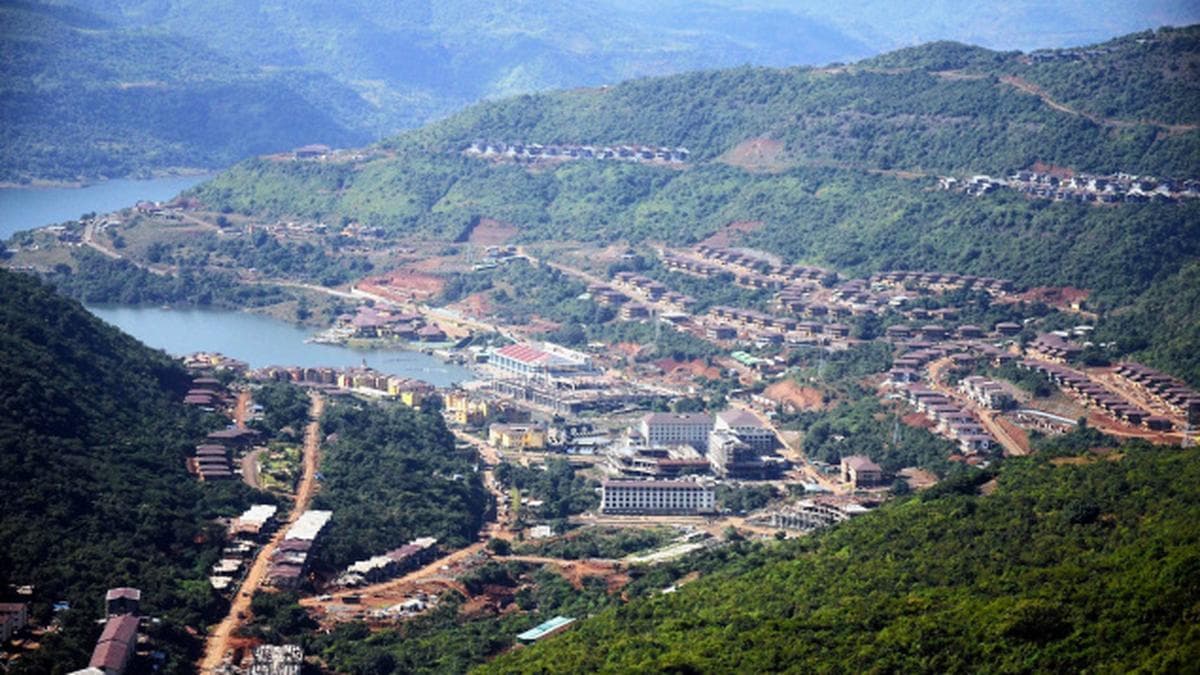
Lavasa, envisioned as India's first privately built hill city, was promoted by Lavasa Corporation, a subsidiary of Hindustan Construction Company (HCC). The project, spanning over 18,000 acres in the picturesque Mose Valley near Pune, Maharashtra, began gaining significant traction in the early 2000s. The idea was to create a self-contained urban center with world-class infrastructure, attracting investments and tourism. However, from its inception, Lavasa became embroiled in a series of controversies, primarily centered on land acquisition, environmental clearances, and allegations of political patronage. Critics pointed to the rapid approvals granted to the project, raising questions about whether due process was followed, especially concerning the conversion of agricultural and forest land for urban development. The project faced significant opposition from environmental groups and local residents, who alleged violations of environmental norms and displacement.
**Allegations Against the Pawar Family and the Judicial Challenge**
The core of the allegations against the Pawar family, particularly Nationalist Congress Party (NCP) chief Sharad Pawar and his nephew Ajit Pawar, revolved around their alleged influence in facilitating the project's approvals. Critics claimed that the family, holding key ministerial portfolios in Maharashtra at the time (Sharad Pawar as Union Agriculture Minister and former CM, Ajit Pawar holding portfolios like Irrigation and Water Resources), used their positions to grant undue benefits to Lavasa Corporation. Specific accusations included preferential land deals, changes in land use policies, and relaxation of environmental norms. These allegations often surfaced in Public Interest Litigations (PILs) filed by activists and concerned citizens, seeking investigations by independent agencies like the CBI.
**The Bombay High Court's Decision and its Rationale**
The recent dismissal by the Bombay High Court stems from one such plea. The court ruled that the petitioner "failed to establish any statutory basis for the relief sought" and found the petition to "lack merit." This decision is critical because it highlights the high legal threshold required for a court to order an investigation, especially by a central agency like the CBI, against public figures. Courts typically require concrete evidence or a strong prima facie case of illegality, rather than mere allegations, to intervene and direct investigative agencies. The High Court's stance underscores judicial restraint and the principle that administrative and investigative processes should not be interfered with without substantial grounds.
**Key Stakeholders Involved**
1. **Pawar Family:** Accused of leveraging political influence for the project's benefit. Their political standing and past roles in the Maharashtra government are central to the allegations.
2. **Lavasa Corporation (HCC):** The developer of the private city, which benefited from the approvals and land allocations, facing scrutiny over the legality and ethics of its operations.
3. **Maharashtra Government:** The state administration, particularly departments responsible for urban development, environment, and land revenue, which granted various clearances and approvals to the project over the years.
4. **Bombay High Court:** The judicial body that heard the plea, responsible for upholding the rule of law and ensuring justice.
5. **Petitioner:** The individual or group that filed the plea, seeking judicial intervention and a CBI probe.
6. **CBI (Central Bureau of Investigation):** The premier investigative agency whose probe was sought, operating under the Delhi Special Police Establishment Act, 1946.
**Significance for India and Broader Themes**
This case touches upon several critical themes relevant to India's governance and development:
* **Judicial Accountability and Restraint:** The court's decision reinforces the principle that courts will not act on mere suspicion but demand a strong legal basis and merit. This is crucial for maintaining the sanctity of judicial processes and preventing frivolous litigation.
* **Combating Corruption:** Allegations of corruption and political influence in mega-projects remain a significant challenge in India. This case highlights the difficulties in proving such allegations in a court of law.
* **Environmental Governance:** The Lavasa project has historically been a poster child for environmental controversies, raising questions about the efficacy of environmental impact assessments and regulatory oversight. While this specific ruling didn't directly address environmental merits, the project's history is intertwined with such concerns.
* **Land Acquisition and Development:** The challenges of land acquisition for large projects, especially those involving private developers and agricultural land, are a recurring theme in India. The Land Acquisition, Rehabilitation and Resettlement Act, 2013, attempts to address some of these issues, but legacy cases like Lavasa predate it.
**Constitutional and Legal Framework**
* **Article 226 of the Indian Constitution:** This article grants High Courts the power to issue writs (like mandamus, certiorari, prohibition, quo warranto, and habeas corpus) for the enforcement of fundamental rights and for any other purpose. Petitions seeking CBI probes often invoke this article, asking the High Court to direct an investigation.
* **Delhi Special Police Establishment Act, 1946:** This Act governs the constitution and powers of the CBI. For the CBI to investigate a case within a state without the state's consent, a High Court or the Supreme Court must specifically order it.
* **Prevention of Corruption Act, 1988:** This Act defines and penalizes various forms of corruption involving public servants. Allegations against the Pawar family would typically fall under the ambit of this Act.
* **Environmental (Protection) Act, 1986:** This umbrella legislation provides for the protection and improvement of the environment. Many of Lavasa's initial controversies were related to alleged violations of this Act.
**Future Implications**
The dismissal sets a precedent regarding the standards required for initiating court-ordered investigations. It implies that future petitioners seeking probes against public figures will need to present a more robust legal basis and compelling evidence. While this decision may offer some relief to the Pawar family, it does not erase the historical controversies surrounding Lavasa. Public scrutiny over large-scale projects and political accountability will likely continue. For India, it reiterates the importance of strong regulatory frameworks, transparent approval processes, and a judiciary that acts on sound legal principles rather than public sentiment alone. This decision could also encourage more thorough preliminary investigations by petitioners before approaching the courts, ensuring that only cases with substantial merit proceed.
Exam Tips
This topic falls under GS Paper II (Polity & Governance) and GS Paper III (Environment & Economy) for UPSC CSE. Focus on the role of High Courts, judicial review, anti-corruption mechanisms, and environmental regulations.
Study related topics such as Public Interest Litigation (PIL), the powers of the CBI (and the need for state consent/court orders), the Prevention of Corruption Act, 1988, and key environmental legislation like the Environment (Protection) Act, 1986. Understand the concept of 'statutory basis' and 'merit' in legal proceedings.
Common question patterns include: 'Discuss the role of judiciary in ensuring accountability in governance, with reference to recent cases.' or 'Analyze the challenges in environmental clearance and land acquisition for large infrastructure projects in India.' Be prepared to discuss the balance between development and environmental protection, and the role of political influence.
Related Topics to Study
Full Article
The Bench says the petitioner failed to establish any statutory basis for the relief sought and the petition lacked merit