



Relevant for Exams
Mamata slams Union govt over alleged MGNREGA name change to 'VB-G RAM G bill', removing Gandhiji's name.
Summary
West Bengal CM Mamata Banerjee criticized the Union government for allegedly changing the name of the Mahatma Gandhi National Rural Employment Guarantee Act (MGNREGA) to the 'VB-G RAM G bill'. This move, if confirmed, would remove Mahatma Gandhi's name from the significant rural employment scheme, sparking political debate. For competitive exams, this highlights the importance of knowing government schemes, their full forms, and any major policy changes or controversies surrounding them.
Key Points
- 1West Bengal Chief Minister Mamata Banerjee criticized the Union government.
- 2The criticism pertains to the alleged renaming of the Mahatma Gandhi National Rural Employment Guarantee Act (MGNREGA).
- 3The purported new name for the scheme is 'VB-G RAM G bill'.
- 4The core of the controversy is the alleged removal of Mahatma Gandhi's name from the scheme.
- 5MGNREGA is a flagship rural employment guarantee scheme in India.
In-Depth Analysis
The recent political contention surrounding the alleged renaming of the Mahatma Gandhi National Rural Employment Guarantee Act (MGNREGA) to the 'VB-G RAM G bill', as raised by West Bengal Chief Minister Mamata Banerjee, highlights significant aspects of India's governance, social welfare, and political discourse. This issue, while seemingly about a name change, delves into the symbolism of national figures, the efficacy of flagship welfare schemes, and the dynamics of federalism.
**Background Context:**
MGNREGA, originally enacted as the National Rural Employment Guarantee Act (NREGA) on August 25, 2005, during the UPA government's tenure, is a social security measure that guarantees the 'right to work' to adult members of any rural household willing to do unskilled manual work for at least 100 days in a financial year. It was renamed Mahatma Gandhi National Rural Employment Guarantee Act (MGNREGA) on October 2, 2009, to honor Mahatma Gandhi's legacy and his vision of rural empowerment and 'Gram Swaraj'. The scheme aims to enhance livelihood security in rural areas by providing employment and creating durable assets like roads, canals, ponds, and wells, thereby addressing issues of poverty, rural distress, and distress migration. It is considered one of the largest social welfare programs globally.
**What Happened:**
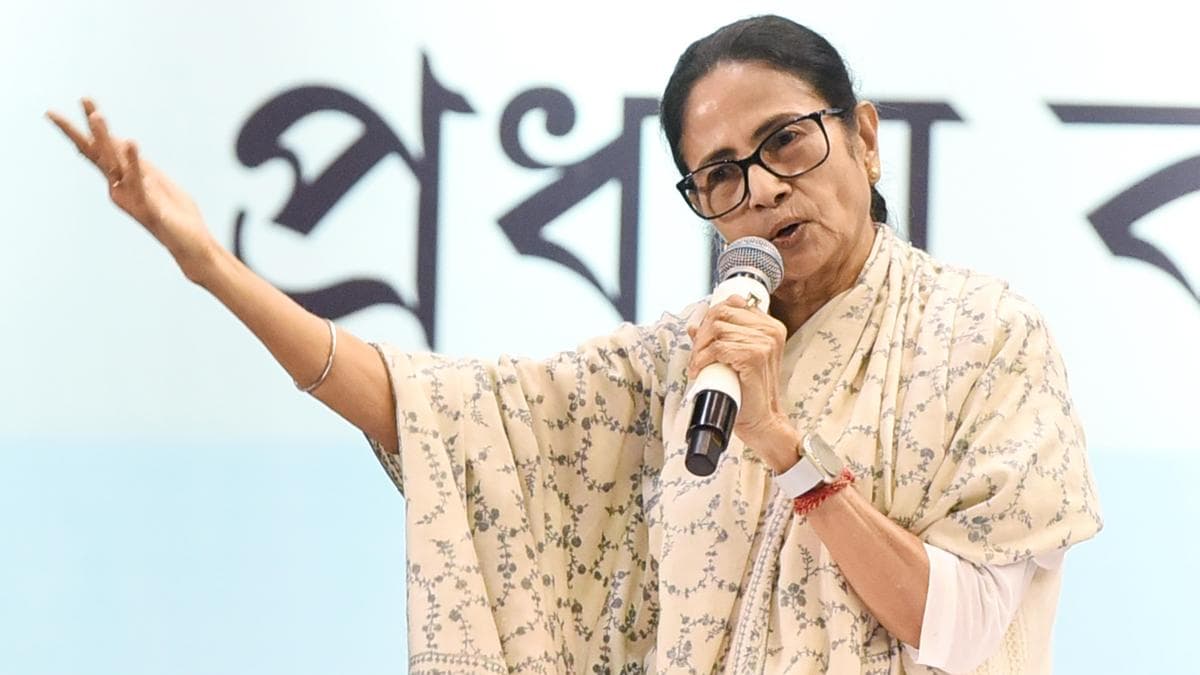
West Bengal Chief Minister Mamata Banerjee publicly criticized the Union government, alleging that it was attempting to remove Mahatma Gandhi's name from the MGNREGA scheme by renaming it the 'VB-G RAM G bill'. This criticism was part of a broader political statement, accusing the central government of undermining the country's foundational values. While the Union government has not officially announced any such name change, the political opposition perceives such a move as an ideological shift and an attempt to dilute the historical and symbolic significance attached to the scheme through Gandhi's name. The controversy erupted in the context of ongoing political tensions between the Trinamool Congress-led West Bengal government and the BJP-led Union government.
**Key Stakeholders Involved:**
1. **Union Government (Ministry of Rural Development):** As the implementing authority for MGNREGA, it is responsible for the scheme's policy, funding, and administration. Any decision regarding renaming or significant policy changes would originate from here.
2. **West Bengal Government (Chief Minister Mamata Banerjee):** As a prominent opposition leader and head of a state government, she represents a critical voice against perceived central government policies, particularly those impacting state-level implementation and federal relations.
3. **Mahatma Gandhi National Rural Employment Guarantee Act (MGNREGA) Beneficiaries:** Millions of rural households depend on this scheme for their livelihood. Any change, whether in name or substance, directly impacts their perception and access to employment.
4. **Political Parties:** The issue becomes a focal point for political debate, with opposition parties using it to criticize the ruling dispensation, and the ruling party defending its policies or clarifying its stance.
**Why This Matters for India:**
This controversy is significant for several reasons. Economically, MGNREGA plays a crucial role in injecting liquidity into rural economies, providing a safety net, and creating rural infrastructure. Politically, the alleged renaming touches upon the symbolism of Mahatma Gandhi, a revered figure whose name is associated with India's freedom struggle and its founding principles. Removing his name, even if alleged, can be seen as an ideological battle. It also highlights the persistent tensions in India's federal structure, where state governments often accuse the Centre of overreach or withholding funds for centrally sponsored schemes. Socially, MGNREGA has been instrumental in empowering women and marginalized communities by providing guaranteed employment at their doorstep, reducing distress migration, and improving rural living standards. Any move perceived to weaken the scheme, even symbolically, can have adverse social implications.
**Historical Context:**
Naming public schemes, institutions, and infrastructure after national leaders has been a long-standing practice in India, reflecting the political and ideological leanings of successive governments. Mahatma Gandhi's name, in particular, has been associated with numerous initiatives, symbolizing his ideals of rural upliftment, self-reliance, and non-violence. The renaming of NREGA to MGNREGA in 2009 was a conscious decision to link the scheme with Gandhi's vision of 'Gram Swaraj' and inclusive development. Therefore, any move to remove his name is not just an administrative change but a symbolic gesture loaded with historical and ideological weight.
**Future Implications:**
The debate, even if based on an allegation, underscores the sensitivity surrounding national symbols and welfare programs. In the future, such controversies could intensify, particularly concerning other schemes named after historical figures. It may also lead to a renewed focus on the actual implementation, funding, and effectiveness of MGNREGA, moving beyond just its nomenclature. States might push for greater autonomy in implementing central schemes, and the Centre-State relationship regarding welfare funding could become more contentious. Ultimately, the political discourse will likely continue to revolve around the balance between preserving historical legacies and shaping new policy narratives.
**Related Constitutional Articles, Acts, or Policies:**
* **Mahatma Gandhi National Rural Employment Guarantee Act (MGNREGA), 2005:** The foundational legislation that guarantees the right to work.
* **Directive Principles of State Policy (DPSP):** Article 41 directs the State to make effective provision for securing the right to work, to education, and to public assistance in cases of unemployment, old age, sickness, and disablement. MGNREGA is a direct legislative embodiment of this DPSP.
* **Article 243G (Powers, authority and responsibilities of Panchayats):** Panchayats play a crucial role in the planning, implementation, and monitoring of MGNREGA works, aligning with the constitutional mandate for local self-governance.
* **Seventh Schedule of the Constitution (Lists I, II, III):** The subject of 'social security and social insurance, employment and unemployment' falls under the Concurrent List (List III, Entry 23), allowing both the Centre and states to legislate, but with central law prevailing in case of conflict. This highlights the shared responsibility and potential for Centre-state friction in welfare schemes.
Exam Tips
This topic falls under 'Indian Economy' (Poverty, Employment, Government Schemes, Rural Development) and 'Indian Polity' (Federalism, Directive Principles of State Policy, Centre-State Relations) in UPSC, SSC, and State PSC syllabi. Focus on the core features, objectives, and constitutional backing of MGNREGA.
Study MGNREGA's evolution (NREGA to MGNREGA), its key provisions (100-day guarantee, wage payment, permissible works, role of Gram Panchayats), and its impact. Be prepared for questions on its achievements, challenges (e.g., funding delays, corruption, demand-supply mismatch), and reforms.
Common question patterns include: direct questions on MGNREGA's features or objectives; analytical questions linking MGNREGA to DPSP (Article 41) or the concept of 'right to work'; questions comparing it with other rural development schemes; and questions on Centre-State dynamics regarding scheme implementation and funding.
Understand the symbolic importance of naming schemes after national figures, especially Mahatma Gandhi. This can appear in essay questions or general studies papers on ethics and values, or even in current affairs questions regarding political controversies.
Beyond the name change controversy, delve into the broader policy debates surrounding MGNREGA's funding, demand-driven nature, and its effectiveness in poverty alleviation and asset creation. This provides a holistic understanding required for Mains examination.
Related Topics to Study
Full Article
Reaction comes in response to Union government changing the MGNREGA’s name to the VB-G RAM G bill