



Relevant for Exams
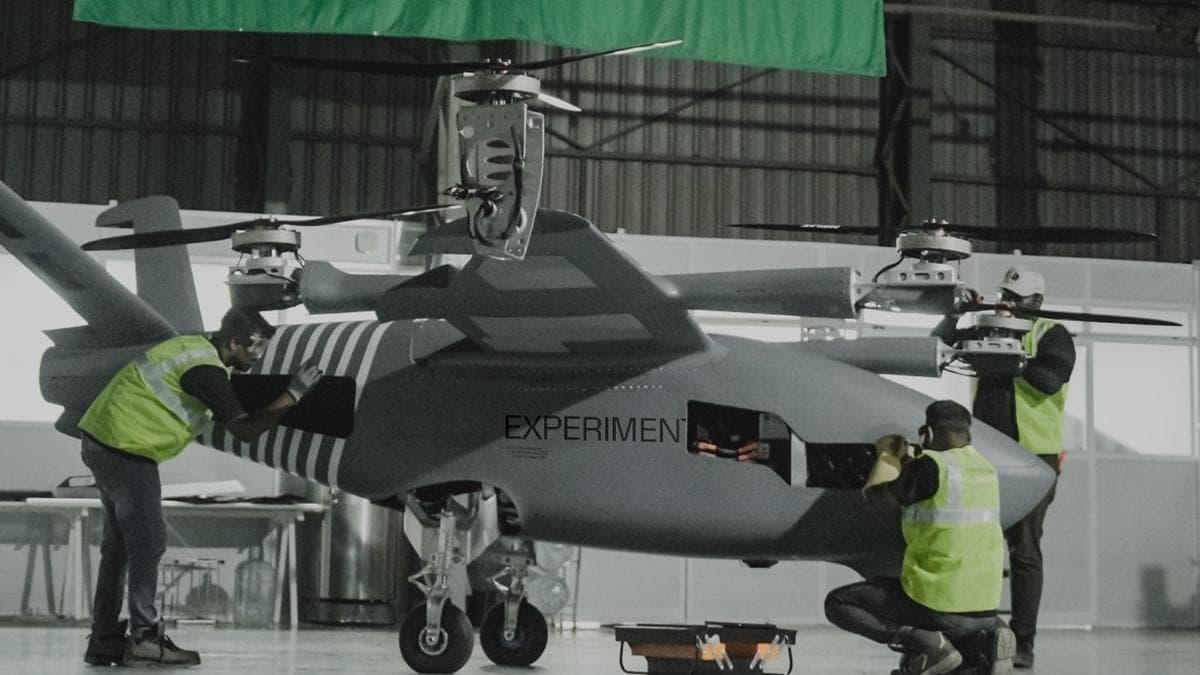
Bengaluru firm begins ground testing of electric flying taxi, advancing India's urban air mobility.
Summary
A Bengaluru-based firm has successfully commenced ground testing for its electric flying taxi at its dedicated test facility in Bengaluru. This development signifies a crucial step in India's advancement in urban air mobility and electric aviation technology. It showcases domestic innovation in sustainable transportation solutions, making it relevant for competitive exams focusing on science, technology, and India's emerging industrial capabilities.
Key Points
- 1Ground testing for an electric flying taxi was initiated by a Bengaluru-based firm.
- 2The testing activities took place at the company's dedicated test facility located in Bengaluru, India.
- 3This project represents a significant step in India's efforts towards developing Urban Air Mobility (UAM) solutions.
- 4The vehicle being tested is an 'electric flying taxi', highlighting a focus on sustainable and advanced aviation technology.
- 5The commencement of ground testing is a preliminary but critical phase for the development of new aerial vehicles.
In-Depth Analysis
The recent commencement of ground testing for an electric flying taxi by a Bengaluru-based firm marks a pivotal moment in India's journey towards advanced air mobility. This development is not merely a local engineering feat but a significant stride that positions India within the global race for sustainable and efficient urban transportation solutions. Understanding this event requires delving into its background, key players, implications, and regulatory landscape.
The genesis of electric flying taxis, or eVTOL (electric Vertical Take-off and Landing) aircraft, lies in the escalating challenges of urban congestion and the imperative for sustainable development. Major global cities grapple with gridlocked roads, leading to economic losses, increased pollution, and reduced quality of life. Simultaneously, advancements in battery technology, electric propulsion, and autonomous systems have made the concept of Urban Air Mobility (UAM) increasingly viable. Companies worldwide, such as Joby Aviation, Archer Aviation, and Lilium, have been at the forefront of this innovation, attracting substantial investment. India, with its rapidly expanding urban centers and burgeoning technological capabilities, is a natural fit for exploring such solutions. The 'Make in India' and 'Atmanirbhar Bharat' initiatives provide a strong policy impetus for domestic firms to innovate and manufacture cutting-edge technologies, reducing reliance on foreign imports and fostering self-reliance.
The core event is the initiation of ground testing for an electric flying taxi at a company's Bengaluru facility. Ground testing is a crucial preliminary phase in aerospace development. It involves rigorous checks of all systems – propulsion, avionics, control surfaces, battery management, and structural integrity – while the aircraft remains on the ground. This phase ensures that individual components and integrated systems perform as designed before progressing to more complex stages like tethered flights and free flights. The successful completion of ground testing validates the fundamental design and engineering principles, paving the way for further development and certification processes.
Several key stakeholders are involved in this groundbreaking endeavor. At the forefront is the Bengaluru-based firm itself, serving as the innovator, designer, and manufacturer. Their role is critical in driving research and development, securing funding, and executing the project. The Government of India, particularly the Ministry of Civil Aviation and its regulatory arm, the Directorate General of Civil Aviation (DGCA), plays an indispensable role. The DGCA is responsible for establishing safety standards, certifying aircraft, licensing pilots, and regulating air traffic management. Their proactive engagement is essential for creating a conducive regulatory environment for UAM. NITI Aayog, as the premier policy think tank, also contributes by envisioning future mobility solutions and recommending policy frameworks. Investors, including venture capitalists and private equity firms, provide the necessary capital, while academic institutions and research organizations may collaborate on specific technological challenges.
This development holds immense significance for India. Technologically, it signals India's entry into a highly advanced and competitive global aviation segment, showcasing its engineering prowess and innovation capabilities. Economically, it can lead to job creation in high-tech manufacturing, aerospace engineering, and associated service industries. It aligns perfectly with the 'Make in India' vision, potentially making India a hub for eVTOL production and export. For urban mobility, electric flying taxis offer a promising solution to mitigate traffic congestion, reduce travel times, and enhance connectivity, especially in megacities. Environmentally, being electric, these vehicles contribute to India's climate goals by offering a zero-emission alternative to conventional transport, aligning with Directive Principle of State Policy under Article 48A concerning the protection and improvement of the environment. Furthermore, it reinforces the constitutional mandate to develop scientific temper as enshrined in Article 51A(h) of the Fundamental Duties.
Historically, India has a strong legacy in aviation through entities like Hindustan Aeronautics Limited (HAL) and the Indian Space Research Organisation (ISRO), which have demonstrated advanced aerospace capabilities. However, the private sector-led development of UAM represents a new frontier, moving beyond traditional aerospace manufacturing into futuristic transport solutions. This project draws parallels with the evolution of drone technology in India, which saw the government introduce progressive Drone Rules, 2021, to foster growth while ensuring safety and security. These rules could serve as a foundational template for regulating UAM.
The future implications are vast but also present challenges. Regulatory frameworks will need to evolve rapidly to accommodate these new modes of transport. The Aircraft Act, 1934, and the Aircraft Rules, 1937, will require significant amendments or new supplementary legislation to address the unique operational characteristics, safety protocols, and air traffic management needs of eVTOLs. Infrastructure development, such as the establishment of 'vertiports' (dedicated take-off and landing sites), charging stations, and integrated air traffic control systems, will be crucial. Public acceptance and addressing concerns regarding noise, safety, and privacy will also be vital for successful commercialization. If successful, India could emerge as a leader in UAM, transforming urban transportation, boosting its aerospace industry, and contributing significantly to a sustainable future.
Exam Tips
This topic primarily falls under 'Science & Technology' (UPSC GS-III, State PSCs) and 'Current Affairs'. Focus on the technological aspects (eVTOL, battery tech, autonomous systems) and their societal impact.
Relate this to 'Government Policies and Interventions' (UPSC GS-II) by studying the 'Make in India', 'Atmanirbhar Bharat' initiatives, and the role of the Ministry of Civil Aviation and DGCA in fostering such innovations and regulating new technologies. Understand the evolution of aviation regulations in India.
Prepare for questions that could be factual (e.g., 'Which city/firm is involved?'), conceptual (e.g., 'What are the benefits and challenges of Urban Air Mobility in India?'), or analytical (e.g., 'Discuss the role of government policy in promoting advanced aviation technologies in India, referencing relevant acts/schemes.').
Study the constitutional provisions related to scientific temper (Article 51A(h)), environmental protection (Article 48A), and the general framework for legislative powers over aviation (Union List, Schedule VII).
Understand the difference between drones, eVTOLs, and traditional aircraft, focusing on their unique characteristics, applications, and regulatory requirements.
Related Topics to Study
Full Article
The ground testing took place at the company’s Bengaluru test facility