



Relevant for Exams
Ashok Gehlot accuses Centre of 'selling' Aravallis, calls 0.19% mining claim 'misleading'.
Summary
Former Rajasthan CM Ashok Gehlot accused the Centre of 'selling' the Aravallis and alleged a conspiracy behind policy changes, terming Union Environment Minister Bhupendra Yadav's claim of only 0.19% Aravalli area being open for mining as 'misleading'. This highlights a significant environmental policy debate concerning a crucial ecological region, relevant for understanding environmental governance and federal relations in India for competitive exams.
Key Points
- 1Former Chief Minister Ashok Gehlot made the accusation regarding Aravalli mining.
- 2Gehlot accused the Centre of 'selling' the Aravallis and alleged a 'conspiracy behind policy changes'.
- 3The accusation was against Union Environment Minister Bhupendra Yadav's claim.
- 4Bhupendra Yadav claimed only 0.19% of the Aravallis would be open for mining.
- 5Ashok Gehlot termed Yadav's claim as 'misleading and factually incorrect'.
In-Depth Analysis
The recent accusation by former Rajasthan Chief Minister Ashok Gehlot against the Central government regarding the 'selling' of the Aravalli hills for mining has reignited a critical environmental debate in India. This issue is not merely a political slugfest but underscores the perennial tension between economic development and ecological preservation, particularly in a region as vital as the Aravallis.
The Aravalli Range, one of the oldest fold mountains in the world, stretching approximately 692 km from Gujarat through Rajasthan and Haryana to Delhi, serves as a crucial ecological barrier. It acts as the 'lungs' for the National Capital Region (NCR), a natural check against the eastward expansion of the Thar Desert, a vital groundwater recharge zone, and a habitat for diverse flora and fauna. Its geological history dates back billions of years, making it a unique natural heritage. Historically, mining has been prevalent in parts of the Aravallis due to rich mineral deposits like marble, granite, sandstone, and various metallic ores. However, unregulated and illegal mining over decades has led to severe environmental degradation, including deforestation, soil erosion, water scarcity, and loss of biodiversity.
The immediate trigger for Gehlot's accusation was Union Environment Minister Bhupendra Yadav's claim that only 0.19% of the Aravalli area would be opened for mining. Gehlot vehemently contested this, labeling it 'misleading and factually incorrect' and alleging a 'conspiracy behind policy changes.' While the specific policy changes referred to by Gehlot are not explicitly detailed in the summary, such accusations often pertain to amendments in environmental clearance processes, reclassification of land, or changes in the interpretation of 'forest' or 'non-forest' areas for mining purposes. The percentage figure itself is a point of contention, with environmentalists often arguing that even small percentages in ecologically sensitive zones can have disproportionately large impacts, especially when cumulative effects of past mining are considered.
Key stakeholders in this dispute include the **Rajasthan Government** (and its former CM Ashok Gehlot), representing state interests and often reflecting public sentiment regarding environmental protection, while also having to balance development needs. The **Union Ministry of Environment, Forest and Climate Change (MoEFCC)**, led by Minister Bhupendra Yadav, is the central authority responsible for environmental policy, clearances, and ensuring sustainable development. Their perspective often emphasizes controlled, scientific mining within regulatory frameworks. The **mining industry and associated lobbies** are significant stakeholders, driven by economic interests and the demand for minerals. **Environmental activists and NGOs** consistently advocate for stricter protection, often highlighting the long-term ecological and social costs of mining. Finally, **local communities** living in and around the Aravallis are directly impacted by mining activities, facing issues like displacement, health hazards from dust and pollution, and depletion of water resources.
This issue matters profoundly for India. Environmentally, the continued degradation of the Aravallis poses a severe threat to the ecological balance of North India. It exacerbates issues like desertification, impacts water security for millions (including Delhi-NCR), and contributes to air pollution. Economically, while mining generates revenue and employment, the long-term costs of environmental damage often outweigh the short-term gains, leading to calls for a shift towards sustainable practices and green alternatives. Politically, such disputes highlight the complexities of federalism in India, where states and the Centre often have differing priorities or interpretations regarding resource management. Allegations of 'conspiracy' also raise questions about transparency and accountability in governance.
Historically, the Aravallis have been a battleground for environmental protection. The Supreme Court of India has repeatedly intervened, notably through a landmark 2002 judgment that banned mining in certain parts of the Aravallis, followed by various directives in 2009 and 2010 to curb illegal mining. In 2018, the Supreme Court even directed Rajasthan and Haryana to halt illegal mining activities, emphasizing the need for rehabilitation plans. These judicial interventions underscore the persistent challenge of enforcing environmental laws.
Several constitutional provisions and acts are relevant here. **Article 48A** of the Directive Principles of State Policy (DPSP) mandates the State to 'endeavour to protect and improve the environment and to safeguard the forests and wildlife of the country.' **Article 51A(g)**, a Fundamental Duty, obligates every citizen to 'protect and improve the natural environment including forests, lakes, rivers and wildlife, and to have compassion for living creatures.' Key legislation includes the **Environment (Protection) Act, 1986**, the **Forest (Conservation) Act, 1980**, and the **Mines and Minerals (Development and Regulation) Act, 1957 (MMDR Act)**. The **Environmental Impact Assessment (EIA) Notification, 2006**, governs the process for granting environmental clearances for projects, including mining. The **National Green Tribunal (NGT) Act, 2010**, established a specialized body for environmental justice.
Looking ahead, the future implications are significant. This debate could lead to further legal challenges, heightened environmental activism, and potentially revised environmental policies. The balance between sustainable development and economic imperatives will continue to be tested. The Aravallis' fate will directly impact the environmental health and water security of a vast region, making robust environmental governance, transparent decision-making, and strong federal cooperation imperative. The incident highlights the need for a comprehensive, long-term vision for the Aravallis, prioritizing ecological restoration alongside regulated, truly sustainable resource utilization, rather than short-sighted economic gains.
Exam Tips
This topic falls under GS Paper I (Geography - physical features, environmental geography of India) and GS Paper III (Environment & Ecology - Conservation, Environmental Pollution & Degradation, Environmental Impact Assessment, Government policies). It also touches upon GS Paper II (Indian Polity - Federalism, Centre-State relations, DPSP, Fundamental Duties, Government policies & interventions).
Prepare MCQs on specific environmental acts (e.g., Environment Protection Act, Forest Conservation Act, MMDR Act) and constitutional articles (48A, 51A(g)). For descriptive questions, focus on the conflict between development and environment, the role of judiciary in environmental protection, and challenges of federalism in resource management. Practice case studies on environmental governance.
Study related topics such as the classification of mountain ranges, ecological significance of biodiversity hotspots, causes and effects of desertification, detailed process of Environmental Impact Assessment (EIA), and various Supreme Court judgments on environmental issues (e.g., Godavarman Thirumulpad case).
Related Topics to Study
Full Article
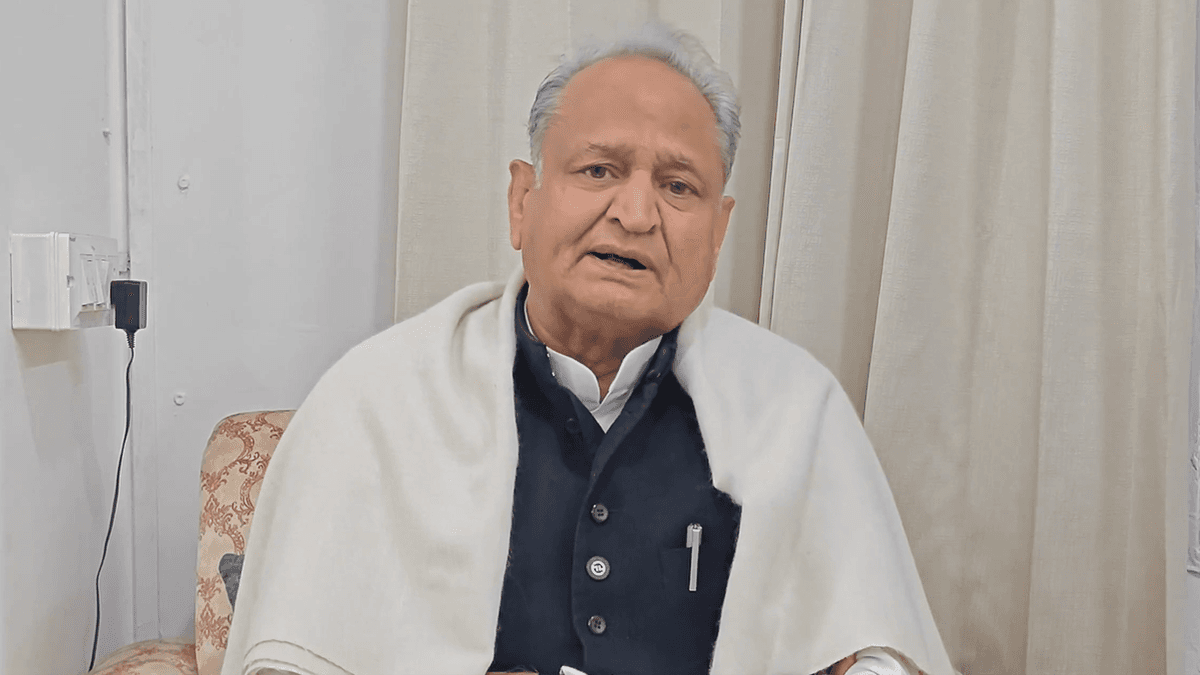
Former Chief Minister Ashok Gehlot termed Union Environment Miniser Bhupendra Yadav’s claim that only 0.19% of the Aravallis would be open for mining “misleading and factually incorrect”