



Relevant for Exams
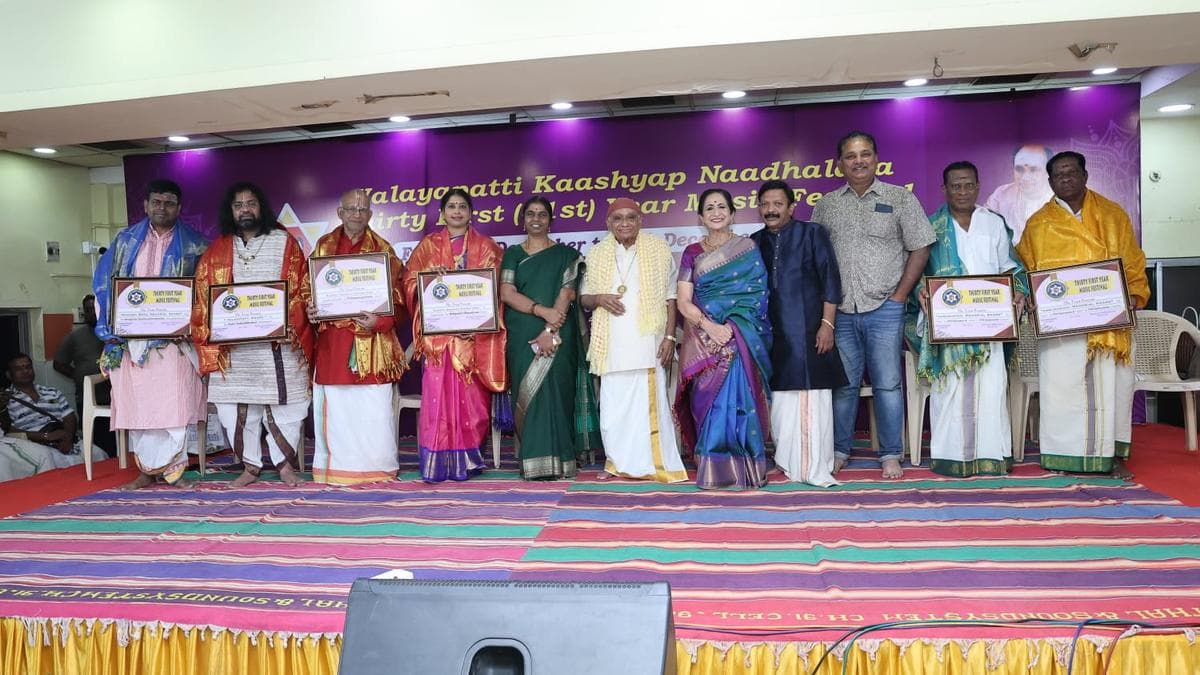
Music festival inaugurated in Nanganallur, honouring artists; 2,500 artistes to perform.
Summary
A music festival commenced in Nanganallur with an inaugural ceremony where artists were honoured. This cultural event is designed to host approximately 2,500 artistes, showcasing diverse talents across 20 different locations. While promoting regional arts and culture, the article lacks specific details like the festival's name or key personalities, which reduces its direct impact for competitive exam questions beyond general awareness.
Key Points
- 1A music festival was inaugurated in Nanganallur.
- 2Artists were honoured during the inaugural ceremony of the music festival.
- 3Approximately 2,500 artistes are slated to participate in the event.
- 4The music festival will be spread across 20 different locations.
- 5The event is a cultural music festival promoting regional arts.
In-Depth Analysis
The inauguration of a music festival in Nanganallur, honouring artists and featuring approximately 2,500 artistes across 20 locations, serves as a significant microcosm of India's broader commitment to cultural preservation and promotion. While the provided article is brief, the scale and nature of the event underscore the vital role cultural festivals play in the nation's social, economic, and cultural fabric.
**Background Context and Historical Significance:**
India boasts an incredibly rich and diverse cultural heritage, with music, dance, and various art forms having evolved over millennia. From ancient Vedic chants and classical traditions like Carnatic and Hindustani music to myriad folk forms, arts have always been integral to Indian society, often patronized by royal courts, religious institutions, and local communities. Post-independence, the Indian state recognized the importance of preserving this heritage. The establishment of institutions like the Sangeet Natak Akademi (1953), Lalit Kala Akademi (1954), and Sahitya Akademi (1954) under the Ministry of Culture was a foundational step to promote performing arts, visual arts, and literature, respectively. Events like the Nanganallur music festival are a direct continuation of this legacy, bringing these rich traditions to contemporary audiences and providing platforms for artists.
**What Happened and Key Stakeholders:**
The festival's inauguration in Nanganallur, a locality in Chennai, Tamil Nadu, highlights the regional focus of such cultural initiatives. Honouring artists at the inaugural ceremony is a crucial aspect, providing recognition and encouragement to practitioners who often dedicate their lives to these art forms. The participation of 2,500 artistes across 20 locations signifies a large-scale, decentralized approach, aiming to reach a wider audience and involve diverse artistic talents. Key stakeholders in such an event typically include:
1. **Artists:** The primary participants, whose talent is showcased, and who benefit from recognition, performance opportunities, and potential income.
2. **Organizers:** Local cultural organizations, government bodies (e.g., Tamil Nadu Department of Art and Culture, Ministry of Tourism), and sometimes private sponsors or trusts, responsible for funding, logistics, and promotion.
3. **Local Community:** Residents of Nanganallur and surrounding areas, who serve as the primary audience, and whose local economy benefits from increased activity.
4. **Government (State and Central):** Providing policy support, financial grants, and infrastructure, aligning with cultural preservation mandates.
**Significance for India:**
This festival, like many others across India, holds multi-faceted significance:
* **Cultural Preservation and Promotion:** It acts as a crucial platform for preserving traditional music forms, ensuring their continuity by engaging new generations of artists and audiences. It fosters a sense of cultural identity and pride.
* **Economic Impact:** Large-scale cultural events generate significant economic activity. Artists, technicians, event managers, vendors, hospitality services (hotels, restaurants), and local businesses all benefit. This contributes to local employment and revenue generation, aligning with the broader goal of cultural tourism.
* **Tourism Promotion:** Cultural festivals are major attractions for both domestic and international tourists. Promoting such events can boost tourism, especially in regions like Tamil Nadu, which already has a rich heritage of temples and classical arts. This aligns with government initiatives like 'Dekho Apna Desh' to promote domestic tourism.
* **Social Cohesion:** By bringing together artists and audiences from diverse backgrounds, these festivals foster a sense of community, mutual understanding, and shared cultural experience.
* **Soft Power:** Showcasing India's vibrant cultural heritage through such events enhances its 'soft power' on the global stage, projecting an image of a culturally rich and diverse nation.
**Constitutional and Policy References:**
The Indian Constitution implicitly supports cultural promotion. **Article 51A(f)**, a Fundamental Duty, states that it shall be the duty of every citizen of India "to value and preserve the rich heritage of our composite culture." While festivals are not explicitly mentioned, their role in preserving heritage is clear. Furthermore, the Directive Principles of State Policy (DPSP) encourage the state to promote the welfare of the people, which can include cultural welfare. The **Ministry of Culture**, a central government body, is explicitly tasked with the preservation and promotion of art and culture. It implements various schemes such as the 'Kala Sanskriti Vikas Yojana' (Scheme for Promotion of Art and Culture), which provides financial assistance to cultural organizations, individuals, and institutions for promoting various art forms and conducting cultural activities. State governments, through their respective departments of art and culture and tourism, also play a pivotal role in organizing and funding such festivals, often linking them with tourism promotion policies.
**Future Implications:**
The successful organization of such large-scale festivals in regional centers like Nanganallur can have several positive future implications. It could lead to increased government and private investment in cultural infrastructure, artist training, and talent incubation programs. It might also inspire more youth to pursue traditional art forms, ensuring their longevity. Furthermore, if these festivals gain national and international prominence, they can significantly boost cultural tourism, creating sustainable livelihoods for artists and local communities. The decentralized nature, with events across 20 locations, suggests a model that could be replicated to ensure broader participation and reach, fostering a truly inclusive cultural ecosystem.
Exam Tips
This topic falls under 'Indian Art and Culture' for UPSC Civil Services Exam (General Studies Paper I) and State PSCs. Be prepared to discuss the role of government in promoting culture, types of Indian music/dance forms, and the significance of cultural festivals.
Study related government initiatives and institutions like the Ministry of Culture, Sangeet Natak Akademi, and schemes like 'Kala Sanskriti Vikas Yojana'. Questions often link current events to these broader policy frameworks.
Understand the economic and social impact of cultural tourism. Common question patterns include 'Discuss the role of cultural festivals in promoting national integration and economic development' or 'Analyze the constitutional provisions supporting cultural preservation in India'.
Related Topics to Study
Full Article
Around 2,500 artistes will participate in the event that will be spread across 20 locations