



Relevant for Exams
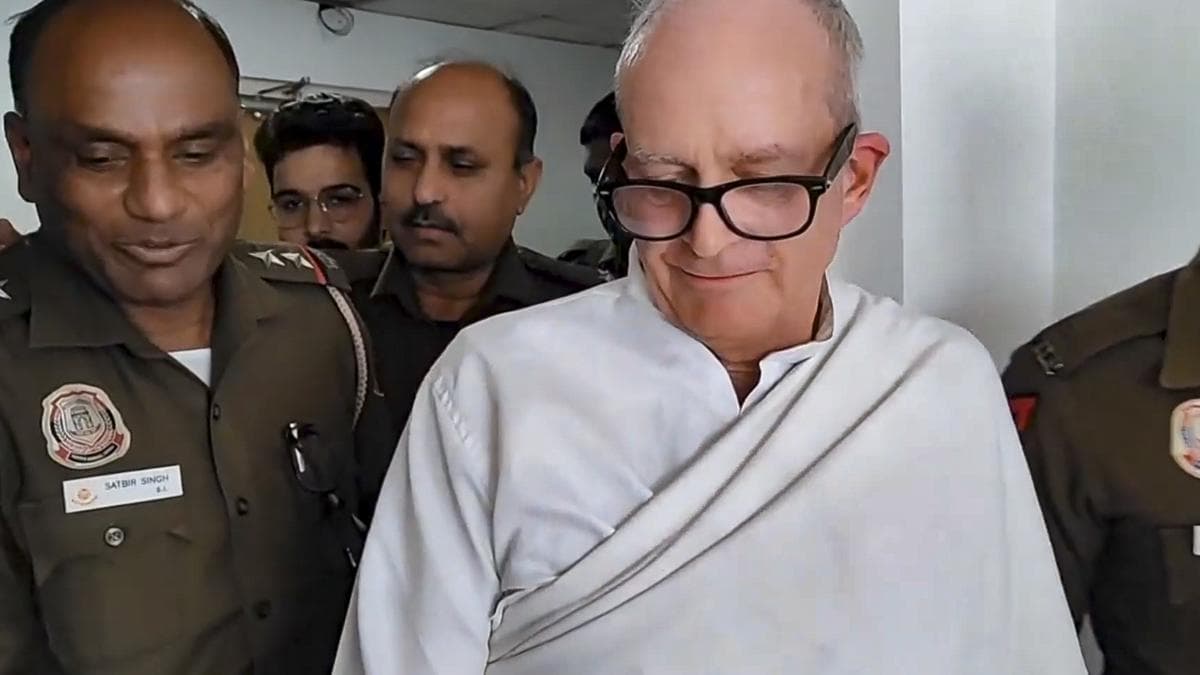
Court reserves order on Christian Michel's plea for release in AgustaWestland CBI case.
Summary
The court reserved its order on Christian Michel's plea for release in the AgustaWestland VVIP chopper scam's CBI case. Michel sought release, claiming he had served the maximum seven-year sentence for the charges against him. This case is significant for understanding legal processes, high-profile corruption investigations, and the extradition of key accused in international defense deals, crucial for UPSC and SSC exams.
Key Points
- 1Christian Michel is a key accused in the AgustaWestland VVIP chopper scam.
- 2He filed a plea seeking release in the CBI case related to the scam.
- 3The basis for his plea is that he has already undergone the maximum period of sentence.
- 4The maximum period of sentence cited for the charges against him is seven years.
- 5The court has reserved its order on Christian Michel's plea for release.
In-Depth Analysis
The AgustaWestland VVIP chopper scam stands as a significant case in India's fight against corruption, particularly in high-stakes defense procurement. The recent development concerning Christian Michel's plea for release brings the legal intricacies and prolonged nature of such investigations back into focus. Understanding this case is crucial for aspirants to grasp concepts related to governance, anti-corruption mechanisms, and India's international legal cooperation.
**Background Context and The Scam's Genesis:**
The genesis of the AgustaWestland scam dates back to 2010 when the Indian Ministry of Defence signed a ₹3,600 crore (approximately €560 million at the time) deal with AgustaWestland, a subsidiary of Italian defense conglomerate Finmeccanica (now Leonardo S.p.A.), for 12 AW101 helicopters. These choppers were intended for the transport of VVIPs, including the President, Prime Minister, and other high-ranking officials. Allegations of kickbacks and bribery surfaced in 2013 when Italian authorities arrested Giuseppe Orsi, then CEO of Finmeccanica, and Bruno Spagnolini, CEO of AgustaWestland, on charges related to the deal. Investigations revealed that commissions, reportedly amounting to 12% of the deal value, were paid to middlemen to influence Indian officials and manipulate the tender process, specifically concerning the service ceiling height of the helicopters.
**The Current Development: Christian Michel's Plea:**
Christian Michel James, a British citizen, emerged as a key alleged middleman in this scandal. He is accused by both the Central Bureau of Investigation (CBI) and the Enforcement Directorate (ED) of facilitating bribes and laundering money to secure the contract. After years of investigation and legal proceedings, Michel was extradited from Dubai to India in December 2018, a significant diplomatic and legal victory for India. He has since been in judicial custody. The recent development involves Michel filing a plea before a special CBI court, seeking release on the grounds that he has already undergone the maximum period of sentence of seven years for the charges leveled against him in the CBI case. The court has reserved its order on this plea, indicating a thorough examination of the legal arguments and the nature of the charges.
**Key Stakeholders Involved:**
* **Christian Michel James:** The central figure as an alleged middleman, accused of orchestrating the kickbacks. His extradition was a landmark event.
* **Central Bureau of Investigation (CBI):** India's premier investigating agency, responsible for probing the corruption aspects of the deal. The CBI operates under the Delhi Special Police Establishment Act, 1946.
* **Enforcement Directorate (ED):** Investigating the money laundering angle under the Prevention of Money Laundering Act (PMLA), 2002.
* **Indian Judiciary:** The various courts (Special CBI Court, High Court, Supreme Court) that hear the arguments, grant bail, and conduct trials, ensuring due process and upholding justice.
* **Ministry of Defence (MoD) and Indian Air Force (IAF):** The primary procuring entities, whose officials are under scrutiny for potential involvement.
* **AgustaWestland/Finmeccanica (now Leonardo S.p.A.):** The defense contractor accused of paying bribes.
* **Italian Authorities:** Whose initial investigation brought the scam to light and provided crucial evidence.
**Significance for India:**
This case holds profound significance for India across multiple dimensions. Firstly, it underscores the persistent challenge of **corruption in defense procurement**, which not only drains public exchequer but also compromises national security by potentially influencing critical decisions. The AgustaWestland case, much like the Bofors scandal of the 1980s, highlights the vulnerability of India's defense acquisition process to external manipulation and internal complicity. Secondly, it showcases India's commitment to pursuing justice through **international legal cooperation**, demonstrated by the successful extradition of Michel from the UAE under the Extradition Act, 1962. This sends a strong message that high-profile fugitives cannot evade Indian law indefinitely. Thirdly, the case tests the efficacy and independence of India's **investigative agencies (CBI, ED)** and the **judiciary**. The prolonged nature of the trial raises questions about the speed of justice and the challenges in prosecuting complex transnational corruption cases. Finally, it reinforces the need for robust and transparent **Defense Procurement Procedures (DPP)** to prevent future scams and ensure accountability.
**Historical Context and Future Implications:**
The AgustaWestland scam is not an isolated incident but fits into a broader pattern of defense corruption that has plagued India. From the Jeep scandal of 1948 to Bofors in 1987 and Tehelka in 2001, such cases have repeatedly exposed systemic weaknesses. The current case has pushed for significant reforms in India's DPP, aiming for greater transparency, oversight, and integrity. Future implications include the potential for the court's order on Michel's plea to set a precedent regarding the interpretation of maximum sentence periods in complex corruption cases. It will also impact the ongoing trials of other accused individuals and companies. A successful prosecution could bolster public confidence in the rule of law, while delays or acquittals might fuel cynicism. The outcome will also influence how India approaches future defense deals, potentially leading to stricter anti-corruption clauses and enhanced due diligence.
**Related Constitutional Articles, Acts, and Policies:**
* **Prevention of Corruption Act, 1988:** This is the primary legislation under which public servants involved in corrupt practices are prosecuted. Michel, though not a public servant, is accused of abetting such acts.
* **Prevention of Money Laundering Act (PMLA), 2002:** The ED investigates the financial trail and attachment of assets under this act.
* **Extradition Act, 1962:** Governs the extradition of fugitive criminals from India to foreign countries and vice-versa, crucial for Michel's return.
* **Article 21 (Right to Life and Personal Liberty):** The right to a speedy trial, though not explicitly mentioned, is an implicit part of Article 21's guarantee of fair procedure, which Michel's plea might implicitly invoke.
* **Criminal Procedure Code (CrPC):** Governs the procedural aspects of criminal trials, including arrest, investigation, bail, and sentencing.
* **Defense Procurement Procedure (DPP):** The policy framework that governs all capital acquisitions of the Ministry of Defence. Subsequent revisions have sought to enhance transparency and integrity, often in response to such scams.
Exam Tips
This topic falls under 'Indian Polity & Governance' (UPSC Mains GS-II, SSC CGL General Awareness) focusing on anti-corruption mechanisms, judiciary, and investigative agencies. It also touches upon 'International Relations' (UPSC Mains GS-II) concerning extradition treaties and diplomatic cooperation.
Study the roles and powers of the CBI and ED thoroughly. Understand the key provisions of the Prevention of Corruption Act, 1988, and the Prevention of Money Laundering Act, 2002. Also, be familiar with the Extradition Act, 1962.
Common question patterns include factual questions (e.g., 'Who is Christian Michel?', 'Which agencies are investigating?'), conceptual questions on corruption's impact on governance, and analytical questions on the challenges of prosecuting high-profile cases or the effectiveness of anti-corruption laws. Questions on the evolution of Defense Procurement Procedures are also possible.
Related Topics to Study
Full Article
The release was sought on the grounds that he had already undergone the maximum period of sentence of seven years for the charges against him