



Relevant for Exams
No content available; cannot extract information on Bangladesh violence for exam preparation.
Summary
Due to the explicit absence of article content, a comprehensive summary detailing the events, their significance, or specific exam relevance cannot be provided. The title suggests a focus on violence in Bangladesh, a topic that typically carries geopolitical implications relevant for competitive examinations if content were available.
Key Points
- 1Article content is explicitly stated as 'No content available'.
- 2Consequently, no specific facts, dates, names, numbers, or percentages can be extracted for exam preparation.
- 3Detailed analysis of 'violence in Bangladesh' and its implications is impossible without the article text.
- 4Therefore, exam-focused MCQs or revision points cannot be generated from this input.
- 5The potential relevance of the topic (Bangladesh violence) for exams like UPSC, State PSC, and Defence cannot be assessed without content.
In-Depth Analysis
Understanding the dynamics of violence in Bangladesh is crucial for Indian competitive exam aspirants, given Bangladesh's strategic importance as a neighboring country. While the specific article content is unavailable, a comprehensive analysis can be built around the recurring patterns of violence, their underlying causes, and profound implications for India.
Bangladesh, born out of a bloody liberation war in 1971, has a history marked by political turbulence, military coups, and sporadic violence. The foundational trauma of 1971, coupled with the assassination of its founding father Sheikh Mujibur Rahman in 1975, set a precedent for political instability. Subsequent decades saw alternating periods of military rule and fragile democratic transitions, often characterized by a fierce rivalry between the two dominant political parties: the Awami League (AL) and the Bangladesh Nationalist Party (BNP). This deep-seated political polarization is a primary driver of violence, especially around election cycles.
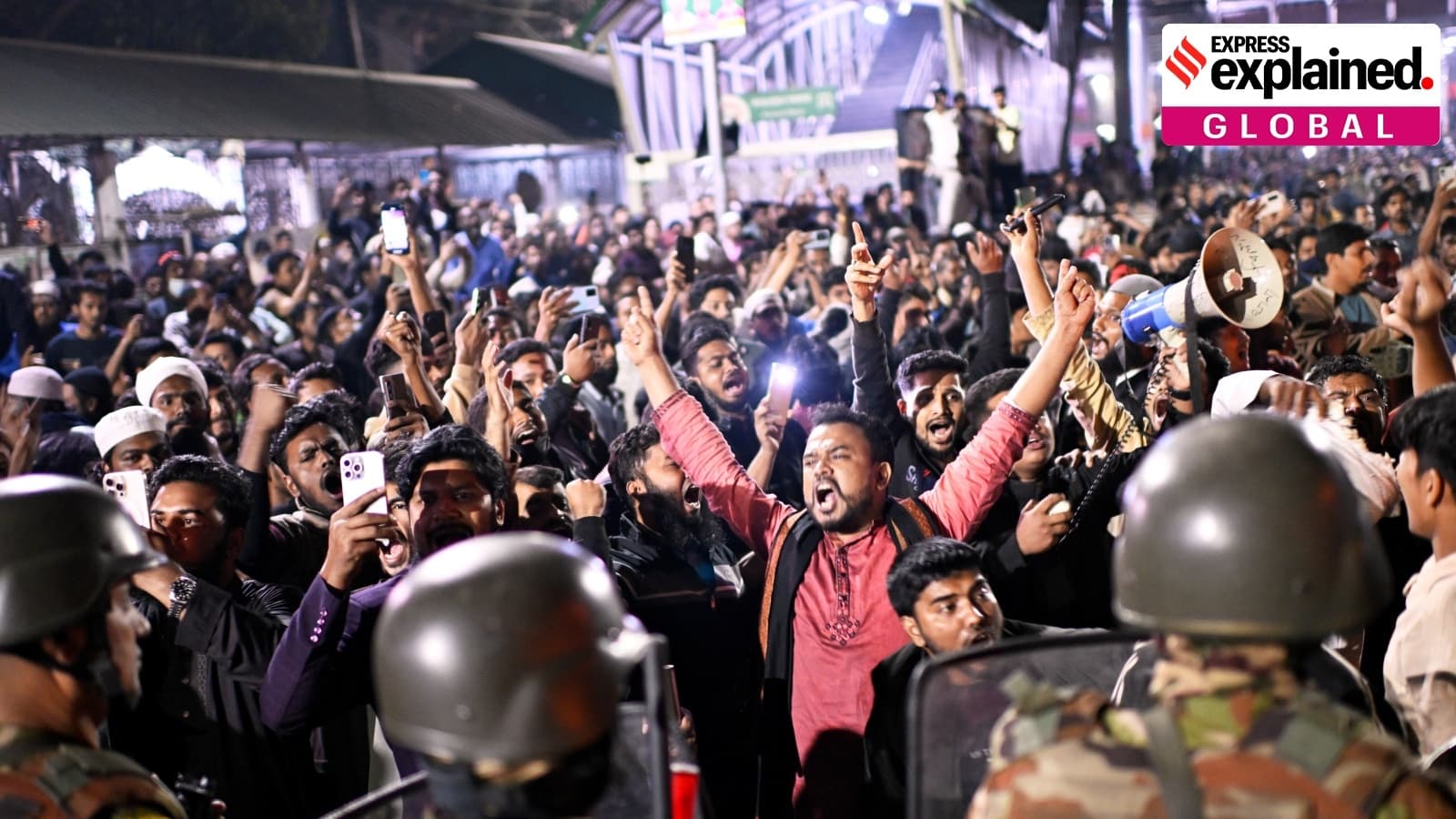
The nature of violence in Bangladesh manifests in several forms. Political violence is most prominent, often erupting during elections, protests, and general strikes (hartals). Clashes between cadres of the AL and BNP, sometimes involving law enforcement, frequently lead to injuries and fatalities. Accusations of voter intimidation, rigging, and suppression of opposition are common, exacerbating tensions. Beyond political clashes, communal violence is another grave concern. Religious minorities, particularly Hindus, have historically been targets of attacks, often instigated by extremist elements or politically motivated actors seeking to create unrest or disenfranchise certain communities. The rise of Islamist extremist groups, such as Jamaat-ul-Mujahideen Bangladesh (JMB) and Ansar al-Islam, also contributes to violence, targeting secular writers, minority community members, and foreigners, aiming to impose a more fundamentalist interpretation of Islam.
Key stakeholders in this cycle of violence include the ruling Awami League, which, while credited with significant economic development, faces criticism for authoritarian tendencies and alleged suppression of dissent. The opposition BNP, often allied with Islamist parties like Jamaat-e-Islami, frequently resorts to street protests and blockades, which can turn violent, in its bid to return to power. The security forces, including the police and paramilitary units like the Rapid Action Battalion (RAB), are tasked with maintaining order but have often been accused of human rights abuses and extrajudicial killings. Religious extremist groups capitalize on political instability and communal fault lines to further their agenda. India, as a major neighbor, is an indirect but critical stakeholder, deeply impacted by Bangladesh's internal stability.
For India, the implications of violence in Bangladesh are multifaceted and significant. Firstly, **geopolitical stability**: A stable and prosperous Bangladesh is vital for India's 'Neighbourhood First Policy' and its 'Act East Policy'. Instability can disrupt regional trade, connectivity projects like the Bangladesh-Bhutan-India-Nepal (BBIN) Initiative, and cooperation in forums like BIMSTEC. Secondly, **border security and migration**: Political or communal violence in Bangladesh can trigger an influx of refugees and illegal migrants into India's bordering states, particularly West Bengal, Assam, and Tripura, posing significant demographic and security challenges. The Citizenship (Amendment) Act, 2019 (CAA), for instance, explicitly mentions religious persecution in neighboring countries like Bangladesh as a ground for granting citizenship, highlighting India's concern regarding minority safety in Bangladesh. Thirdly, **economic ties**: India is a major trading partner and investor in Bangladesh. Instability can negatively impact bilateral trade, Indian investments, and the progress of joint projects. Fourthly, **strategic interests**: India monitors the rise of extremist groups in Bangladesh due to potential spillover effects on its own internal security. Furthermore, India seeks to counter the growing influence of China in Bangladesh, making a stable and friendly government in Dhaka crucial for its regional strategic balance. Lastly, **water sharing disputes**, such as the long-pending Teesta River agreement, are also impacted by the political climate in Bangladesh.
Historically, the India-Bangladesh relationship has been complex, rooted in the 1971 Liberation War where India played a crucial role. However, periods of strained relations, particularly during BNP rule, have been marked by concerns over anti-India sentiments and activities. The current Awami League government under Sheikh Hasina is generally seen as pro-India, but domestic political pressures can always influence foreign policy. India's Constitution, particularly **Article 51** (a Directive Principle of State Policy), directs the state to promote international peace and security and maintain just and honorable relations between nations, which underpins its approach to regional stability. India's foreign policy is guided by the principle of non-interference in internal affairs, but the humanitarian and security implications of violence in Bangladesh often necessitate a proactive diplomatic stance.
Looking ahead, the future implications include the potential for continued political polarization, especially leading up to the next general elections. The challenge for Bangladesh will be to balance economic growth with democratic space and human rights. For India, ensuring a stable, democratic, and secular Bangladesh remains a top foreign policy priority. This will involve continued diplomatic engagement, strengthening economic ties, and cooperation on security matters to prevent the growth of extremism and manage border challenges effectively. The stability of Bangladesh is intrinsically linked to the peace and prosperity of India's eastern and northeastern regions.
Exam Tips
This topic falls under GS Paper II (International Relations, India and its Neighbourhood, Bilateral Relations) and GS Paper III (Internal Security, Border Management). Focus on analyzing the geopolitical and security dimensions.
Study related topics like India-Bangladesh bilateral relations, India's 'Neighbourhood First Policy', the Rohingya refugee crisis, border management challenges, and the role of regional groupings like BIMSTEC.
Expect analytical questions such as: 'Analyze the impact of political instability in Bangladesh on India's security and economic interests.' or 'Discuss the drivers of communal violence in Bangladesh and its implications for India's internal security.' Be prepared to quote constitutional articles and policy initiatives.
Understand the historical context of India-Bangladesh relations, including the 1971 Liberation War and the evolution of political parties in Bangladesh, as this provides crucial background for current events.
Pay attention to specific government policies and initiatives, such as the Citizenship (Amendment) Act (CAA) and its stated rationale concerning religious minorities in neighboring countries, and India's efforts to enhance connectivity with Bangladesh.