



Relevant for Exams
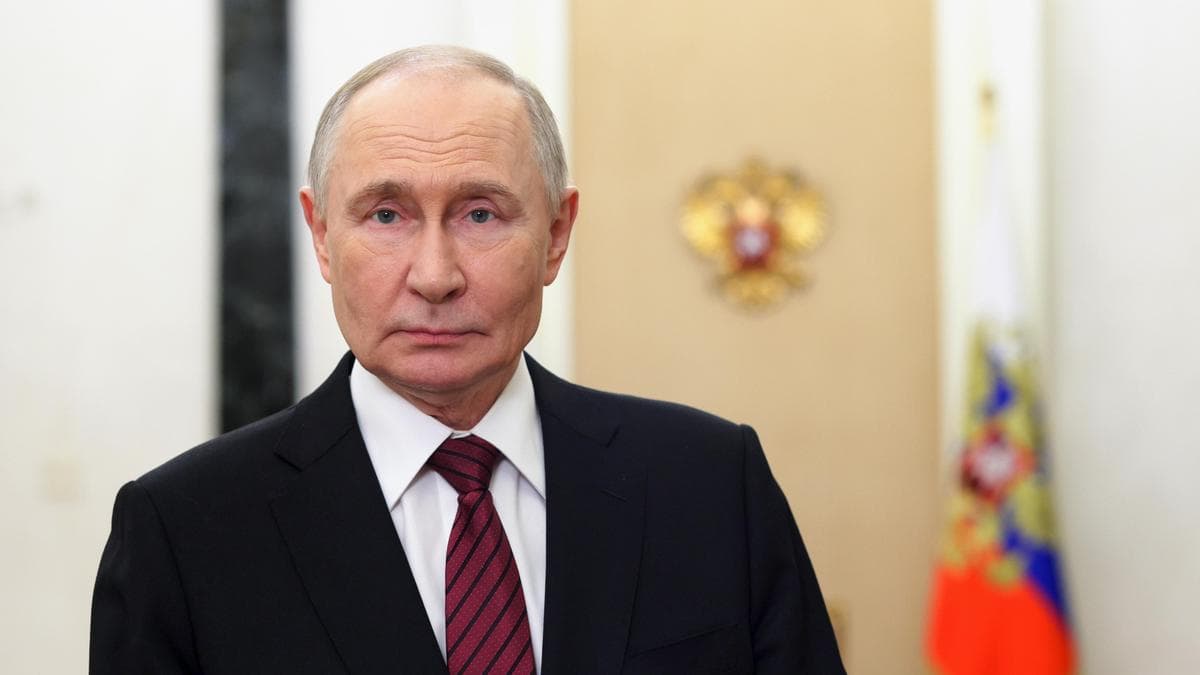
US intelligence: Putin's Ukraine war aims unchanged, contradicting denials of threat to Europe.
Summary
U.S. intelligence reports indicate that Russian President Vladimir Putin's war objectives in Ukraine remain consistent, contradicting his claims of not posing a threat to Europe. This assessment is crucial for understanding the ongoing geopolitical landscape and potential future developments in the Russia-Ukraine conflict. For competitive exams, this highlights the importance of staying updated on international relations, intelligence assessments, and the stances of key global leaders regarding major conflicts.
Key Points
- 1U.S. intelligence has assessed that Russian President Vladimir Putin's war aims in Ukraine are unchanged.
- 2The intelligence contradicts Russian leader Vladimir Putin's denials of posing a threat to Europe.
- 3The primary focus of the intelligence assessment is on Russia's ongoing military objectives in Ukraine.
- 4The assessment directly addresses the statements made by the Russian leader regarding his intentions.
- 5The news highlights the continued geopolitical tension between the U.S. and Russia concerning the Ukraine conflict.
In-Depth Analysis
Imagine a complex geopolitical chess game, where every move is scrutinized, and intentions are often masked. The recent U.S. intelligence assessment, stating that Russian President Vladimir Putin's war aims in Ukraine remain unchanged despite his denials of posing a threat to Europe, is a crucial piece of information in understanding this ongoing conflict. This isn't just a headline; it's a window into the strategic thinking that drives one of the most significant international crises of our time.
To truly grasp the gravity of this assessment, we must rewind to the genesis of the conflict. The roots of the Russia-Ukraine war are deep, stretching back to the collapse of the Soviet Union in 1991. Ukraine, a former Soviet republic, sought closer ties with the West, particularly the European Union and NATO, much to Russia's chagrin. Moscow views NATO's eastward expansion as an existential threat to its security perimeter. Key events include the 2004 Orange Revolution in Ukraine, which saw a pro-Western government come to power, and the 2014 Euromaidan Revolution, which ousted a pro-Russian president. Following the Euromaidan, Russia annexed Crimea in March 2014 and supported separatists in the Donbas region (eastern Ukraine), leading to a simmering conflict for eight years before the full-scale invasion in February 2022. Putin's stated objectives for the 2022 invasion included "demilitarization" and "denazification" of Ukraine, which were widely seen by the West as pretexts for regime change and territorial conquest.
The U.S. intelligence assessment directly challenges Putin's public narrative. While Putin has occasionally suggested a willingness for negotiations or downplayed Russia's aggressive posture towards Europe, the intelligence community believes his core objectives – likely involving significant control over Ukrainian territory, preventing its integration into Western alliances, and perhaps even replacing its government – have not shifted. This implies that any current or future peace overtures from Moscow might be tactical rather than a fundamental change in strategy. The intelligence community's role is to provide objective analysis, often based on signals intelligence, human intelligence, and satellite imagery, to inform policymakers.
Several key stakeholders are deeply involved. On one side, we have **Russia**, led by President Vladimir Putin, whose long-held grievances about NATO expansion and a desire to restore a sphere of influence for Russia drive its actions. The **Ukrainian government**, under President Volodymyr Zelenskyy, along with the Ukrainian people, are fighting for their sovereignty and territorial integrity, backed by substantial military and financial aid from Western nations. The **United States**, as the primary intelligence gatherer and a leading proponent of support for Ukraine, plays a pivotal role in shaping the international response. **NATO** (North Atlantic Treaty Organization), a collective security alliance, has strengthened its eastern flank and provided extensive military aid, though carefully avoiding direct military confrontation with Russia. The **European Union** has imposed stringent sanctions on Russia, provided humanitarian aid, and is navigating the complex energy crisis triggered by the conflict.
For India, the Russia-Ukraine conflict and such intelligence assessments carry profound significance. India maintains a delicate diplomatic balance, rooted in its policy of strategic autonomy. Economically, the war has impacted global energy prices, leading to inflation and supply chain disruptions. India, a major oil importer, has had to navigate these price shocks, including increasing its crude oil imports from Russia, often at discounted rates. This decision, while economically pragmatic, has drawn scrutiny from Western nations. Politically and diplomatically, India has largely abstained from condemning Russia directly at the UN, emphasizing dialogue and diplomacy. This stance reflects India's long-standing defence ties with Russia (a major supplier of military hardware) and its desire to maintain a multi-aligned foreign policy. This balancing act is crucial for India's geopolitical standing, especially as it seeks to strengthen ties with the West (e.g., through the Quad) while preserving its relationship with a traditional partner like Russia. India's foreign policy is guided by principles like **Article 51** of the Constitution, which directs the state to promote international peace and security, maintain just and honourable relations between nations, foster respect for international law, and encourage settlement of international disputes by arbitration. India's approach to the Ukraine conflict, while not directly invoking a specific act, is an exercise of its executive power in foreign policy, aiming to uphold these constitutional ideals in a complex global scenario.
Historically, India has championed non-alignment and strategic autonomy, a legacy that continues to shape its response. The current situation tests India's ability to navigate a multipolar world where traditional alliances are shifting. The future implications are vast: a prolonged conflict could further destabilize global energy markets, solidify new geopolitical blocs, and reshape international law and institutions. The U.S. intelligence assessment suggests that a quick resolution based on a change in Russia's fundamental objectives is unlikely, portending a long and arduous path towards peace. It underscores the ongoing challenge to the principles of territorial integrity and sovereignty enshrined in the UN Charter, raising questions about the effectiveness of international bodies in preventing major power conflicts.
Exam Tips
This topic falls under GS Paper 2 (International Relations) for UPSC Civil Services Exam. Understand the historical context of the conflict (post-Cold War, NATO expansion, 2014 Crimea annexation) and India's foreign policy doctrines like Strategic Autonomy and Multipolarity.
For SSC, Banking, Railway, and State PSC exams, focus on factual aspects: key dates (Feb 2022 invasion), major stakeholders (Russia, Ukraine, US, NATO), and the economic impact (oil prices, inflation). Be prepared for questions on India's stance and its implications.
Study related topics like energy security, global supply chains, the role of international organizations (UN, NATO), and the impact of sanctions. Common question patterns include analytical questions on India's balancing act, the causes and consequences of the war, and the future of international relations.
Understand the difference between official statements and intelligence assessments. Intelligence often provides a deeper, less political view of intentions, which is crucial for understanding the true trajectory of conflicts. For UPSC, be ready to analyze the credibility and implications of such assessments.
Practice essay writing on topics like 'Impact of Russia-Ukraine War on Global Geopolitics' or 'India's Foreign Policy Challenges in a Multipolar World,' incorporating economic, political, and strategic dimensions.
Related Topics to Study
Full Article
The intelligence also contradicts the Russian leader’s denials that he is a threat to Europe